Woodwasps
Sirex woodwasps are endemic to Asia, Europe, and South Africa. Sirex nictilio has been introduced in New Zealand and has also made its way into Australia from imported timber.
Morphology
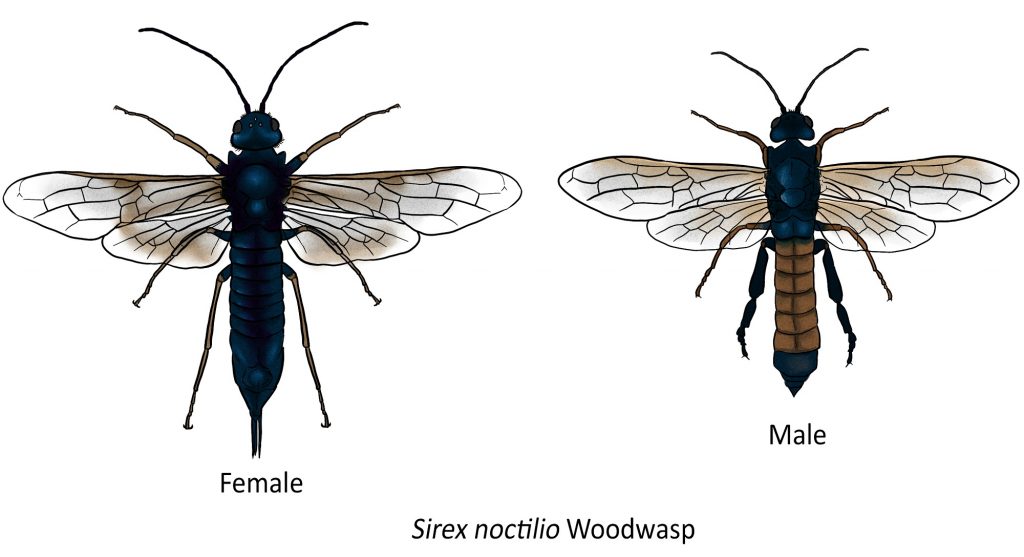
Sirex woodwasps have cylindrical bodies without a waist or an abdominal petiole, but they have abdomens that are pointed at the end. This species exhibits sexual dimorphism, meaning males and females are different in size and appearance. Adult males are 9–32 mm in length and are black in colour, except for the orange part in the middle of their abdomens. Females are 15–36 mm in length and have metallic blue bodies with orange legs and a prominent ovipositor. Both sexes have long, black antennae and yellowish membranous wings.
Biology and Behaviour of Common Species
Females deposit 25–400 eggs together with fungus spores through the bark and into the sapwood of injured trees. The spores then germinate and block the water-conducting tracheids, impairing metabolism in the shoots and loss of water balance. Moreover, this causes trees to wilt and change colour until it dies in 3–6 months after infestation. Adult Sirex woodwasps then emerge through round holes about 6 mm in diameter. The life cycle from egg to adult takes one to two years to complete depending on environmental factors.
Treatment
Technicians may see sirex wasp damage when infested timbers were used in housing. In this case, no treatment is required since the wasps have already emerged and do not reinfest sawn timber. Infested foreign timbers are inspected by quarantine services when they enter Australia.
Leave a Reply