Other common name: European honey bee
Scientific name: Apis mellifera
Distribution
Found throughout Australia
Identification
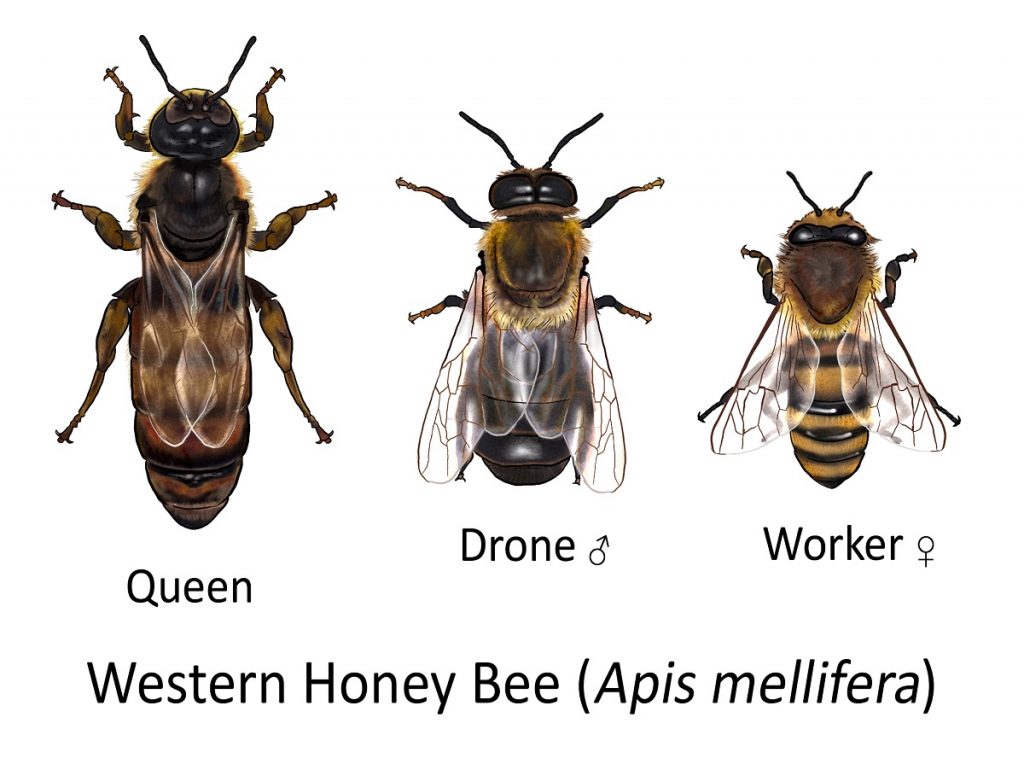
13–16 mm in size. Red/brown with black and orange-yellow rings on the abdomen. The body is covered in hairs but the thorax is more densely covered than the abdomen. They have a pollen on each hind leg.
Behaviour
Social bees that live in colonies with a population of approximately 10,000 to 30,000 bees adult worker bees. They build parallel wax structures that house food storage in their hives and their brood nest in the cavities.
They swarm once or twice a year depending on environmental conditions. They are docile and would only sting when threatened.
Importance
Highly beneficial as it is an agricultural pollinator and provides beeswax and honey to the domestic and export market.
General Pest Management Procedures
Gaining Access
Residential
You must notify the customer beforehand that you are scheduled to do a pest control treatment via phone call or otherwise before you proceed to the property. You must either knock on the front door and ring the doorbell or otherwise, to alert the client that you have arrived on site. If a minor answers the door or intercom, ask to speak to an adult occupant.
Introduce yourself to the occupant and explain the work order, confirm the client’s request, and ask about the pest problem using a friendly and professional tone.
You must use the following introduction or something similar:
“Good morning Mr/Ms [Occupier’s last name] my name is [Your name] I am here to treat [inspect] your home for [pests included in the job allocation]. Is there anything, in particular, you want me to pay attention to?”
Commercial
You must contact the authorised person at the business and notify them that you are scheduled to do a pest control treatment via phone call or otherwise before you proceed to the property.
Introduce yourself to the authorised person and explain the work order, confirm the client’s request. Use the following introduction or something similar:
“Good morning Mr/Ms [Authorised person’s last name] my name is [Your name] I am here to treat [inspect] your home for [pests included in the job allocation]. Is there anything in particular you want me to pay attention to?”
Describing the Job
Before starting the job, the Pest Controller must:
- Inform the client about treatment details.
- Inform the customer about the equipment, products, and in what areas you intend to use them.
- Inform the client how you will treat the infestation in the cavities of the building.
- Ask if the client has any health risks, e.g. asthma.
- Inform the client about the relevance of the amount of honey the bees have stored in the building.
- Explain why honeybees swarm
- Tell the client why it is important to remove honey stored inside the wall cavity.
- Inform the client of the treatment preparations and precautions the client must take to avoid being stung during the treatment.
- Inform the customer that they must leave the premises during the treatment.
- Explain the Bee (B) warranty.
- Confirm the approval of the client to proceed.
Conducting A Site Risk Assessment
While you go around the property and familiarise yourself with the building structure, access points and utilities, you must be observant and identify potential hazards or risks that could pose a danger during the treatment.
Some elements to consider before doing a treatment include:
- People
- Children
- Pets (dog/s, cat/s, caged birds)
- Fish tanks/fish pond
- Other animals or pets
- Clothes on line
- Electrical wiring or outlets that can lead to electrical shocks
- Health risks (asthma or respiratory risks)
- Slips and trips
- Temperature
- Spills
- Working at heights
- And other potential risks
Examples of risk and safety considerations you must do before treatment include:
- Exclude occupants, children, and pets for the duration of the treatments
- Secure pets and make sure they can not escape
- Remove or turn over any pet food or water containers
- Cover fish ponds
- Keep a spill kit on-site
- Ensure the ladder is safe to use
- Wear the necessary PPE
Inspection
Bees favour dark, dry, and undisturbed conditions, which are prevalent in wall cavities and attics. They may sneak inside openings like window cracks, gaps, vents, or doors. If the walls of the property have a nest from a previous bee habitation, then fresh reinfestation is more likely to happen.
Treatment
- Apply dust to the cavity until you reasonably believe the swarm has no chance of survival.
Restore the Site
Once you are done treating the area, you must restore it to its original condition. Anything that was moved due to risk assessment, or to gain access to a harbourage should be placed back to where it was e.g. pet’s water bowls should be replaced, replace toaster or microwave if it was moved, any electrical appliances that were removed to use the dusting machine should immediately be reconnected, etc.
Completing the Documents, Re-entry time, and Post Treatment Expectations
After the treatment, talk to the client and discuss the terms and conditions and the invoice incompletion. You must ensure to discuss when the occupants can re-enter the treated rooms and ventilate the house to allow fresh air to circulate and remove any lingering odour or fumes from the chemicals. You must discuss what to expect after the treatment.
Clean & tidy up
Clean all equipment used during the treatment immediately after use, as dried pesticides are harder to clean. Clean the equipment away from water supplies and children and animals, also check the pesticide label to know how to properly dispose of and store them. Wash and clean your PPE immediately after use. Return all items such as sprayers, warning signs, etc. to the vehicle, and correctly store PPE. Be sure to wash any parts of the body that may have been exposed to the pesticides with soap and water.