Silverfish
The silverfish is a small, agile, primitively wingless insect that belongs to the order Zygentoma (formerly Thysanura). It got its common name from its silvery appearance and fish-like shape and movements. There are 28 described species of silverfish but only five have successfully invaded buildings. Silverfish are often found in dark, humid, and inaccessible areas such as ceilings, basements, bathrooms, bookcases, and storage tooms where they might damage books, fabrics, and other materials.
Morphology
The silverfish is about 13–25 mm long. Its abdomen narrows at the rear end, giving it a fish-like appearance. Newly hatched silverfish are similar in structure to that of the adult but are whitish in colour and develop a greyish hue with a metallic shine as they get older. It has three long appendages from the rear of the abdomen. The antennae are usually long and it has two small compound eyes, although some species are entirely eyeless (family Nicoletiidae).
Life Cycle
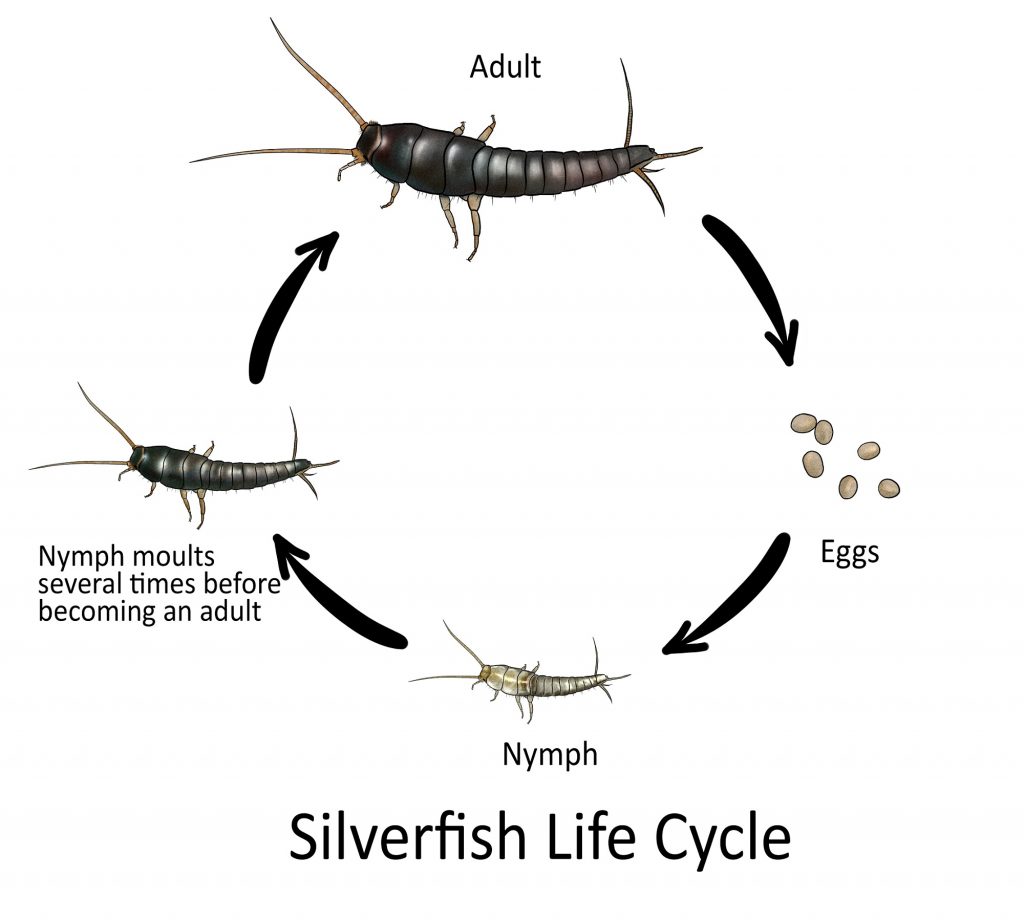
Silverfish are ametabolous, meaning they undergo no metamorphosis or transformation. The females lay eggs singly or in small batches, and they hatch in 2–8 weeks. The nymphs closely resemble the adult and undergo 6–7 times before they reach sexual maturity which can take anywhere between 3–24 months. Silverfish continue to moult throughout their life, which may be as long as four years.
Behaviour
Since silverfish do not have wings, they move in a very quick fish-like manner to get to one place from another. They are nocturnal and prefer to remain hidden during the day. They are unable to climb smooth surfaces, so they often get trapped in baths and basins.
Silverfish are scavengers and would eat anything available, but they have a preference for starches and protein. They can also digest cellulose and dextrin in adhesives— a reason why they eat book pages and book bindings, glue, some paints, photos, plaster, and wallpaper.
Silverfish as pests
Silverfish are considered pests because of their feeding behaviour and the destruction they cause to property. However, although they are responsible for the contamination of food and other damage, they do not transmit any diseases.
Control and Management
Getting rid of a silverfish infestation always starts with an inspection. This should involve moving and opening stored objects to disturb and locate silverfish. In some cases, an aerosol flushing agent can help locate the hiding place.
Non-chemical control and prevention methods
Good housekeeping practices are always the best method of preventing an infestation. Cleaning crumbs and scraps of food in the kitchen and tightly sealed containers will make the area less desirable for silverfish. Inspecting incoming materials such as paper and files, as well as secondhand books and furniture can also help avoid infestation.
Chemical control
Due to the widespread distribution of silverfish within areas, a combination of treatment techniques is often necessary to achieve successful control. Reducing cleaning up and reducing clutter prior to pesticide application would be most effective.
Surface sprays. There are various surface sprays registered to control silverfish. This type of treatment is residual and needs to be applied to surfaces that silverfish would travel on.
Space sprays. This type of spray can be applied in the form of mists, fogs or high-pressure aerosols. This can be a helpful backup to surface sprays and can be applied to spaces where there are still silverfish.
Dusts. Dry dust formulations are effective for treating silverfish since they usually infest areas where wet sprays are safe to use. Low-toxicity dusts can be applied to boxes of books and papers before they are stored away.
Baits. Using insecticidal baits can supplement a silverfish control plan. Placing baits should be strategic, as other food sources can limit their effectiveness.