Red Imported Fire Ant
Scientific name: Solenopsis invicta
Distribution
Native to South America but has been established in Southeast Queensland and Gladstone.
Nesting Site
Can be found outdoors in mounds built of soil about 46 cm in diameter. Can also be found nesting under logs, lawns, and pasture areas.
Identification
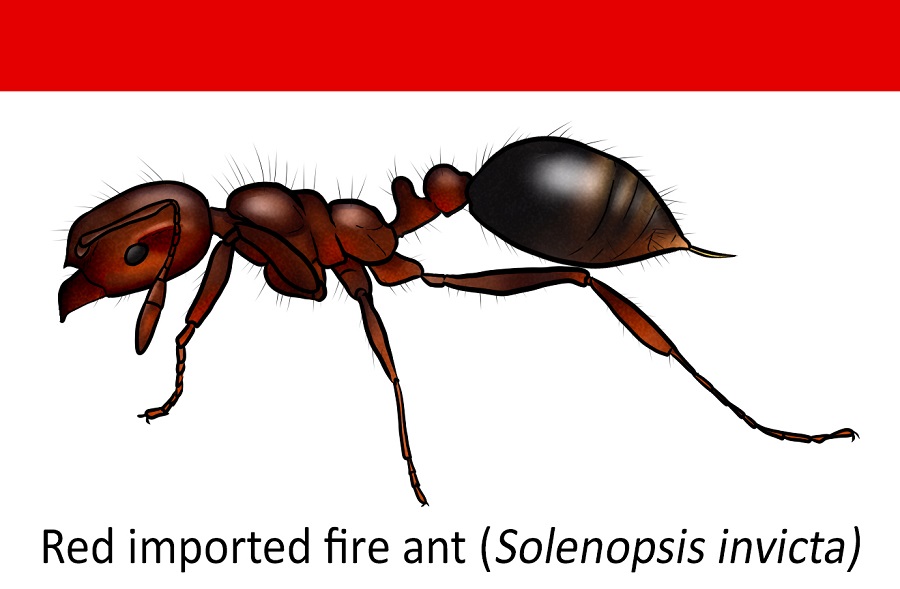
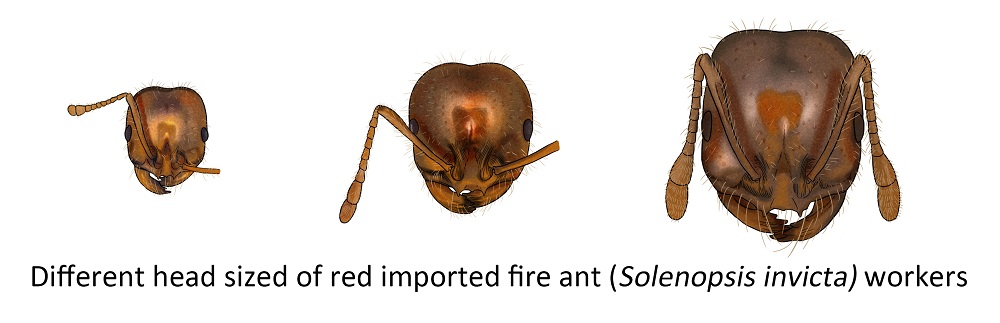
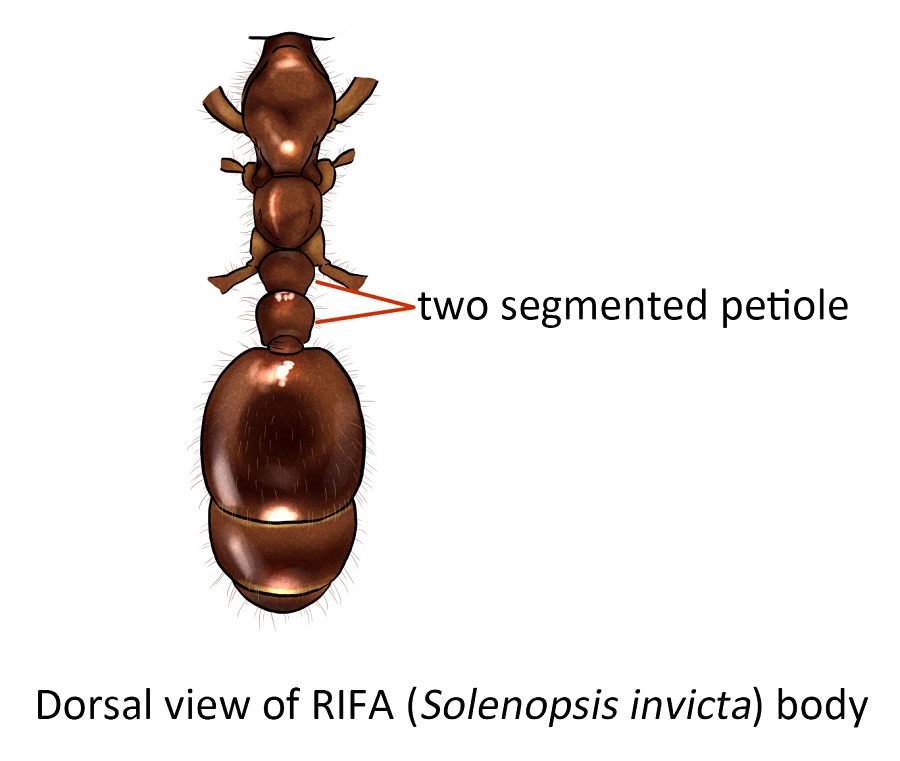
This species has major and minor workers (polymorphic), ranging from 2.4–6.0 mm in length. They have a two-segmented petiole and 10-segmented antennae with 2-segmented clubs. Their mandibles have four distinct teeth. Their bodies are reddish brown, and the gaster is black with a stinger at the tip.
Food Preference
Feed on dead animals, honeydew, fats, and proteins.
Safety Risk
Painful stings that cause inflammation, may cause allergic reactions, and even anaphylactic shock in some people.
Best Bait
Oil-based and granular corn grit baits.
General Treatment Procedures
Gaining Access
Residential
You must notify the customer beforehand that you are scheduled to do a pest control treatment via phone call or otherwise before you proceed to the property. You must either knock on the front door and ring the doorbell or otherwise, to alert the client that you have arrived on site. If a minor answers the door or intercom, ask to speak to an adult occupant.
Introduce yourself to the occupant and explain the work order, confirm the client’s request, and ask about the pest problem using a friendly and professional tone.
You must use the following introduction or something similar:
“Good morning Mr/Ms [Occupier’s last name] my name is [Your name] I am here to treat [inspect] your home for [pests included in the job allocation]. Is there anything, in particular, you want me to pay attention to?”
Commercial
You must contact the authorised person at the business and notify them that you are scheduled to do a pest control treatment via phone call or otherwise before you proceed to the property.
Introduce yourself to the authorised person and explain the work order, confirm the client’s request. Use the following introduction or something similar:
“Good morning Mr/Ms [Authorised person’s last name] my name is [Your name] I am here to treat [inspect] your home for [pests included in the job allocation]. Is there anything in particular you want me to pay attention to?”
Describing the Job
Before starting the job, the Pest Controller must:
- Inform the client about treatment details.
- Inform the customer about the equipment, products, and in what areas you intend to use them.
- Ask if the client has any health risks, e.g. asthma.
- Inform the client of the treatment preparations, e.g. the windows need to be closed, and children and pets should be excluded from any area until any pesticide solution has dried and the room has been ventilated, etc.
- Inform the customer that they must leave the premises during the treatment.
- Explain the Ant (A) warranty.
- Confirm the approval of the client to proceed.
Conducting A Site Risk Assessment
Performing a site risk assessment helps identify potential hazards or risks within the property and allows the pest controller to take necessary precautions to ensure their safety and the safety of others.
While you go around the property and familiarise yourself with the building structure, access points and utilities, you must be observant and identify potential hazards or risks that could pose a danger during the treatment.
Some elements to consider before doing a treatment include:
- People
- Children
- Pets (dog/s, cat/s, caged birds)
- Fish tanks/fish pond
- Other animals or pets
- Clothes on line
- Electrical wiring or outlets that can lead to electrical shocks
- Health risks (asthma or respiratory risks)
- Slips and trips
- Temperature
- Spills
- Working at heights
- And other potential risks
Examples of risk and safety considerations you must do before treatment include:
- Exclude occupants, children, and pets for the duration of the treatments
- Secure pets and make sure they can not escape
- Remove or turn over any pet food or water containers
- Cover fish ponds
- Keep a spill kit on site
- Ensure the ladder is safe to use
- Wear the necessary PPE
Non-chemical Control
Exclusion
- Seal cracks and gaps around foundations and other potential entry points from the outside to prevent ants from entering the building.
- Focus on entry points along structural features like wires and pipes since ants use them to get inside and move around the building.
- Avoid planting trees and suburbs close to buildings that host honeydew-producing insects, as ants may be associated with them.
- Maintain a distance of several centimetres between plants, grass, mulch, and the building’s foundation, as these can serve as nesting sites for ants.
- Indoors, seal up cracks in kitchens and where food is stored.
Sanitation
- Store sugar, syrup, honey, and pet food in tightly sealed containers.
- Clean empty sugary drink containers and either rinse them or take them out of the building.
- Clean grease and spills.
- Always remove and change garbage bags.
Chemical Control
Apply Ant Spray
- You must apply Ant Spray
- Mix the required amount of Ant Spray Solution in accordance with the label.
- You must only use a product listed in the Pesticide list as an approved Ant Spray.
- Apply the spray in accordance with the manufacturer’s recommendations to the soil abutting the perimeter of the dwelling.
- Apply around the letter box.
- Wind hose onto hose reel and secure wand and trigger.
- Where it is unsafe or in your reasonable opinion not appropriate to apply Ant Spray you must notify us of the reason[s] why within 24 hours and arrange to return to the Site and complete the Ant Spray when it is safe and in your reasonable opinion appropriate.
- You must not Complete the Job until either:
- the Ant Spray has been carried out; or
- You have received written authorisation from Us authorising you to Complete the Job.
Install Ant Bait[s]
- You must only install ant bait[s] in accordance with the manufacturer’s recommendations.
- You must only use a product listed in the Pesticide list as an approved Ant Bait.
- Knowing what kind of ant you are dealing with can help determine what kind of bait to use.
Apply Dust to roof void
- You must apply Dust to all Accessible roof areas
- You must only apply Dust listed in the Pesticide list as an Approved Dust
- If you remove an electrical appliance lead in order to connect the Dusting Machine you must reconnect the appliance immediately after You have finished applying dust to the roof void.
- You must use a ladder to remove the access point (manhole) cover.
- You must use a torch to inspect the roof void before applying Dust to the roof void.
- Using the Dusting Machine’s dust/air mixture control and the extension wands you must apply an even distribution of dust to the entire roof void.
- If it is not possible to apply an even distribution of Dust from the manhole You must enter the roof void to complete the operation.
- If You enter the roof void You must not allow any component of the roof to bear of any significant portion of Your body weight that is not either:
- a part of a truss; or
- substantial roof support (obviously capable of supporting the weight of Your body) .
- If there is no access to the roof void or it is unsafe to access the roof void you must notify us when you Complete the Job.
- If the access to the roof void is obstructed you must within 24 hours and you must make reasonable efforts to return to Apply Dust to the roof void.
- Where access is obstructed You must not Complete the Job until either:
- Dust has been applied to the roof void; or
- You have received written authorisation from us to Complete the Job.
Leave a Reply