Scientific name: Apis florea
Distribution
Native to southeastern and southern Asia. In Australia, this species is considered an exotic and invasive species, primarily found in the tropical and subtropical areas of the Northern Territory and Northern Western Australia.
Identification
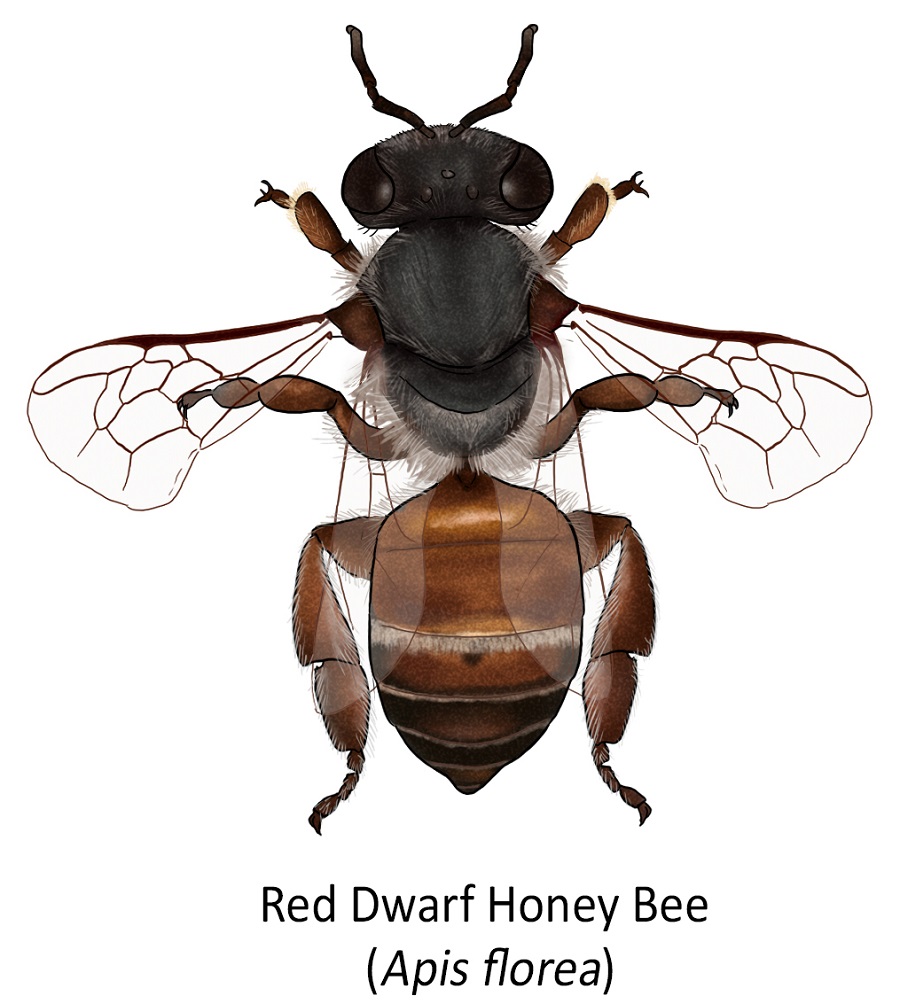
These bees are notably smaller compared to other honey bee species, typically measuring around 7-10 mm in length. They have a distinctive reddish-brown to light brown colouration, with a slender body structure. Their abdomen has distinct altering red-brown and white and black bands. Their small size and colouration help distinguish them from native Australian bee species. Red dwarf honeybees construct unique, small, single-comb nests that are often exposed and attached to tree branches, shrubs, or other vegetation, which is quite different from the enclosed hive structures of more common honey bee species.
Environmental Impact
The red dwarf honey bee (Apis florea) does indeed pose a significant potential threat to Australian agriculture and bee populations due to its association with Euvarroa mites, which are close relatives to the highly destructive Varroa destructor mite. Euvarroa wongsirii and Euvarroa sinhai are parasitic mites that specifically target and infest Apis florea colonies, and they could represent a serious biosecurity concern for Australia.
Sting Risk
This species presents a relatively low threat to humans. Their small size and typically non-aggressive nature mean they are less likely to sting than larger honey bee species. Nonetheless, individuals with bee allergies should still exercise caution and avoid direct contact with their nests.