Psocids, or booklice and barklice
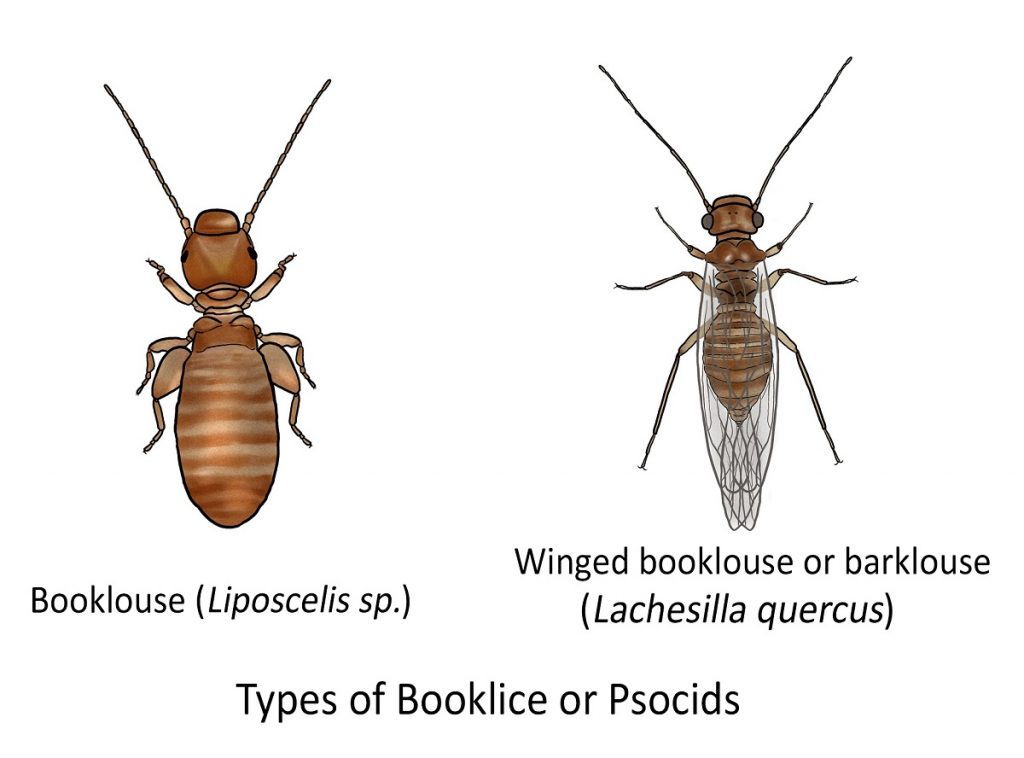
There are more than 5,000 species of Psocoptera in the world; with 293 species are known from Australia.
Pcosids are occasionally scavengers in human-inhabited areas. Due to their small size and secretive behaviour, they are not widely known insects. They are drawn to books and papers that are infrequently used and stored in moist conditions.
Appearance
Adults are small and soft bodies, with prominent heads, slender antennae, and mouthparts adapted for chewing. They commonly have well-developed compound eyes, and in winged species, three ocelli are present. The wings can either be absent, reduced, or present as two pairs of membranous wings.
The nymphs resemble the adults except got wings and reproductive appendages.
Biology and Behaviour
Psocids are scavengers found in various environments like leaf litter, grass, nests of birds and rodents, mouldy stored foods, and musty books. They consume fungi, lichens, and decaying matter, including starch in books. Reproduction is mainly sexual, but parthenogenesis occurs. Nymphs share similar behaviour as adults and undergo multiple moults.
Pest Status
Psocids are not economically significant overall, but in moisture-prone storage conditions, some species can cause damage to books and insect collections.