Lice
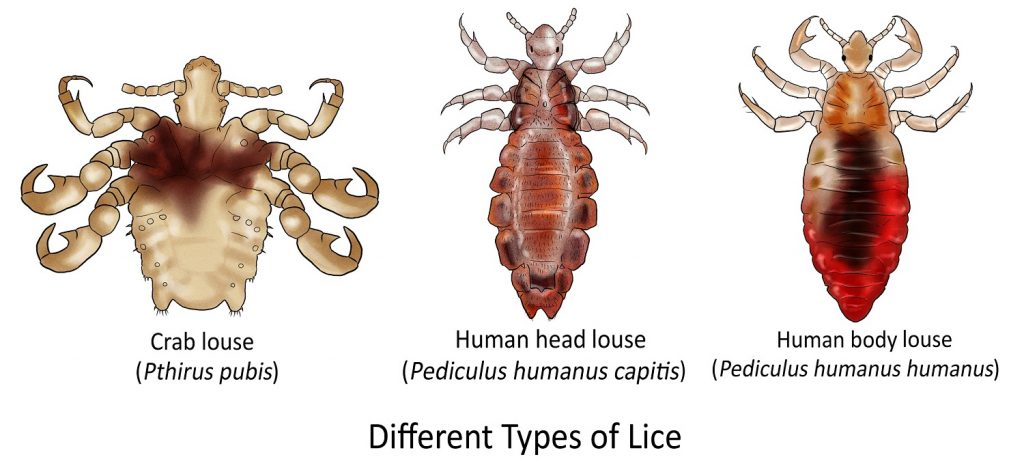
There are 5,000 species of lice worldwide, 465 in Australia.
Despite being repulsive to many, lice display impressive adaptation and specialization for their parasitic behaviours. They rely entirely on their host’s survival, and if the host dies, they move to the outer parts of fur or feathers, facing death unless another suitable host is nearby.
Appearance
Adults are typically diminutive, having flattened bodies and short antennae. Compound eyes are reduced or absent. The cuticle is often resilient yet elastic, adorned with rows of bristles. Legs are short, ending in a single or paired claws, and cerci are not present.
There are four types of lice:
- Anoplura – these are lice that have piercing-sucking mouthparts that are found on mammals, including humans.
- Amblycera – These are lice that have chewing mouthparts and feed on the hair or feathers of mammals and birds.
- Ischnocera – These are lice that have chewing mouthparts and feed on the skin of their hosts, which are birds.
- Rhynchopthirina (formerly Mallophaga) – these are lice that have piercing-sucking mouthparts that are found on elephants and warthogs.
Biology and Behaviour
Lice depend entirely on a live host, often favouring specific body parts (e.g. head lice can only be found in human hair). Reproduction is mostly sexual (some species are asexual), with females attaching eggs to the host’s fur, hair, or feathers. Chewing l ice feed on fragments, while those with piercing mouthparts are bloodsuckers.
Pest Status
Lice are common pests for humans and livestock. They can lead to debilitation and transmit diseases. Medical and veterinary professionals handle issues related to louse infestations, and outbreaks of diseases like typhus are linked to lice and poor hygiene.