Dragonflies and damselfies
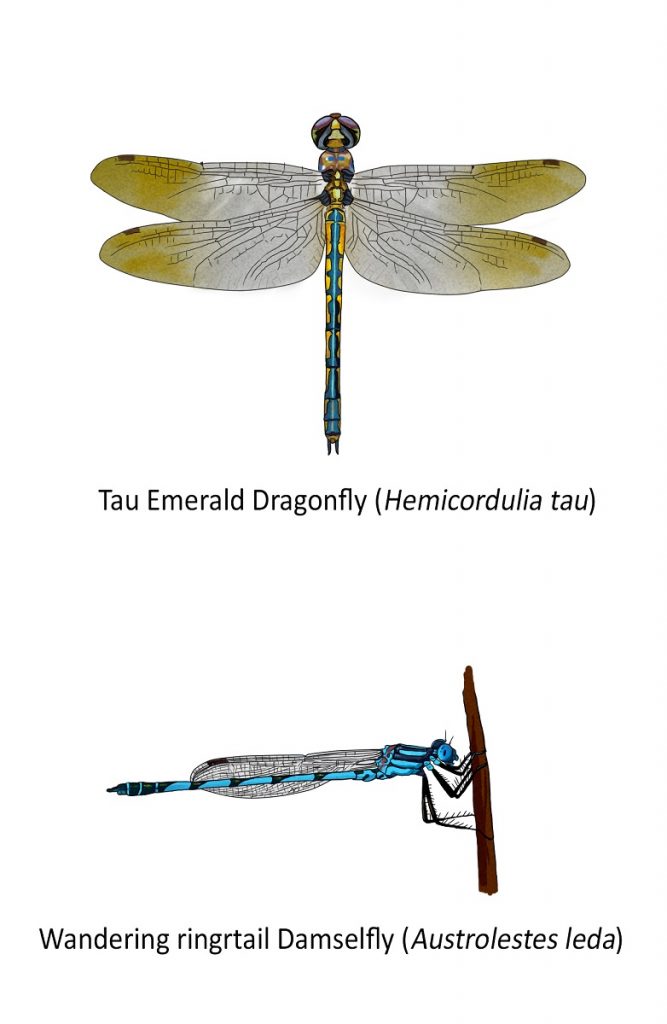
There are approximately 5000 species of Odonata in the world, 325 of which are found in Australia.
The adults of this primitive order are excellent fliers, having remarkable speed and maneurability in flight. They are often seen flying near streams and ponds where they catch their pray, and lay eggs.
The immature of Odonates are called naiads because they are aquatic hemimetabolous insects. The naiads look very different from the adults; they are shorter and stouter than adults and have relatively smaller eyes and longer antennae. They have chewing mouthparts with a modified lower lip that can be projected forward to catch prey like mosquito larvae, tadpoles or fish fry underwater and bring it towards the chewing jaws.
Biology and Behaviour
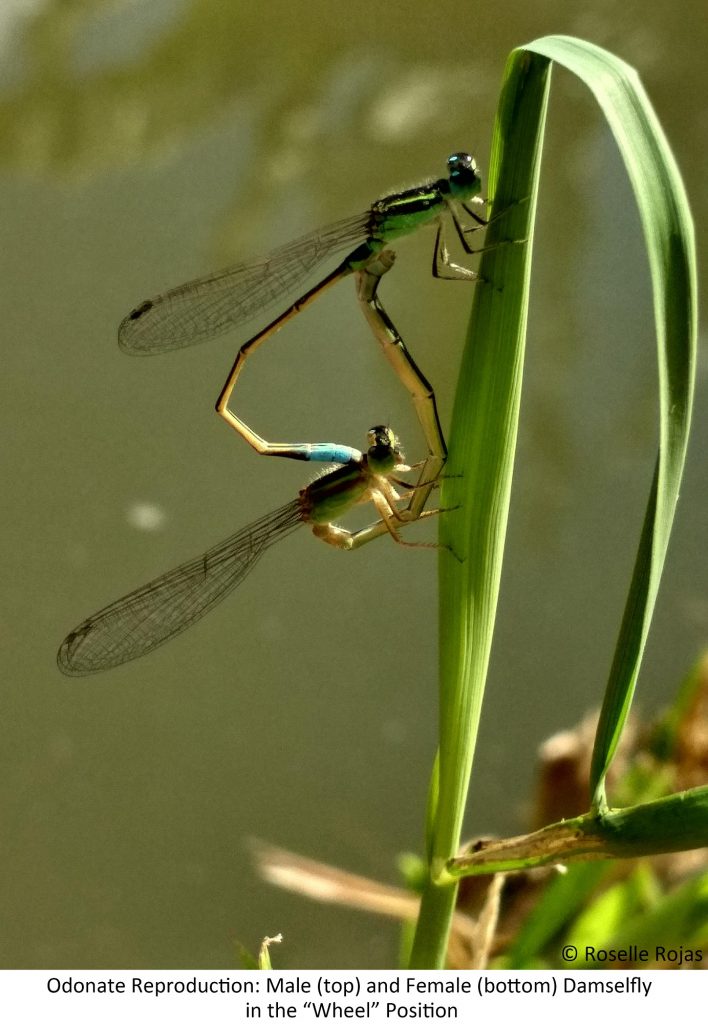
The adults are active during the day and can be seen mostly during spring and summer in temperate regions. They catch on the wings, flying insects such as mosquitoes, flies, and beetles. Dragonflies and damselfies reproduce sexually in an rather odd way. The male uses the claspers at the end of his abdomen to grasp the top of the female’s head or prothorax, forming a tandem. After forming a tandem and the sperm is ready, the female responds with bending up her abdomen to the genitalia of the male and form a heart-shaped position, known as a ‘wheel position’ to receive the sperm. This may occur during flight or at rest. The eggs are inserted into aquatic plants or dispersed on the water. The naiad undergoes a number of moults during development, and after it’s last instar, it crawls away from the water and undergoes a final moult. It unfolds its new wings and flies off as an adult.
Pest Status
Dragonflies and damselflies are not pests. They do not attack or bite. They are beneficial insects as they are predators of mosquitoes and other insect pests.