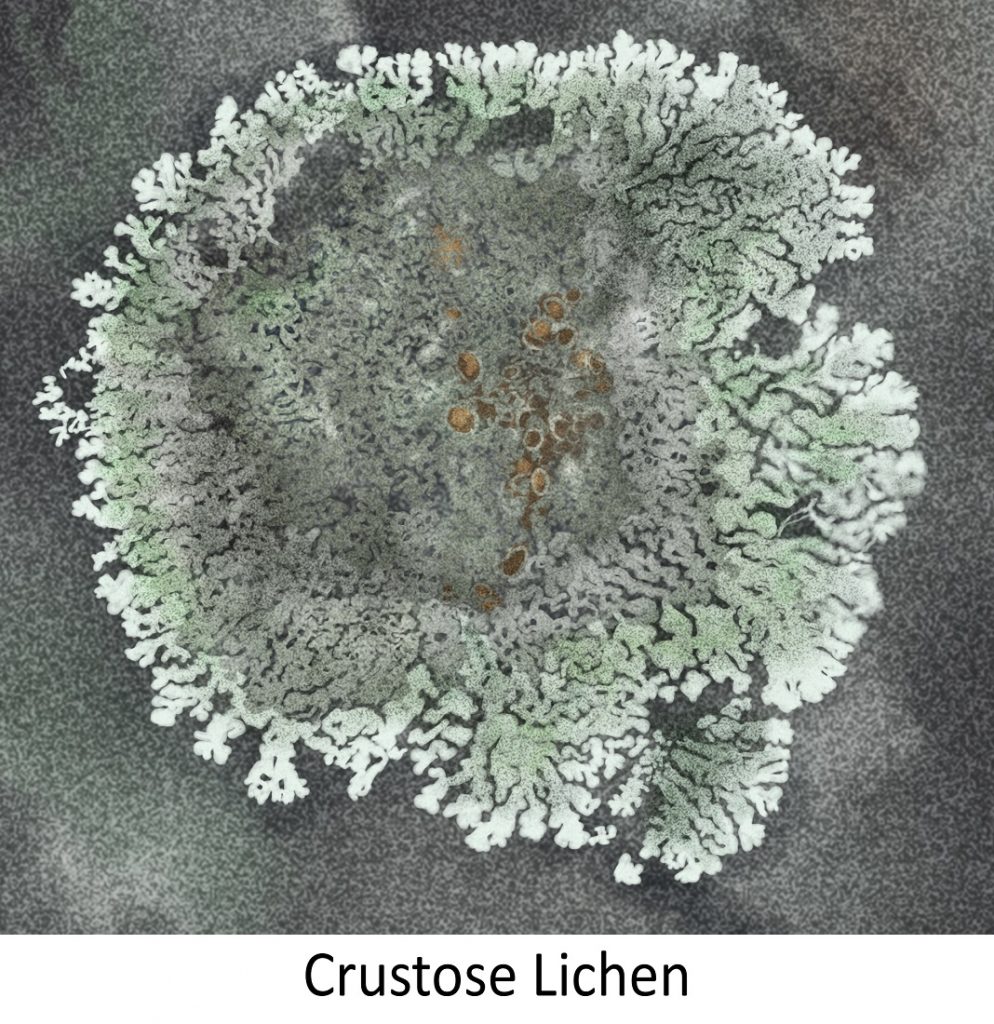
A lichen is a symbiotic relationship between two organisms, in most cases, an Ascomycete fungus and a unicellular green alga. The fungus and algae are highly dependent on one another; if either of them is killed, the other dies too. Lichens thrive in tropical and temperate regions near the east coast of north Queensland and Tasmania. There are more than 3,200 species of lichens in Australia.
Lichens appear as a flat crust on a surface about 25–50 mm in diameter, often on the surface of roofing tiles, tree bark, boulders, and soil. They mostly grow on the absorbent sections of roof tiles that have imperfectly glazed. They act as sponges, keeping the roof damn and causing more growth which can speed up normal wear and tear.
There are several techniques and combinations of techniques that can be used to treat lichens. Copper sulphate kills algae, and fungicide kills the fungi. The lichen growth flakes off some months after treatment is done. There are commercial techniques for removing lichens from roof tiles and certain types of walls.