Trogoderma granarium
Distribution
The khapra beetle is not endemic to Australia. Its native range includes India, with subsequent spread to regions of Africa, the Middle East, and parts of Europe and Asia. Australia has successfully prevented its establishment through rigorous biosecurity measures, despite occasional interceptions at ports of entry.
Pest Type
Primary pest
Morphology
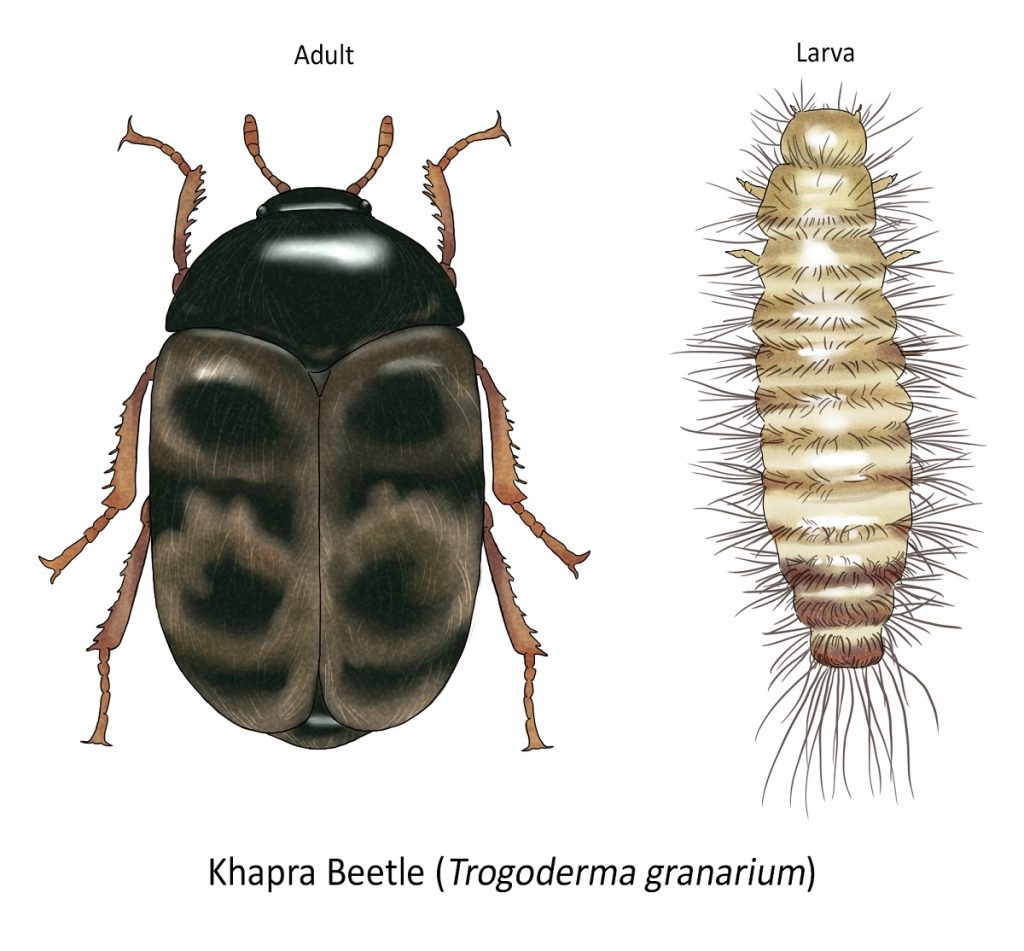
Adults are 2-3 mm in length, exhibiting a reddish-brown to dark brown colouration with a hirsute appearance. The larvae, which pose the greatest threat, are yellowish-brown and covered in setae, with a characteristic posterior tuft of hairs.
Life Cycle
This species has a complete life cycle, comprising egg, larval, pupal, and adult stages. The average life cycle duration of the khapra beetle typically ranges from 30 to 45 days under optimal conditions.
Commodities Attacked
This pest demonstrates a broad host range, infesting various stored products including cereals (wheat, barley, oats, rice), as well as dried foodstuffs such as nuts, seeds, spices, and dehydrated meat and fish products.
Economic Importance
T. granarium is recognised globally as one of the most destructive pests of stored grain products. Its potential establishment in Australia poses a significant threat to the nation’s grain industry and agricultural exports. Conservative estimates suggest that an incursion could result in economic losses amounting to hundreds of millions of dollars. The pest’s ability to rapidly infest stored products, coupled with its resilience and difficulty of eradication, underscores its status as a high-priority quarantine pest.
In response to this threat, Australia maintains stringent quarantine protocols and ongoing surveillance programs to prevent the introduction and establishment of T. granarium within its borders. These measures are critical for safeguarding the agricultural sector.