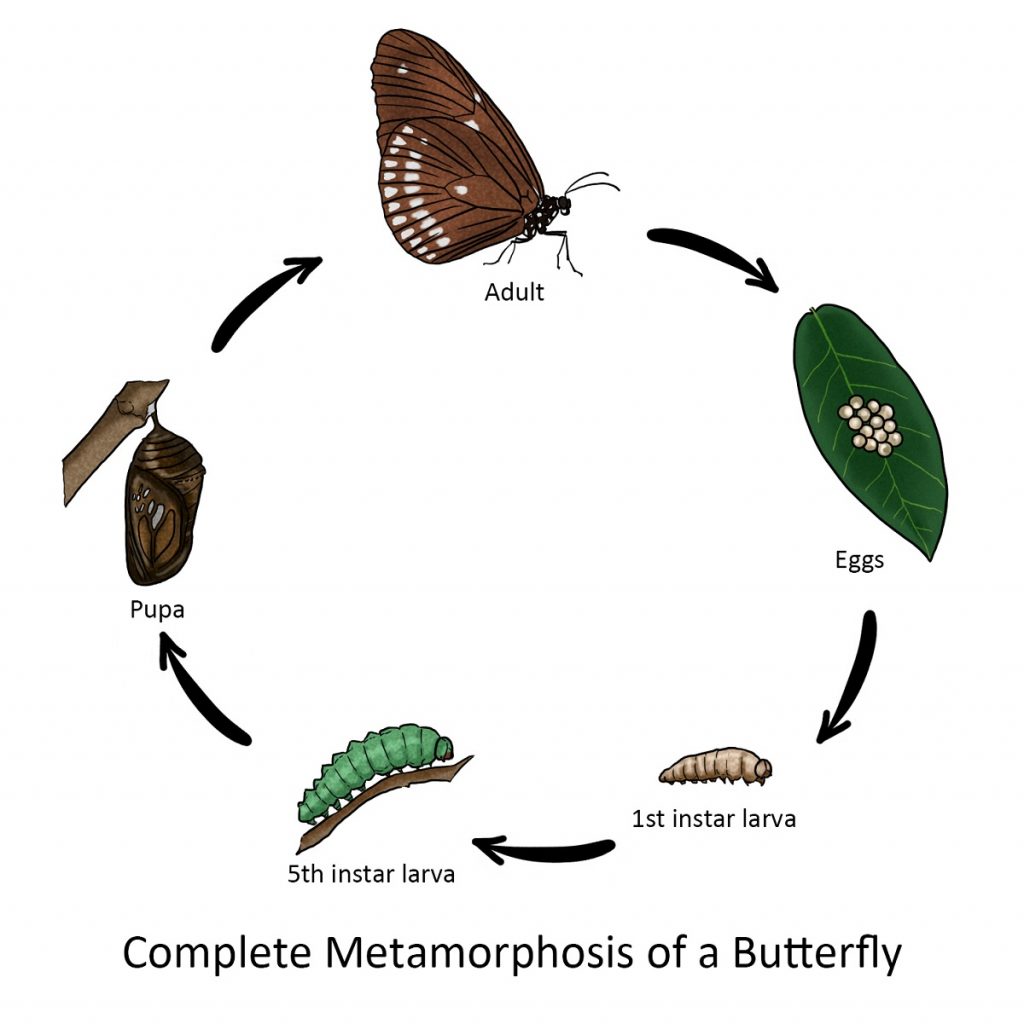
The life cycle of most insects comprises two stages:
- Immaturity or juvenile stage – The insect undergoes a developmental stage characterized by multiple moulting processes, with the duration ranging from a few days to weeks or even years, depending on species and environmental conditions.
- Maturity or adult stage – This process occasionally includes moulting but is primarily focused on locating a mate, reproducing, and dispersing. The timeframe for these activities can vary from days to years, depending on the specific species and prevailing environmental conditions.
Ecdysis, the process of moulting, is an essential stage in the development of insects during their immature phase because they undergo rapid growth. The insects must periodically split and moult due to the limited expansion capability of the rigid cuticle. The frequency of moulting varies among species and environmental conditions. For instance, maggots of houseflies undergo three moults but their cuticle is soft and flexible. Most insects mould 5-6 times, while others moult more.
Types of Insect Metamorphosis
Metamorphosis is a biological process involving a change in the physical form and structure of an organism during its development. There are three types of metamorphosis:
Primitive or ametabolous metamorphosis
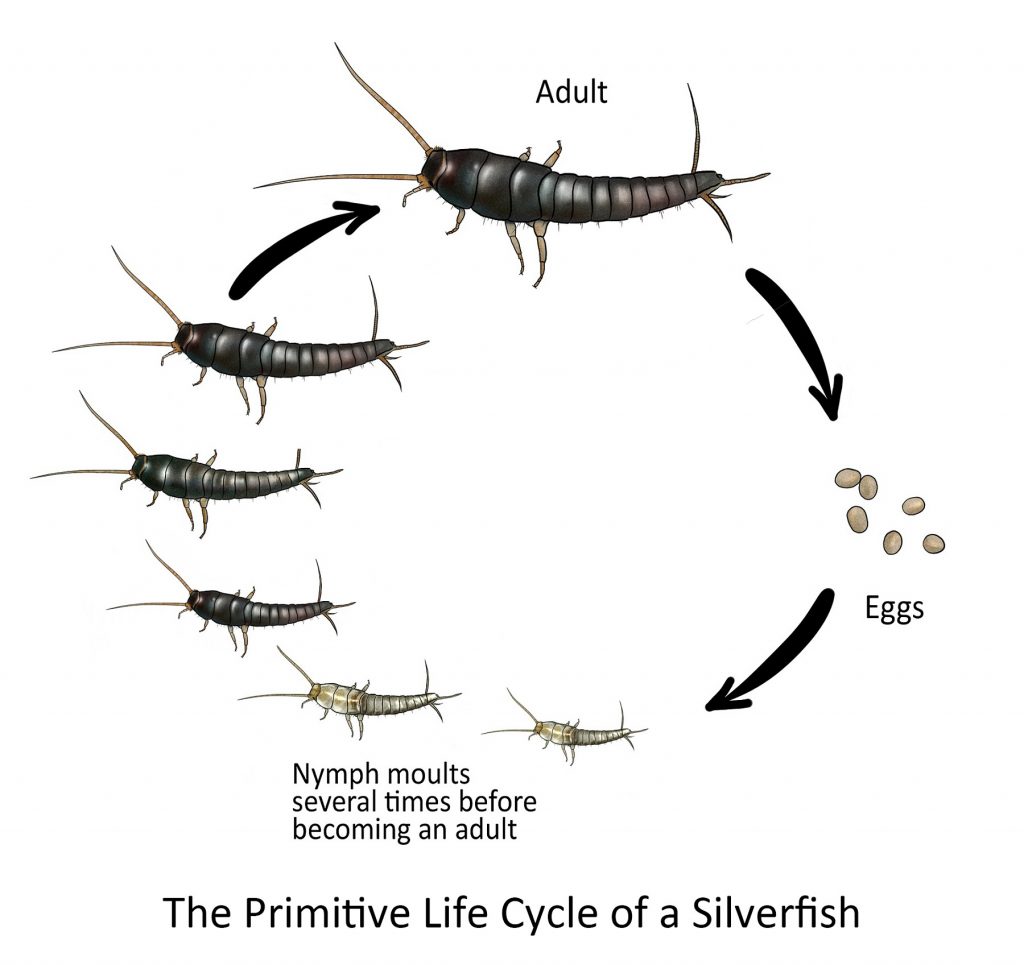
The most primitive insects such as silverfish and bristletails (or firebrats) undergo little to no metamorphosis over the course of their entire life. This type of metamorphosis is referred to as “ametabolous”, Greek for “having no metamorphosis. Upon hatching from the egg, immature ametabolous insects look like a tiny version of their adult equivalent. Unlike other insects, once silverfish reach adulthood they continue to moult. There is no fixed number of instars for the adult silverfish, but studies showed that it is between 25 to 66 times in a lifespan.
This type of metamorphosis can be summarized as: egg → immature adult (moults several times) → adult (may continue moulting)
Incomplete or hemimetabolous metamorphosis
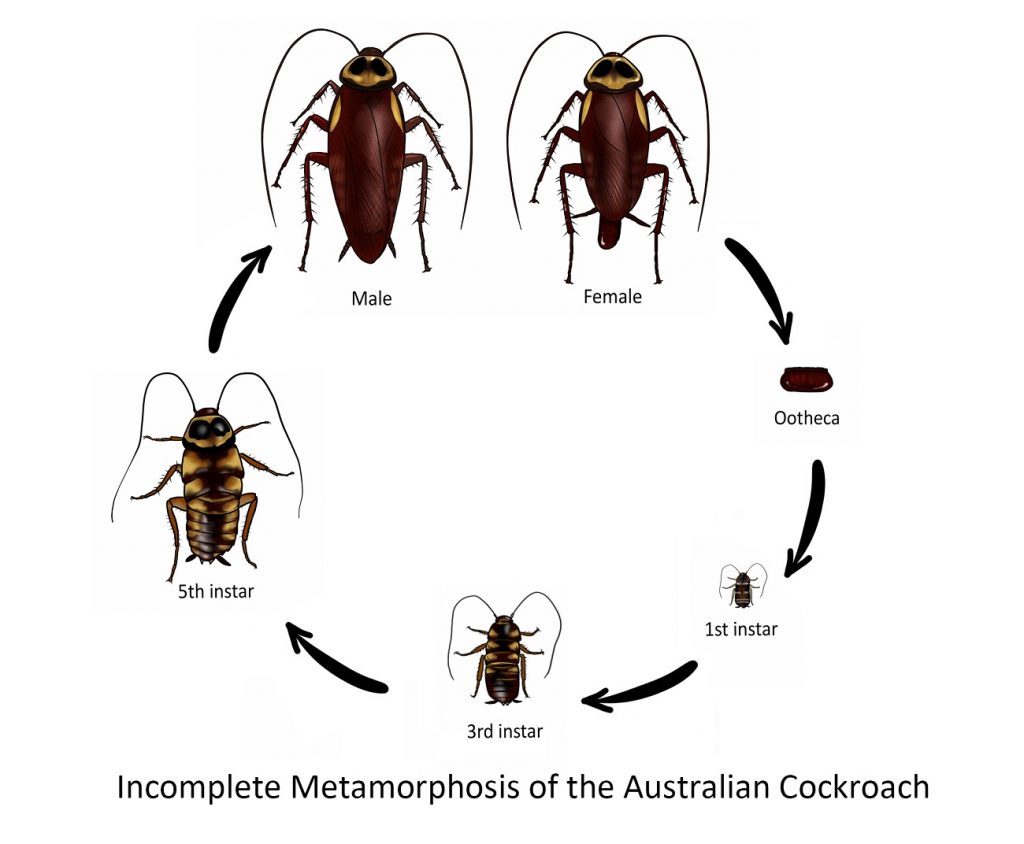
Insects that undergo this type of metamorphosis include: cockroaches, bedbugs, termites, lice, and many more. The main difference between this and an ametabolous metamorphosis is that the eggs develop into nymphs and then adults. The insects that undergo this gradual development also experience more noticeable changes as they grow, but the nymphs essentially retain the same basic structure and they look like their adult counterparts. Changes in development may involve the development of wings, reproductive organs, and colour differences and markings. This type of metamorphosis can be summarized as: egg → nymphs (undergoes moults) → adul.
Insect Orders that undergo an incomplete metamorphosis include:
Order Phasmatodea – stick and leaf insects
Order Plecoptera – stoneflies
Order Psocoptera – booklice and barklice
Order Phthiraptera- lice
Order Hemiptera – true bugs (aphids, scale insects, cicadas, whiteflies leaf hoppers)
Order Odonata – dragonflies and damselflies
Order Ephemeroptera – mayflies
Order Blattodea – Cockroaches and termites (Infraorder Isoptera)
Order Mantodea – praying mantids
Order Dermptera – earwings
Order Orthoptera -grasshoppers, locusts, and crickets
Complete or holometabolous metamorphosis
Holometabolous insects include: flies, beetles, fleas, lepidopterans, and hymenopterans. Insects that undergo this type of metamorphosis exhibit the specialisation of life stages most clearly. Once the egg is hatched, the immature form emerges, which in this case is called a larva and it bears no resemblance to its adult form. The larva is the ‘eating stage’ in this development; it eats and eats to store up reserves of protein. When the larva is fully fed, it will usually withdraws from its food source and transforms into a pupa somewhere drier. Larva usually pupate in hidden, protected areas as this is the most vulnerable stage in development. During the pupal stage is when drastic changes occur; cells reorganise, certain cells carried during the larval state are activated for the first time, and a “new” live organism is formed.
Once the pupal stage is over, the adult emerges with an entirely different appearance and structure from the larval stage and usually their main purpose is to mate and reproduce. Its diet and habitat are usually entirely different from its larval form, depending on the insect. This type of metamorphosis can be summarized as: egg → larva (moults several times) → pupa (usually stationary) → adult.
Insect Orders that undergo a complete metamorphosis include:
Order Diptera – flies
Order Neuroptera – lacewings
Order Siphonaptera – fleas
Order Lepidoptera – moths and butterflies
Order Hymenoptera – ants, bees, wasps