Ants, bees, and wasps
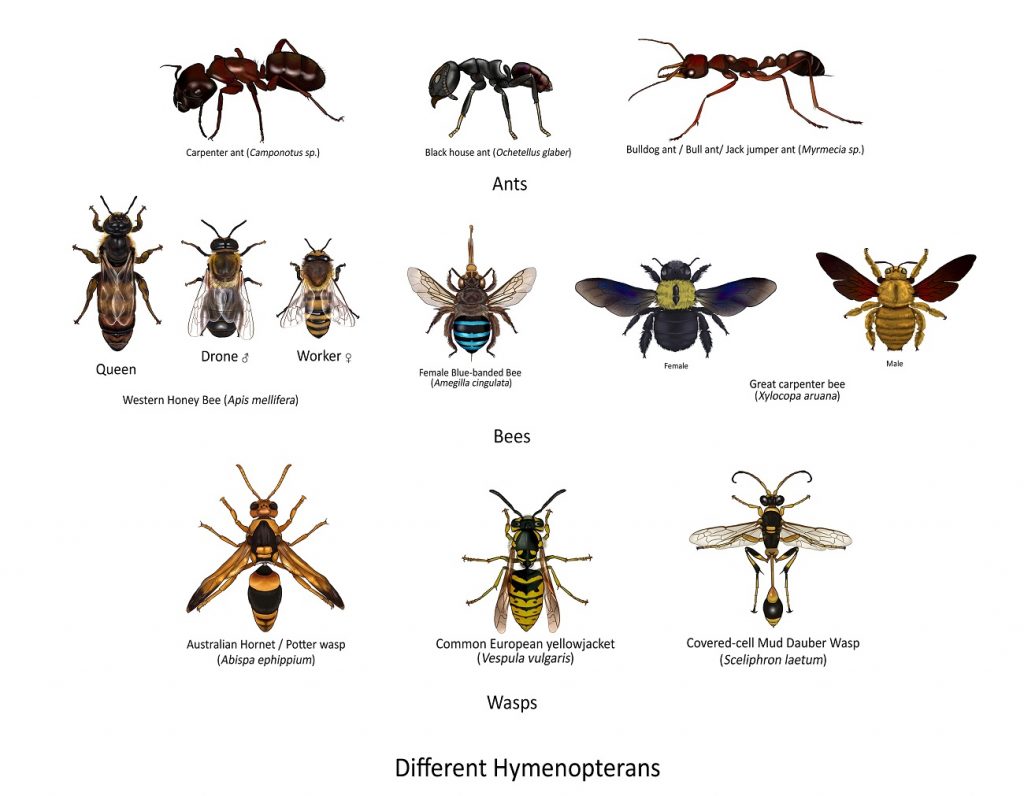
This is a large group of insects with over 150,000 living species worldwide, 14,800 of which are present in Australia.
The valuable contributions of parasitic and predatory wasps, along with bees and other insects in controlling plant pests and facilitating pollination are often underestimated.
Appearance
Adults vary in size and form, with wings that may be membranous, reduced, or absent. Mouthparts are mandibulate, modified for lapping or sucking in some, like bees. The cuticle is often highly sclerotized, and they have large compound eyes, three ocelli, and variable antennae. Females may have an ovipositor for sawing, piercing, or stinging. Larvae exhibit diverse forms, some resembling caterpillars, others more grub-like, with variable legs or none. They all share distinctive chewing mouthparts and a unique capsule.
Biology and Behaviour
The group displays diverse habits, ranging from solitary to social insects like bees, which form intricate societies with distinct castes and communication. Adult hymenopterans often feed on nectar or pollen, while larvae have varied diets, including foliage, wood, internal or external parasitism, or prey. Reproduction can be sexual or through parthenogenesis. Parasitic species lay eggs on or in a host with a venomous sting, while foliage eaters deposit eggs on or in the host plant. In social insects, workers tend to eggs, larvae, and pupae, with larvae undergoing multiple moults before pupation.
Pest Status
While some sawflies, wood wasps, mud daubers, masonry bees, wasps, and ants can be pests in various ways, the majority of this insect group is beneficial.