Furniture Beetle
Scientific name: Anobium punctatum
This species is originally from Europe but now is widespread throughout the world. It probably made its way to Australia during early settlements in New South Wales. It attacks woodwork and furniture in houses, buildings, and warehouses, but causes more damage to various species of structural pine timber that have been in service for 20 years. It also attacks exotic wood such as English oak and spotted gum.
Morphology
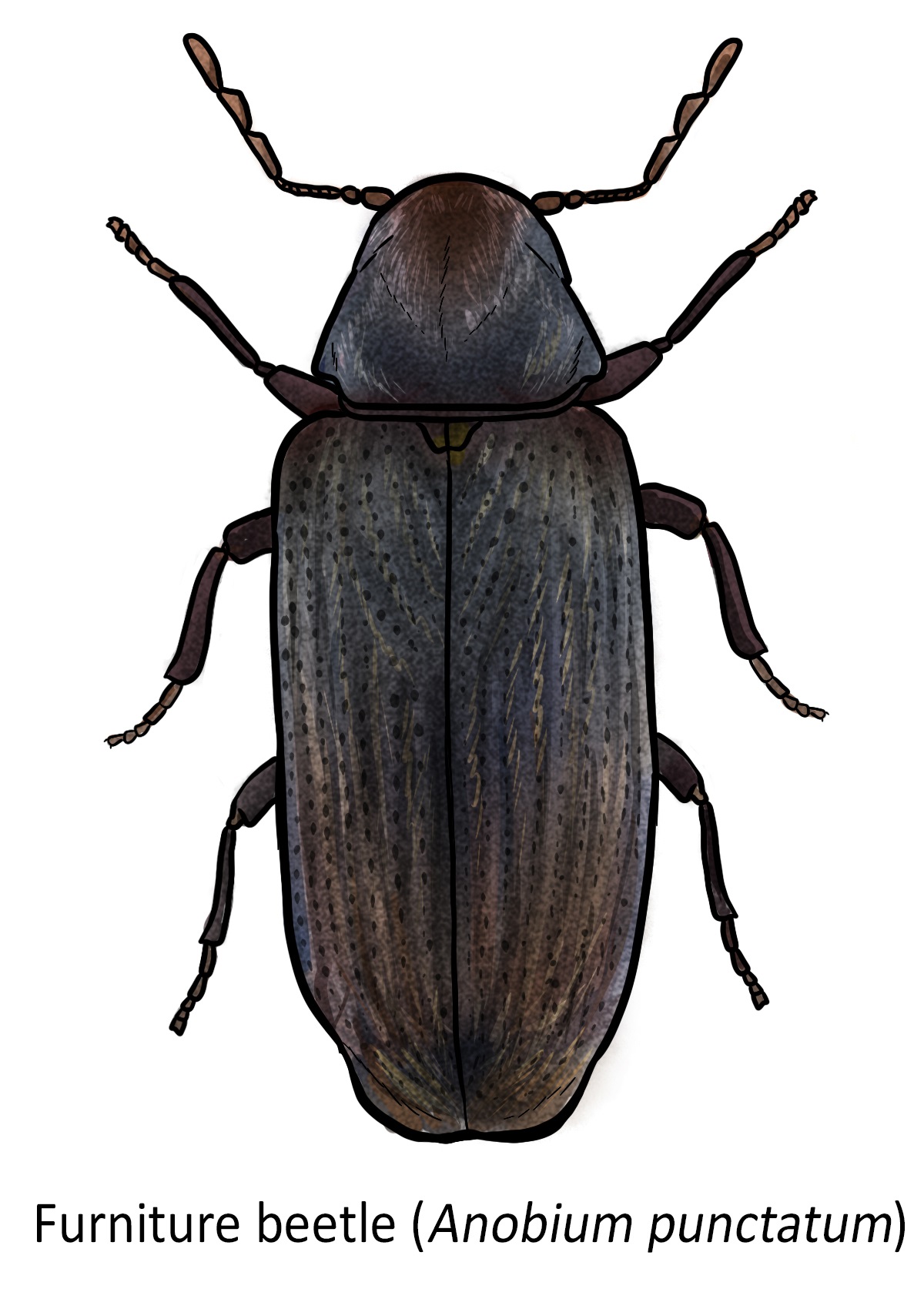
The adults are 2.5–5.0 mm long and are dull reddish to dark brown in colour. Their heads are hidden beneath their pronotum when viewed from above. They have elbowed antennae with three flattened segments at the end that are shorter than their legs.
Biology and Behaviour
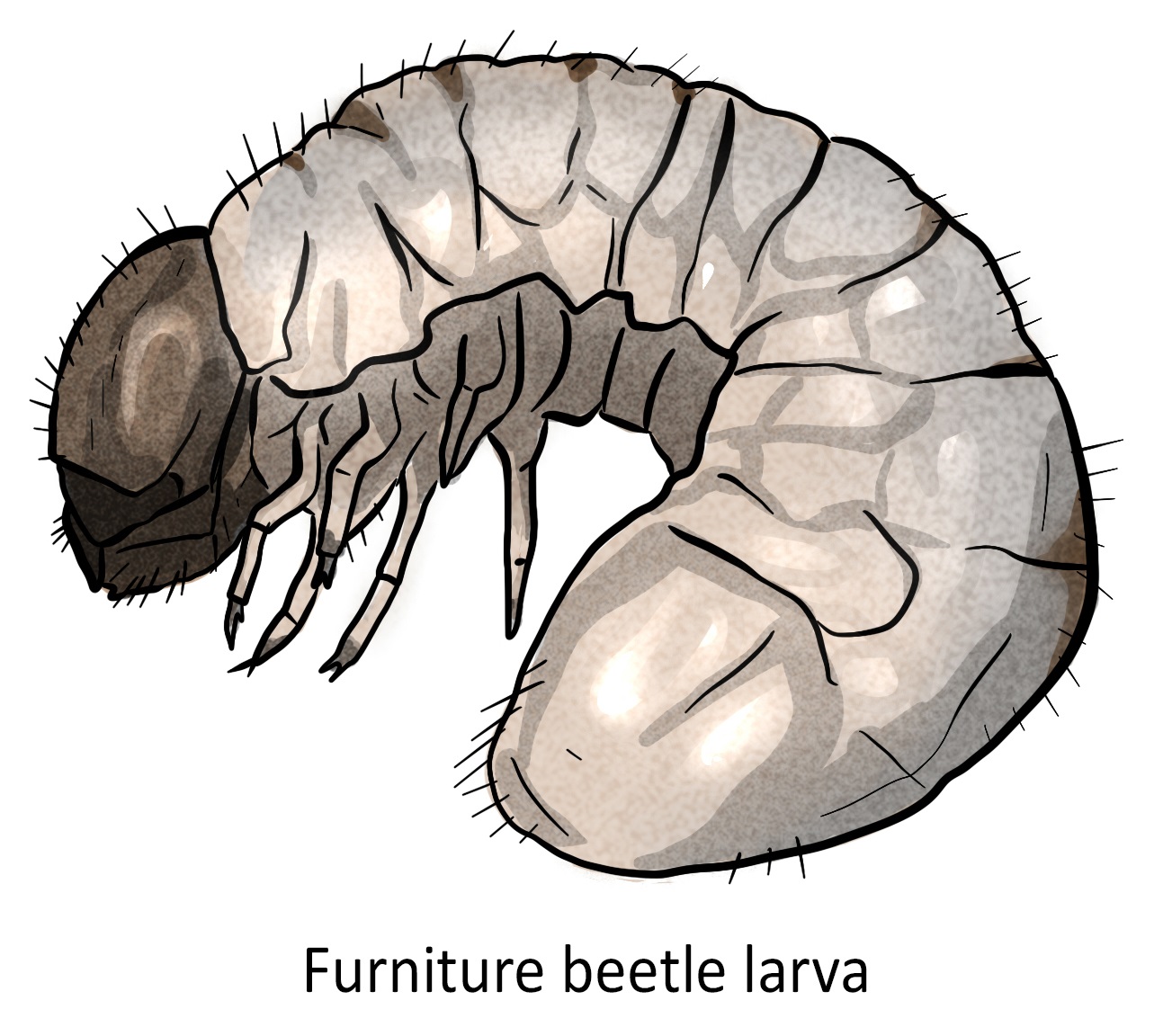
Females lay about 50–100 eggs in cracks, crevices, and chaffed areas in timber. The eggs hatch after a few weeks into larvae measuring about 1 mm. They are long, C-shaped and cream to white in colour. Larval development takes about 3–5 years depending on environmental factors like the type of wood, temperature, and humidity. During this time span, they bore semi-randomly through timber, eating its starchy parts until they are ready to pupate. They pupate near the wood surface and emerge as adults after 6–8 weeks through round exit holes that are 1.5–2.0 mm in diameter.
Treatment
Furniture beetle attacks often go unnoticed until a piece of furniture breaks. Pretreating the timber before use is the best control measure for furniture beetles. Spray application of Permethrin-based treatment can be used on surfaces. This treatment only penetrates 0.5–1.0 mm but will kill beetles as soon as they emerge and have contact with the treated surface.
Leave a Reply