Flies
Many insects are called “flies”, but the true flies belong to the insect order Diptera — ‘di’ meaning two and ‘ptera’ meaning wings. Members of this insect order only have two wings, unlike most insects that have four. Their hindwings evolved into a pair of small club-shaped organs called ‘halteres’ that function for balance and oscillate during flight — they enable dipterans to perform advanced air movements. Houseflies, blowflies, mosquitoes, midges, gnats, fruit flies, phorid flies, and drain flies are all dipterans.
Flies exploit a variety of food sources and breeding sites like fruits, vegetables, organic matter, soil, sand, water, and human food. They also spread diseases because of their feeding and breeding habits, which is why they are considered pests. However, some flies are considered beneficial as they are pollinators, and parasites of other arthropods; some flies can even be useful in forensic entomology.
There are 150,000 species of flies around the world, and Australia has approximately 7786,
Life Cycle and Behaviour
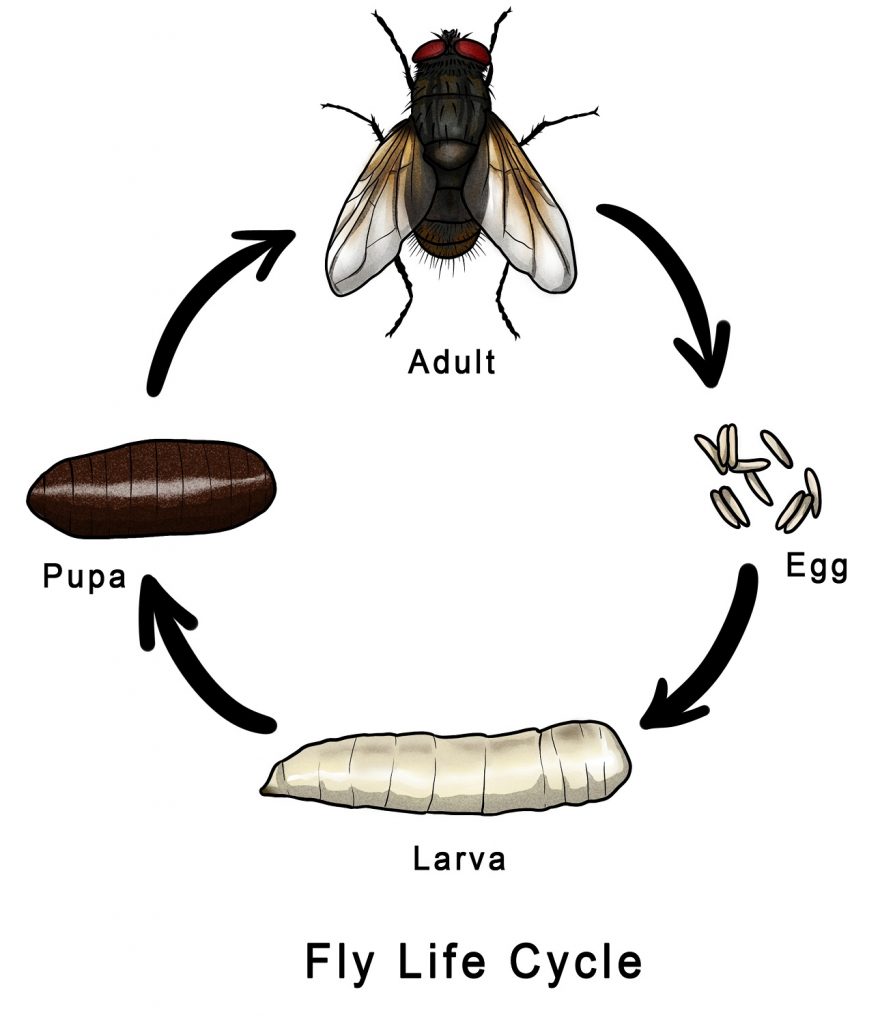
Flies undergo a complete life cycle with four stages: egg, larva, pupa, and adult. The female lays eggs somewhere with an abundant food supply and has no involvement in the care for her offspring. The number of eggs the female lays depends on the species but it can range from several to hundreds. They lay eggs in clumps or singly, in or near water, or attached to other things. After a few days, the eggs hatch into larvae which look like tiny worms that are cream in colour. They undergo several moults or instars prior to pupation. The larval stage takes up to two weeks to several months. The pupal stage of dipterans varies in shape and size.
Since the larval stage of flies is very different from the adult stage, they inhabit different environments. For example, the larva of mosquitoes, also called wrigglers, can be found in stagnant water and eat microorganisms and algae bound in water, while the adults can be found in most places since they can fly and they feed on nectar and fruit juices.
The population of flies and mosquitoes is heavily dependent on temperature, humidity, and favourable breeding sites. Flies disperse no more than 50 metres away from the breeding site, but for large breeding sites such as garbage bumps, flies can disperse several kilometres. Wind can aid in the dispersal of bush flies; adults can travel hundreds of kilometres away from the breeding site.
In urban areas where there are plenty of breeding sites that favour flies, the population can become huge and continue to grow. Depending on the species concerned, this can be problematic for humans.
Flies as Pests
The main reason why flies are pests may be because of their annoying flying habits. In Australia, at certain times of the year, bush flies become a nuisance outdoors and house flies annoy people indoors. Additionally, flies are considered a threat to public health because of the diseases they spread like Salmonella, food poisoning, typhoid fever, dysentery, cholera, hepatitis, tuberculosis, parasitic worms, and more.
Some fly species like midges and mosquitoes pierce the skin of humans and animals to suck blood. When they pierce the skin with their mouthparts, they lacerate the skin and then inject saliva with anticoagulants. This feeding behaviour not only causes itchiness and irritation but can also distribute diseases like malaria and dengue fever.
Important Fly Pests
House Fly
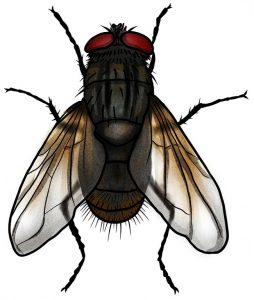
Bush Fly
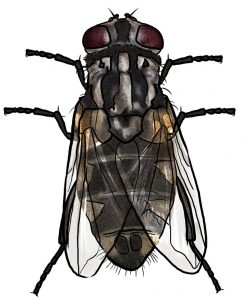
Lesser House Fly
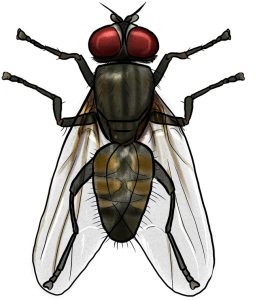
Stable Fly
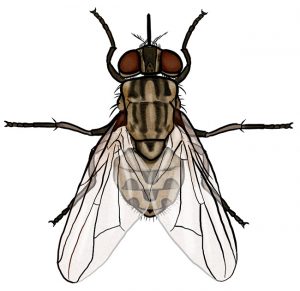
Hairy Maggot Blow fly
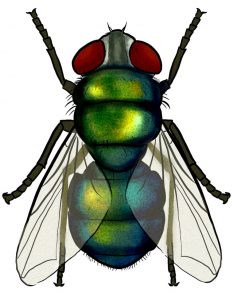
Flesh flies
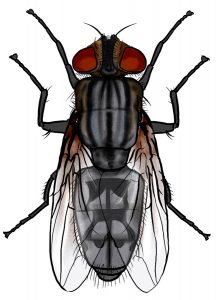
Cheese skipper
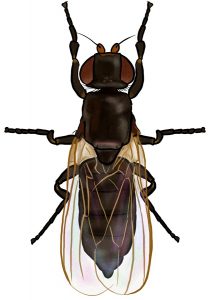
Vinegar Fly
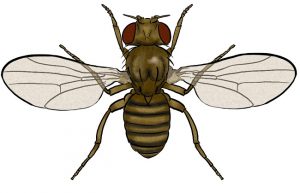
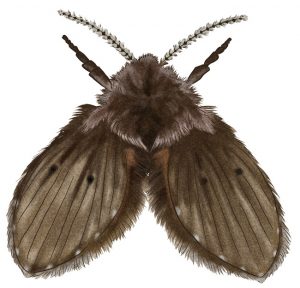
Drain Fly
Biting midges
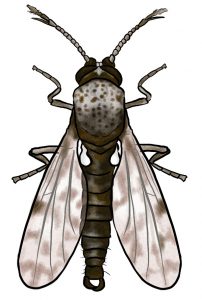
Image Gallery