Family Kalotermitidae
This family has both drywood and dampwood species. The soldiers have 4 tarsal segments, and 2 segmented cerci. They do not have a fontanelle (opening of the frontal gland that looks like a hole on their “forehead” used to squirt a white sticky substance as a defense mechanism). They have pronotums that are as wide as their heads.
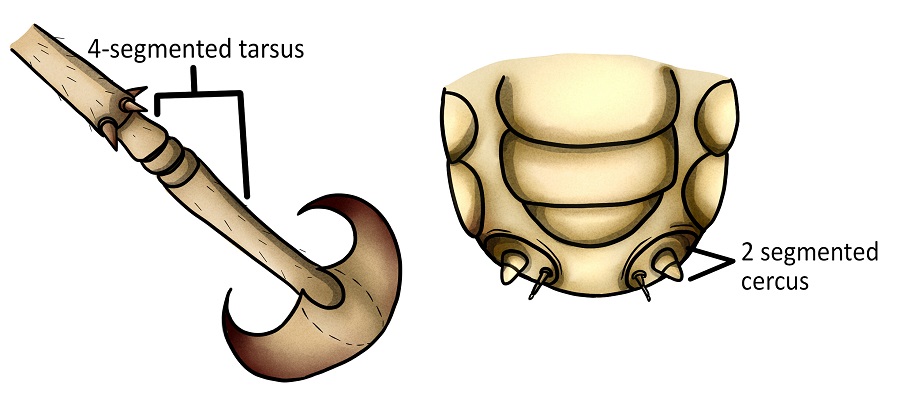
Genus: Cryptotermes
This genus is comprised of drywood termites.
Identification
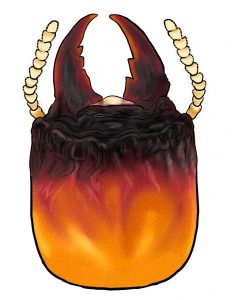
Soldiers measure about 2.5–8.5 mm in length depending on the species. They are characterized by their dark, wrinkled, phragmotic or “plug-shaped” heads which they use to block the openings of the galleries to prevent predators and/or invaders from entry. Identification of some species often requires a termite specialist, sometimes requiring the alates as well as soldier specimens.
Presence of piles of termite frass or dry fecal pellets near timber, wood products, or structures is an indication of Cryptotermes activities.
Cryptotermes Species
Cryptotermes brevis
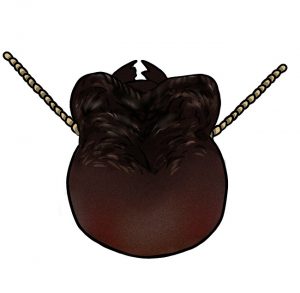
Cryptotermes primus
Distribution
There are several Cryptotermes species found in Queensland. The ones listed below have no significant economic impact.
| Species | Introduced or Native | Distribution |
| Crytotermes austrinus | Introduced | Restricted in Northern Australia, Alice Springs, Northern Territory, South Australia, Victoria, and New South Wales |
| Cryptotermes cynocephalus | Introduced | Restricted around Cairns and parts of Northern Australia |
| Cryptotermes domesticus | Introduced | Restricted around Cairns and parts of Northern Australia |
| Cyrptotermes dudleyi | Introduced | Restricted in Thursday Island |
| Cryptotermes primus | Native | Widely distributed in coastal Eastern Australia |
Habitat and Behaviour
Members of this genus do not make a single large colony. Instead, they make multiple independent colonies through their annual colonizing flights. Most species nest in dead branches, tree stumps, and poles set in the ground. Some species nest in wood found in buildings, houses, flooring, and furniture.
Cryptomermes can be categorised into two types based on their feeding habits:
- Those that feed on dead branches and wood, tree stumps, and posts in the ground. Most species found in Australia are classified in this group and don’t do any significant damage. Such species include: Crytotermes austrinus, Cryptotermes cynocephalus, Cryptotermes domesticus, and Cyrptotermes dudleyi.
- Those that nest in commercial timber, building structures, houses, and furniture. The native species Cryptotermes primus, and very destructive the West Indian drywood termite Cryptotermes brevis fall in this type. Fortunately, Cryptotermes primus is not as damaging as C. brevis and is not much of an economic problem. C. brevis is discussed in more detail below.