Cockroaches
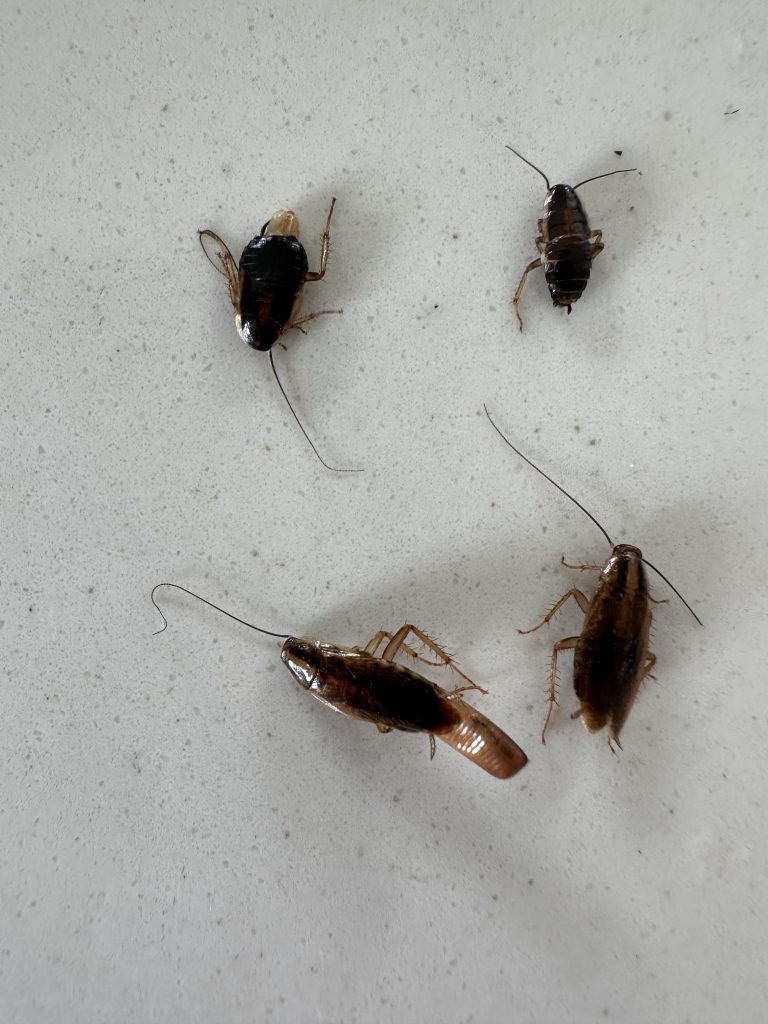
Cockroaches are insects belonging to the order Blattodea. They are an ancient group of animals whose origins date back at least 300 million years. They are nocturnal insects, meaning they shelter the day and are most active at night. They can be found living in a wide range of environments both outdoors and indoors. They seek out moist, humid, and decaying environments like rotting leaf litter, under bark, trash piles, sewer systems, and even nests of social insects. There are about 3500 species of cockroaches worldwide, but only about ten species are a nuisance to humans and are well-known as pests.
Morphology
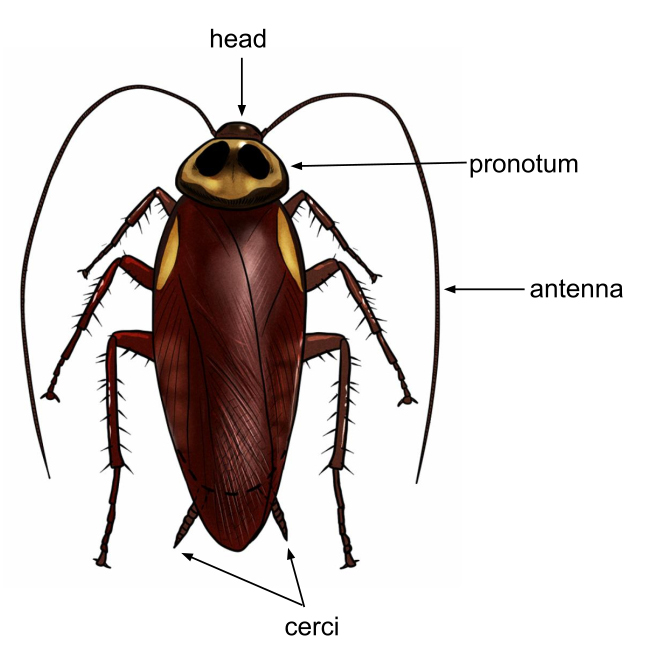
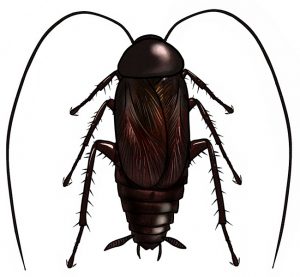
Adult cockroaches are medium to large insects that range from 7 to 50mm depending on the species. When viewed from above, they have a flattened oval-shaped body that allows them to squeeze into cracks and crevices. They have visible pronotums, which is the big shield-like structure that is often mistaken as their head. The head is located right underneath the pronotum, and is equipped with chewing-type mouthparts that allows them to feed on most types of food. Attached to their head is a pair of usually long thread-like antennae. Their legs have protective spikes that aid them in crawling and running on a variety of surfaces, and their wings can either be present, reduced, or absent. They often have prominent cerci attached to their abdomen, which are sense organs present in both male and female cockroaches.
Life Cycle
Cockroaches undergo courtship rituals before they reproduce sexually, which often involves a release in attractant pheromones. Their young often grow outside of the mother’s body, and inside a purse-shaped egg case called “ootheca”. An ootheca may contain 12-40 eggs depending on the species. Egg cases may be glued on to surfaces or dropped just prior to, or a few months before hatching. After hatching, nymphs undergo several moults until they become adults and may take 2-4 months in some smaller species, or up to a year or more in others. Adult lifespan may be a few weeks to over a year, and during this time females may lay 5-30 ootheca, depending on the species and conditions of growth.
Cockroaches as pests
Cockroaches as pests
Cockroaches species are regarded as pests by humans for the following reasons:
- they contaminate food and utensils with droppings, cast skins, egg cases, dead cockroaches and vomit marks on surfaces;
- the unpleasant odour may develop with substantial infestations;
- allergic reactions some people may have to cockroaches, and asthma to asthmatics;
- cockroach bites;
- people’s annoyance and fear of cockroaches; and
- most of all, their ability to potentially transmit pathogenic diseases.
Although cockroaches have never been irrefutably proven to have transmitted pathogenic diseases to humans, there are several factors that point to this possibility because cockroaches dwell in environments that have disease-causing organisms such as sewers, garbage bins, and other unpleasant places. And these same cockroaches may infest kitchens and food manufacturing facilities. Cockroaches are also known to carry several pathogenic bacteria on and inside their bodies. These pathogens include Salmonella, and other organisms causing gastroenteritis, dysentery, tuberculosis, hepatitis, typhoid fever, and many more. There are also organisms that naturally contaminate cockroaches such as 40 species of bacteria harmful to humans, eggs of seven species of worms parasitic to humans, a variety of viruses potentially harmful to humans, and several pathogenic protozoa.
Cockroach populations pose a great health risk to humans because of their ability to transmit human diseases. Therefore the control of cockroaches in premises is necessary.
Cockroach Pests
IMPORTANT SPECIES
German Cockroach
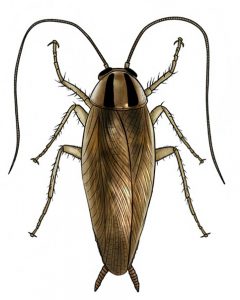
American Cockroach
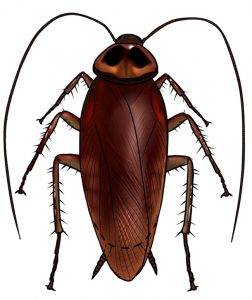
Australian Cockroach
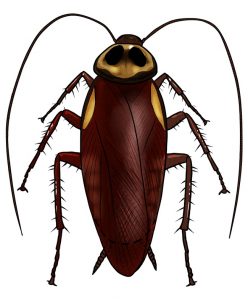
OTHER SPECIES
Smoky Brown Cockroach
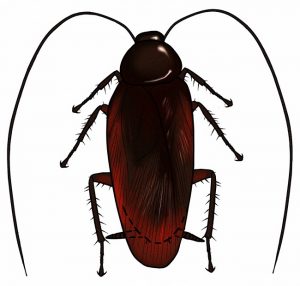
Brown-banded Cockroach
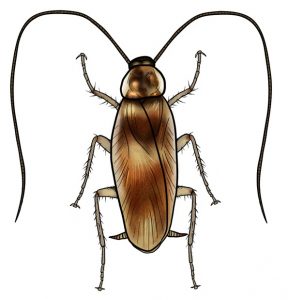
Oriental Cockroach
CONTROL AND MANAGEMENT
Inspection or Surveying
This is where the knowledge of cockroach behaviours and their biology becomes very useful. Knowing where to find cockroach hiding spots will make inspections a lot easier, and knowing how to identify the species infesting an area will help in coming up with an effective control program.
Cockroaches are nocturnal so most inspections are done at night. Most cockroaches like dark, damp, and humid areas. Kitchens and bathrooms are usually the most infested areas. Check under sinks, behind refrigerators, behind the microwave, cupboards with idle items, cabinets, and drains. Signs of cockroach activity in an area also include roach feces and egg capsules or oothecae. Cockroach feces look like small coffee grounds or black pepper. They are often found in corners of rooms and areas they frequently to go. Technicians should also be on the lookout for egg cases. The number of oothecae you see in an area gives you an idea of how bad an infestation is. This also indicates that there are enough cockroaches in the premise that they started breeding. Make sure to record all the findings for future monitoring.
Non-Chemical Control
Sanitation
Cockroaches infest buildings that have food and water sources and a favourable environment. Getting rid of cockroaches does not always have to involve the use of insecticides. Sometimes limiting the availability of their needs by having good hygiene and sanitation practices like emptying the trash daily, repairing leaking taps and pipes, and properly storing food away can reduce cockroach populations. Other sanitation practices that can help include:
- Using garbage bins with tight-fitting lids.
- Clean up piles of paper, wood, rags, boxes, and other idle items that provide hiding places and harborage.
- Check incoming furniture if they have any egg cases glued to them before bringing them inside premises.
- Seal up cracks and crevices that serve as entry points like holes on walls and floors, use door sweeps or weather stripping to fill up door gaps, use window screens to block entryway, etc.
- Vacuum cracks and crevices and places where cockroaches are most likely to take shelter.
Chemical Control
Formulating an effective treatment program will depend on the following factors:
- The species of cockroach causing the infestation
- The population size of the infestation
- Cockroach distribution throughout the building
- Schedule of building occupancy by humans
- Type of building in concern, and other factors.
Cleaning up areas prior to insecticide treatment is a must, especially in areas with poor hygiene and sanitation.
Surface spraying. Emulsifiable concentrates (EC), suspension concentrates (SC), and wettable powders (WP) are commonly used in cockroach treatments. The type of formulation to be used depends on the surface to be treated. WP and SC are usually used on porous and absorptive surfaces. Surface sprays are directly applied to cracks, crevices, and voids that have cockroach harborage, and also surfaces that cockroaches are likely to crawl onto. Surfaces that are likely to be washed should not be sprayed.
After treatment, a thin layer of residue remains on the surface of the areas treated that can last up to a few months. When a cockroach crawls on the surface, its legs and body will pick up the insecticide. The insecticide then enters the body directly, or through grooming. Upon entering, it will target the insect’s nervous system, preventing nerves from transmitting signals or impulses that eventually lead to paralysis and death.
The speed of effect of insecticides on roaches depends on how much they picked on the surface and their susceptibility to the active ingredient; sometimes it can take a few minutes or a few hours for them to die.
Space spraying. Space spraying is the dispersal of high-pressure aerosols, mist, or fog in an area to kill insects. This treatment is in the form of hundreds of millions of liquid insecticide droplets dispersed into the air over a given period of time. The droplets provide a lethal dose to target insects and kill them immediately upon contact. Space sprays are non-residual. Where there are other techniques involved in one job, this should be the last procedure. Prior to this treatment, occupants are asked to leave the premises for a period of time. Make sure to ventilate the treated area before reentering.
Dust. Dusting roof voids and wall cavities with an electrically powered dusting machine is a very effective treatment for large cockroaches. It can also be used in areas where wet sprays can be damaging like in and around appliance motors and switch boxes, and in areas where sprays are not able to reach. The dust kills upon digestion when grooming additionally dust clings to the cockroach’s body and damages its cuticle, eventually causing death.
Baits and Traps. Baiting is a good control method for indoor areas. Cockroach baits contain slow-acting insecticides with food attractants that when ingested, cause cockroaches to die. This control method also exploits the cockroaches’ cannibalistic and coprophagic (behaviour of eating feces) tendencies. When cockroaches eat dead cockroaches and cockroach feces contaminated with insecticides from gel baits, secondary or even tertiary poisoning may occur. Sometimes baiting is used on its own but is often incorporated with other cockroach control methods.
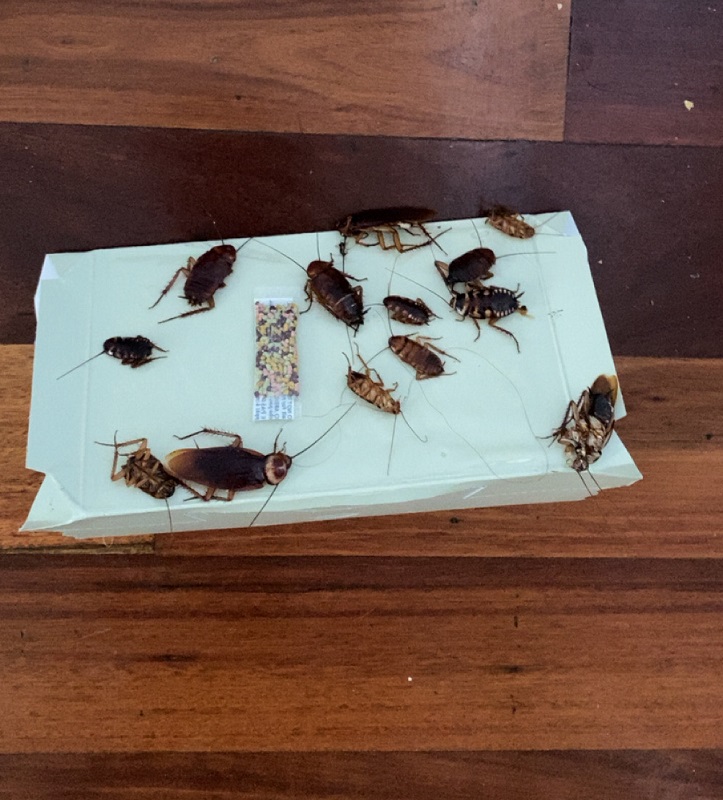
Glue board traps or sticky traps are good for monitoring but are not reliable to get rid of cockroaches, especially in high populations. Baits and traps can be safer to use in some situations and areas such as households with children and small pets, in laboratories, some food-manufacturing facilities, as long as they are placed in safe areas.
Different cockroach species require different treatment strategies. German cockroach treatments are usually more focused in kitchens or food-handling areas in buildings, and bathrooms. However, in severe cases, treatment is done throughout the whole building. Brown-banded cockroaches on the other hand, are scattered throughout the building. Furniture, cabinets, cupboards, boxes, and other hiding places should be checked. As for the larger cockroach species (American, Australian, Smokybrown, and Oriental cockroaches), roof and wall voids, drains, garbage piles, and basements should be inspected.
Image Gallery