Scientific name: Gnatocerus cornutus
Distribution
Worldwide, tolerant of temperate conditions.
Pest Type
Secondary pest, scavenger.
Identification
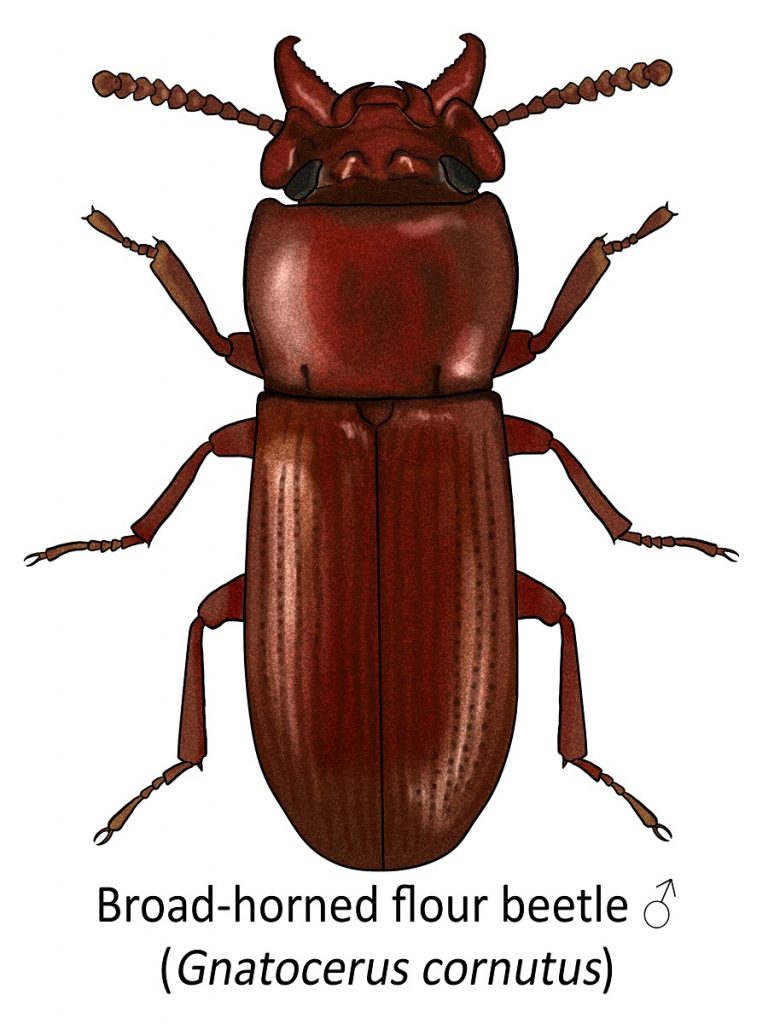
Adult: 3.0–4.0 mm, dorsoventrally flattened, parallel-sided, and reddish-brown in colour.
Male: Have enlarged mandibles that look like horns, and flange-like processes on the sides of the head.
Larvae: elateriform.
Life Cycle
At optimum conditions of 32 ℃ temperature and 90% relative humidity, the life cycle will be completed in 21 days. The eggs are glued individually to the pod or seed. Once larvae hatch, they bore into seed and complete the development inside.
Commodities attacked
Dried materials of animal and plant origin, especially cereal grains.
Economic importance
Low to medium importance; can become a long-term pest problem.