Bed Bugs
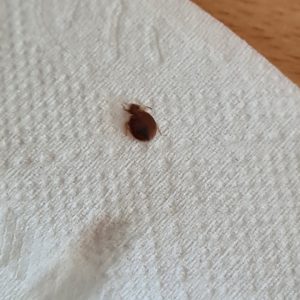
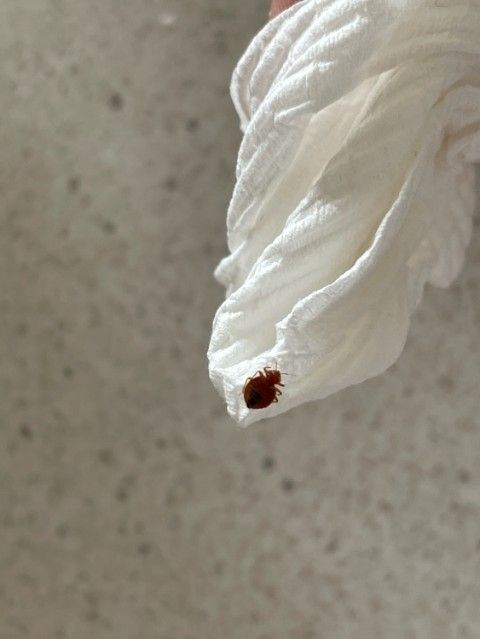
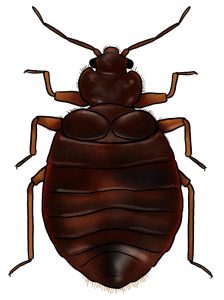
Bed bugs belong to the insect order of true bugs, Hemiptera. Hemipteras have piercing-sucking mothparts that allow them to penetrate plant tissue and extract sap for food. Majority of them are plant feeders, but a small portion are hematophagous or suck blood from animals, such as members of the family Cimicidae, which bed bugs belong in. There are two major species of bed bugs in Australia — Cimex lectularius (the common bed bug) and Cimex hemipterus (the tropical bedbug).
Life Cycle
Beg bugs are paurometabolous insects, meaning their metamorphosis is gradual and there are no sudden changes in physical appearance from nymph to adult. Adult females need a blood meal in order to lay eggs. Eggs are laid singly or in clusters of five each day. Bed bugs do not travel far from where they lay their eggs and their host, so they tend to hide in furniture and mattresses. Eggs take 6-10 days to hatch, and nymphs find their first blood meal in order to moult. Nymphs undergo 5 moulting stages, each lasting about a week or more if they cannot find a host. Adults and nymphs feed once every 3-7 days and take about 5-10 minutes to obtain a full blood meal — the reason why they tend to feed at night when the host is asleep. Adults live up to 6-12 months.
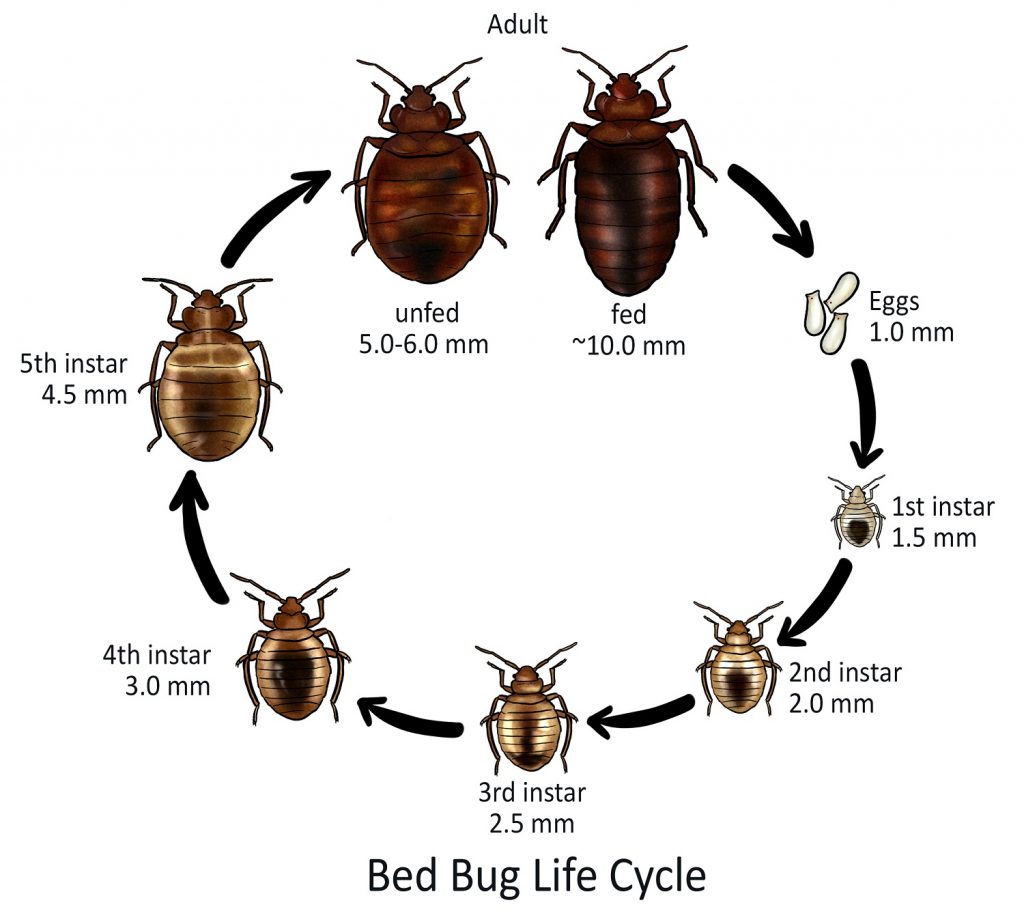
Bed Bugs Species
Common Bed Bug
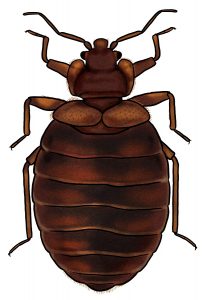
Tropical Bed Bug
Diagnostic Cofounders
If an unknown pest bites a client, it may not necessarily be from a beg bug. There are a number of arthropod pests that bite including but not limited to mites, ticks, fleas, lice, bees, wasps, ants, spiders, and some caterpillars. Environmental factors such as dust, fibres, plant hairs, and ‘cable bug’ can also cause bite-like reactions. The appearance of clinical reaction to a bed bug bite can also be delayed up to 9–14 days, which can cause confusion as to the origin of the bites.
If no bed bugs are found during an inspection, then the pest controller should consider other entomological causes. Pest controllers should not jump to conclusions or advise on possible medical conditions.
Proper identification of bed bugs in a possible infestation should be made since many people find insects that are often misidentified as cockroach nymphs.
Bed Bug Indication
Indication of a bed bug infestation includes the following:
- Presence of live bed bugs, which confirms an active infestation
- Dead bed bugs and cast skins
- Faecal spots on sheets, furniture and mattress seams. Faecal spots are digested blood that bed bugs excrete. Spottings appear in clusters of black splotches, similar to pen or marker dots.
- Presence of bed bug eggs, which are cream to white in colour and about 1 mm in size.
- Presence of a ‘silky sweet’ smell similar to that of stink bugs, usually in cases with high infestations.
Planning and Preparing for Inspection and Treatments
Pest Controller Preparation
It is important for a pest controller to explain the necessary procedures for a bed bug inspection to the client. The pest controller should provide
- Instructions that it is necessary to inspect the bedroom including cupboards and drawers
- Instructions that it is necessary to remove bed heads, dismantle some items, and lift carpets in order to find all bed bug harbourages.
- Advice to the client that follow-up inspections will be conducted after the treatment.
Pest Controller Equipment
Items that can aid in bed bug inspections are listed below:
- A powerful flashlight
- A x10 magnifying lens or hand microscope that can be used to inspect eggs and live bed bugs
- Collection bottles or vials for specimen collection. Sticky tape can also be used
- Fine-tipped forceps for picking up beg bugs
- Screwdrivers for dismantling items
- Inspection mirror
- Palstic bags of different sizes to hold infested items
- Notepad to record findings
- Digital camera or phone to take pictures of infestation sites
- Checklists for a bed bug service
Client Preparation
Pest Controllers should advise the client to not remove any items from the room prior to an inspection due to the following reasons:
- Pest Controllers need to see the true extent of the infestation,
- Bed bugs might disperse if the infestation is disturbed
- Moving items to another location can cause the infestation to spread
Bed linen, curtains, and clothes must be removed from the infested area with the instructions from the Pest Controller. It should be noted that these items are infectious and should be removed from the room and sealed in a bag labelled as infested with bed bugs. Using alginate or water-soluble bags for infested linen is recommended as they can be directly tossed into the washing machine and the bags will dissolve. If alginate bags are used, make sure to store them away from moisture as they might dissolve before washing. If alginate bags are unavailable, plastic bags should be used. Infested linen should be washed in hot water (> 55 ℃) and/or dried in a hot air clothes drier for at least 30 minutes to kill off any live bed bugs. If a linen contractor is involved, they should be informed of the situation to avoid spreading the infestation.
After heat treatment of linen and clothes, they should be returned to wardrobes but kept sealed in plastic bags until the infestation is eliminated.
Prior to treatment, the client is advised to do the following:
- Cover up or remove fish tanks from the room to be treated
- All occupants and pests should leave the room or area to be treated
- For hotel rooms, the rooms must be kept unoccupied until all traces of bed bugs are eliminated
- If possible, the Pest Controller should be provided with a floor plan of the building to track where the infestation was detected. This is a must for hotels to be aable to determine which adjacent rooms need an inspection.
- Sign and date any Bed Bug Management Plan and return a copy to the Pest Controller
Inspection Procedures
The main goal of an initial inspection is to develop the Bed Bug Management Plan and the aim of the inspection process is to find all the hiding spots of bed bugs. One of the main reasons a treatment fails to eliminate an infestation is that not all bed bug harbourages were found. Pest controllers should have great attention to detail during inspection because not only does this ensure success in treating the infestation but it is also necessary for estimating the duration of the control plan, which is a prerequisite for job costing.
Hotel Inspections
When treating hotels, the housekeeping staff should be interviewed about where guests complained of bites and where they may have seen bed bugs. The said staff should also be questioned about the laundering process and the general housekeeping process since they are thoroughly involved in the job and likely to have more information about the infestation than the management.
Residential Inspections
When treating homes, the residents should be asked which areas did they experience bites. Pest Controllers should also attempt to figure out the root of the infestation, for example, ask whether the homeowners had any visitors that stayed over. They should also be asked about the habits and movements of the residents — if they have slept in various rooms within the house or if they were away from the home. Areas where dirty clothes and used linen are kept should be looked at and occupants should be questioned about any control attempts.
Inspection Process
Minimum items should be brought inside an infested room to avoid transferring bed bugs in equipment. Equipment should never be placed on beds or other furniture next to walls. In addition, Pest Controllers should have minimal contact with beds, walls, curtains, and other infested items.
The mattress should be the first site inspected and when doing so, the Pest Controller should pay close attention to:
- The seams, bedding, under buttons, labels, corner protectors
- The base of the mattress since it is more likely to harbour the bugs than the top
- The edge of the material underneath the ensemble since it is a favourite part of the bugs
- The wooden slats of metal bedframes if present since they have many cracks that bed bug can hide in. If the wooden slats are bolted in the bed frame, they should be undone and the drilled holes should be inspected and treated.
- The hollow bed posts since bugs can hide in them. Bed bugs can also hide in coils of bed springs
Areas and items surrounding the mattress should be inspected next, which include:
- Furniture beside the mattress
- Drawers inside tables and cupboards
- Bed heads – if they are attached to the wall, they should be removed after consulting maintenance staff
- Other furniture, especially luggage racks. If they are upholstered, pay close attention to the seams and buttons, and any wooden joint.
- Appliances such as telephones and audiovisual equipment, power points, behind switch plates
- Underneath carpets and rugs, skirting boards, joints in floorboards, under floor boards, loose wallpaper, ornaments, old nail and screw holes, window casings and wall voids
- Bed bugs may be found higher on walls in picture frames, curtains and curtain rods, Venetian and vertical blinds, cracks in the ceiling, and books on a shelf.
Adjacent rooms and areas, both sides and above and below, should always be inspected.
In hotels, lounges in common rooms, housekeeping trolleys and laundry areas should also be inspected.
Bed Bug Detection Dogs
Bed bug infestations can be detected by pest detection dogs. These dogs have been trained by accredited facilities for scent detection. They have been used successfully for many years in detecting termites and bed bugs. In inspecting bed bugs, the pest detection dogs can check a room quicker than any Past Controller, making them extremely useful for small infestations that are less obvious. If a low infestation is detected early, treatment would be easier and the chance for success is higher. Although pest detection dogs are very helpful, they are not always accurate, hence Pest Controllers need to verify an infestation indicated by the dog.
In Australia, there are very few dogs trained in bed bug detection.
High Risk Factors
There are factors in a site that will make inspection challenging and might increase the failure of treatment. These risk factors should be considered in making the Bed Bug Management Plan, especially in the terms of control limitations and job costing.
These risk factors include:
Bed Design. Some bed types are more challenging to treat than others. Bed bugs get underneath and between staples of ensemble base coverings and plastic corner protectors.
Bed bugs also get into metal springs, which are difficult to treat. Aerosol and steam treatment can blow out bed bugs without killing them, so flooding the springs with insecticide or treating them with dry heat is the best option.
Room Integrity and Access. Cracks and crevices, as well as gaps around skirting boards, in the walls, and along the cornice, need to be inspected. In some cases, hollow metal skirting fascia need to be inspected, which can be very difficult.
Room Construction. The type of material an area is made out of can make inspections and treatment challenging. In exposed brick walls, bed bugs harbour in along the mortar which makes treatment time-consuming. In false walls, bed bugs often access behind the wall, and sometimes removing the false wall would be necessary.
Clutter. Clutter will make bed bug control impossible unless the clutter is removed from the room.
Bed Bug ‘Friendly’ Furnishing. Construction materials like chipboard and wicker cane are bed bug ‘friendly’ or favour harbourage which can make control more difficult if present in an infestation.
Extent of the infestation. A heavy bed bug infestation is harder to treat and control than a low infestation because a heavy infestation will require multiple insecticide treatments and frequent monitoring.
Access to adjoining properties. In multiple apartment dwellings, it is crucial to inspect all rooms adjoining the infestation. This can be difficult especially if the property is privately owned and the residents refuse access.
Residential properties. Homes tend to have more furniture and items than hotels, which makes control more difficult because there would be more items that need to be treated with insecticide.
Client cooperation. Cooperation of the client is one of the keys to successful beg bug control — without this control efforts would fail. The Pest Controller must communicate to the client of their responsibilities and how important their cooperation is to eliminate the infestation.
Previous use of household insecticides. Most household insecticides contain synthetic pyrethroids (SPs) which are ineffective and can cause an infestation to disperse. If a client has previously used such insecticides, then the population of the infestation would likely be spread throughout the property and control would be more difficult.
Bed Bug Management Plans
A Bed Bug Proactive management Plan is ideal for accommodation providers and should be created in collaboration with the hired Pest Management company. This plan should be a part of the overall bed bug management policy and procedural guide for the accommodation provider.
The Proactive Management Plan should include:
- History of past beg bug activity and treatments including the pesticides used.
- Findings from the initial inspections done by the Pest Controller, including risk factors and challenges to control.
- A review of management practices that may affect bed bug risks e.g. current housekeeping practices, documentation, training, etc.
- Floor plans, which can help track adjacent rooms that would need inspection and monitoring.
- The eradication process by the Pest Controller, including response times, treatment and insecticides used, warranties, and limitations of the treatment.
- Period of validity of the plan, which should be renewed regularly
Eradication Management Plan
A Bed Bug Eradication Plan must be provided to the client for all bed bug infestation treatments. This plan can also serve as a service contract. This plan describes the control processes by detailing the work to be done. It must be stated up front that the aim of this plan is to achieve complete elimination of the infestation.
The Bed Bug eradication Plan should include:
- Findings of the initial inspection, stating where the harbourages are, the degree of the infestation, and photos if possible.
- A review of past bed bug infestations in the building for commercial residences or managed facilities such as public housing. Such information can be obtained by talking to tenants.
- The treatment process, which includes:
- Estimated time when treatment will start
- Time frame for treatment process
- Non-chemical control to be conducted
- Insecticides to be used and their SDSs
- Where the insecticides will be applied
- Times when the client should vacate and re-enter the premise
- Client responsibilities after treatment
- Realistic expectations of the treatment
- The requirements for follow up inspections and treatment
- Limitations and restrictions, and warranties
- Period of validity
- Cost for the treatment
In the plan, it must be stated that inspection of adjoining rooms is necessary, even though it may not be possible. It should also state the clients’ and organization’s duties and include authorised signatures stating when each will carry out any recommendation made by the Pest Controller. For example, the Pest Controller should insist that housekeeping should help in the removal of carpets and other furnishings and items to protect the Pest Controller from any liability claims from damage.
Treatment Procedures
Non-Chemical Control
Non-chemical controls can reduce bed bug populations but should only be considered as a management tool because complete elimination of an infestation is more achievable with the use of insecticides.
Disposal of Infested Items. Throwing out infested furnishings and items can reduce bed bug populations. This can be recommended by the Pest Controller but it can be expensive for homeowners or hoteliers and is not always necessary. Torn mattresses can be discarded since they are difficult to treat with insecticides and steam. However, they can be covered by a mattress encasement, heat treated or fumigated. All items to be discarded must be properly sealed in plastic and labelled as infested with bed bugs. Furnishings should be treated before disposal. To ensure that no one picks up discarded infested items, furniture should be destroyed and clearly labelled that they were infested with bed bugs. Disposal of items should be coordinated with waste disposal collection.
Physical Removal. Vacuuming or using stingy tape should be used to physically remove bed bugs in mattresses if the numbers are small. Always use a vacuum with a disposable bag. A crevice nozzle can be used on carpet edges, bed frames, mattress seams, ensemble bases, furnishings, and other potential harbourages. Vacuuming prior to insecticide application will make the treatment easier, more effective, and last longer because it removes dust, debris, and removes bugs. After vacuuming, the waste should be destroyed or incinerated if possible, and if not, apply pesticide dust to the contents and seal them in a plastic bag before disposal. Never apply pesticide aerosols or sprays to an operating vacuum as this may cause a fire. The vacuum machine should have a HEPA filter to prevent the dispersal of allergens that can occur through vacuuming; this would help protect the health of the client and the Pest Manager.
The vacuum machine should only be used for pest control and should be properly disinfected immediately after every use to prevent it from being the cause of an infestation. Vacuums that have a plastic base and hose can be sterilized in hot water. When not in use, the vacuum units should be sealed in plastic.
The limitations of vacuuming should be understood by the Pest Controller. Bed bugs within cracks and crevices are hard to suction, especially the egg because they are glued on the surface when they are laid. Stiff brushes are sometimes used to remove the bed bug eggs but are not recommended since they can disperse the eggs.
Heat. Bed bugs are very sensitive to heat and are killed when exposed to temperatures higher than 45 ℃. If heat is used as a control method, the high temperature should be applied suddenly so the bed bugs would not disperse.
- Laundering. Infested linen and clothing can be washed in hot water and hot tumble dried for more than 30 minutes to kill bed bugs. A study showed that a water temperature of 60℃ will kill all life stages of bud bugs. In Australia, there are State plumbing codes for hot water at the outlet. For example, in NSW the water in personal hygiene fixtures should be no more than 43℃ in childcare centres, schools, or nursing homes, and 50℃ for other buildings. In that case, the water might not be hot enough to kill all stages of bed bugs. However, laundries and kitchens do not need to comply with any temperature regulations and will kill all life stages of the bug as long as the water temperature is 60℃.For tumble drying, it needs to be done on the hot setting for 30 minutes to dry clothes to ensure all stages are killed. If the clothes are wet, they need to be left in the drier until completely dry.
- Thermal Heating.Large electric or gas-powered heating units have become popular for bed bug control. The most efficient are ‘bubble treatments’ where infested items are treated in a small confined space. Heat treating whole rooms without having to use insecticides is rarely successful and more challenging, especially in cluttered rooms where there are a lot of harbourages that can protect the bugs. Heat-treating large rooms require great skill. Fans are required to distribute hot air evenly; multiple temperature monitoring devices are needed to record any temperature changes and ensure that the needed temperature to kill bed bugs is reached. Heating units should only be used by trained professionals, as there have been fires caused by mishandling heating units.
- Solar Heating.Some believe that bed bugs can be killed by placing infested items in black plastic bags and then placed on a hot surface directly under the sun. However scientific studies show that this method does not work and is not recommended.
Steam. A great way to exploit heat is through the use of steam. Not only does steam treatment kill all bed bug life stages but it is also non-toxic, which is why some clients preferred this treatment over chemicals, especially on mattresses and beds. However, a study has shown that steam followed by a chemical treatment provides better long-term results; treating an infestation with steam alone can be reliable.
There are a lot of steam machines but not all of them are appropriate for killing pests — the unit should be able to produce low vapour flow and high temperature. It is recommended to use commercial units that employ ‘dry steam’ which allows quicker drying time.
Adult bed bugs and eggs only need 50℃ for complete lethality within minutes. Steam forms from water at 100℃ which is already way beyond the killing point required to eliminate bed bugs immediately.
Steam flow rate must be kept to a minimum to avoid blowing bed bugs and to avoid wetting. A single jet steam nozzle can blow beg bugs away, whereas multiple steam jet heads produce a gentler flow rate. A piece of cloth can be placed on the steam head to prevent the jets from blowing the bugs away and the treated surface becomes hotter, which aids in the elimination of all the stages but will not penetrate the surface being treated as much. Nozzles with bristles or brush heads should not be used on steam machines as they might fling off bugs and eggs. The steam is applied directly to the bugs slowly for a few seconds.
To reduce the chance of blowing off bed bugs if there is no cloth over the steam nozzle, all areas to be treated with steam should be vacuumed first.
The first thing the Pest Controller should treat with steam is the mattress. Steam should be applied to the seams, under labels and handles, and both inside and out of an ensemble base. The material ensemble base needs to be removed but can be reattached after the infestation has been successfully eliminated. Chairs, cushions, and sofas should be treated next, followed by carpets. After the steam treatment, dead bed bugs should be vacuumed, which can help determine if the treatment was successful.
Like any other technology, this method has some limitations, such as:
- Steam is formed from water so electrocution may happen and power points, electrical fittings, appliances, and water-sensitive materials cannot be treated.
- Steam raises humidity which can cause mould which can be a health threat.
- It is time-consuming.
- Steam is non-residual; bugs are not killed directly because they are not exposed to any funther control unless insecticides are used.
Therefore, it is recommended to follow up any steam treatment with the appropriate residual insecticide.
Cold. Extreme cold via freezing can kill bed bugs. The advantage of this method is that heat-sensitive materials will not be damaged. This method may not be used by the Pest Controller but can be recommended to homeowners and hoteliers for small items. Items for freezing should be sealed in plastic prior to removal from the infested room. If the freezer is operating at -20℃, it would take about 2 hours to kill all bed bug stages. The average household freezer would take about 10 hours. Dense items will take several days to kill all bed bug stages; the longer the items are in the freezer the higher the chance of elimination. Around 8 hours of freezing is needed for 2.5 kg of dry-weight of laundry. Modern ‘frost-free’ type freezers go through cycles of varying temperatures so the freezing process would take more time.
Mattress Encasements. Seamless mattress covers are less susceptible to bed bug infestation. They are also easily removable for washing, making control easier and since they are white, bed bug spottings can easily be seen. In Australia, bed bug-proof mattress encasements are available.
In choosing a mattress encasement, it should have:
- Small zipper teeth to stop bed bug nymphs from passing through
- Few seams and tightly stitched joints
- Built-in bite-proof membrane
- End zipper stops that prevent beg bug escape of entry
Mattress encasements can be used in two ways — for containing the infestation or preventing the mattress and base from being infested.
In the containment mode, the infested mattress and ensemble are encased for a period of period of time and the encased bed bugs will die of starvation. An advantage of this method is there would be minimal insecticide use and there is no need to discard the infested mattress and base. Since bed bugs can live up to six months or more without food at 22℃, the encasement should be left on longer than this period or treatment would not be successful. In this case, sanitation can be improved by covering the mattress encasement with a seamless mattress cover that can regularly be removed and washed.
In the prevention mode, the encasement is used as a risk management tool to prevent any possible bed bug infestations from happening. The encasements have few seams, meaning the bugs will only have a few hiding spots on the outer surface. In event that an infestation happens, the encasement can be removed and sanitised by washing it with hot water and hot air drying for 30 minutes without affecting the protective membrane.
Remember that mattress encasements alone cannot stop bed bugs and should be used as a part of the whole bed bug management program.
Vacating a Room. Vacating a room for extended periods is not a control option since bed bugs can live for several months without food.
Bed Bug Traps/Barriers. There are devices that claim to trap or monitor bed bugs or prevent them from crawling onto beds. These types of devices will not eliminate an infestation on their own and should be used as a part of an IPM program.
Many traps are active devices that use attractants such as heat, humidity, carbon dioxide, and/or other attractants to catch live bed bugs. There have been studies that discuss what attracts bed bugs but they were over 50 years old and outdated More recent studies say that most bed bug life stages respond to an aggregation pheromone, however, mated females respond negatively and are repelled. This is a major problem for pheromone traps because they can disperse an infestation. Most active traps do not last long and are disposable or use consumables that only last overnight. These types of devices require replacement and maintenance on a regular basis to work. There are very few devices with attractants that run continually.
There are also passive traps that have no attractant and depend on bed bugs using the trap as a harbourage site. These types of devices are used as long-term monitoring devices.
A number of traps have limitations due to their size or occupational health and safety issues. Regarding size, some traps are over 10 cm tall while most beds with casters in hotels have clearance to the floor of around 6-8 cm which makes the placement of the trap difficult. Naturally, these traps cannot be placed while the room is occupied by guests because no one would want to stay in a room with a history of bed bug infestation. This can also risk the reputation of the hotel by declaring they have an infestation. Some hotels have bed frames where there is no space to put the traps underneath.
Regarding occupational health and risk, many bed bug traps utilise power. Manu accommodation industries may not want power cords under the beds that can risk fires or tripping of clients. Some traps even have a canister of compressed carbon dioxide and some hotels probably would not want a highly compressed gas cylinder in rooms.
Barriers or ‘intercepting devices’, are simple passive units that can protect the sleeper by preventing bed bugs from climbing beyond the bed legs. They are placed either underneath the bed legs/castors or not on top of the castors of ensembles. Other methods of bed bug prevention can be added for additional protection such as insecticide dust and/or sticky traps. For the barriers to be effective, the bed must not touch the walls and the sheets should not touch the ground, as this can help them gain access to the bed.
Many barrier devices are obvious and are not fit to be used in hotels and accommodations, however, they can be useful and cost-effective for housing and homeless shelters.
Bed bugs tend to react negatively to sticky tapes, gels, and other sticky surfaces so it is not recommended for monitoring.
The ‘Climbup Interceptor’ is a barrier that has been proven effective in a scientific study. This device can only be effective if the bed is clear of an infestation and the bed legs are only in contact with the floor. This device is made out of smooth plastic that is difficult for bed bugs to climb and a light dusting talc that needs to be replenished but this makes the device more effective. The Climbup Interceptor is not just effective as a barrier but also a monitoring tool as you can readily observe the captured bugs. Another advantage is that it forces the bed to not touch walls which ensures the bed bug would not get to the host from crawling up the wall. There are disadvantages to this device — castors cannot be easily rolled out for vacuuming, and pillows and blankets from beds without bed heads can fall down which can make prevention ineffective. This device gathers dust and should be cleaned from time to time and the talc needs occasional replacing.
Chemical Control
Insecticide Application and Situational Choices. It is under Australian law that only insecticides that are currently registered or permitted by the APVMA can be used in controlling bed bugs. Product labels should always be checked to confirm if it is registered and if they can be used in the proposed situation. However, because of insecticide resistance, the efficacy of a product approved by the APVMA might not always work in a situation as the APVMA does not require efficacy data.
Insecticides should be directly applied to the insects and all harbourage sites found during the inspection, of course following the label instruction. In most infestations, the carpet and underlay should be peeled back at least 30 cm, and the straight edge underneath. Adjoining rooms without any signs of infestation in the inspection can also be treated.
The type of formulation to be used for the treatment should be fit for the situation. For example, if dust is applied in obvious areas in a hotel, then staff would quickly vacuum it, hence the treatment would be ineffective. Instead, dust should be used in wall voids, underneath carpet edges, and under straight edges. There are several brands of dust registered for bed bug control in Australia but only four active ingredients that occur in available products — amorphous silica (Diatomaceous Earth Dust, trade name: Bed Bug Killer), bendiocarb (Ficam), and permethrin, which should be avoided due to insecticide resistance.
Aerosol insecticides can rapidly kill pests. Synergized pyrethroids can kill bed bugs fast when directly applied to the insects in place. It is good practice to vacuum first before any treatment. Aerosols should be used for wall hangings and antique furniture. Moreover, aerosols should never be used as space sprays as they have fine droplets that would not penetrate into hiding spots and would most likely disperse the harbourage since most aerosols contain pyrethroids that exhibit a flushing effect. Despite its efficacy, aerosols have a poor residual effect against resistant bed bugs, hence other formulations should be included in the treatment.
Smoke-generating insecticides or total-release insecticides (‘bombs’) should never be used since they do not penetrate into harbourage.
Fan sprays should be used for applying liquid formulations along carpet edges, pin streams, and cracks and crevices. Hollow cone sprays should not be used.
Note that not all surfaces can be treated by insecticides so make sure to read the labels. For example, some of the carbamates and organophosphates cannot be used on mattresses. There are certain instructions that need to be followed when treating mattresses; a non-porous cover should be placed between the mattress and sheets. Minimal amounts of pesticides should be used on mattresses and it is best to vacuum and steam first before any chemical treatment.
Fumigation used to be popular for bug control, however, it is a highly specialized area and can only be done by specialists.
Insecticide Efficacy. Australia has conducted efficacy tests using licensed pesticide groups via topical (directly applied to the insect) and residual application, using both liquid and dust formulations. This was tested on an insecticide-resistant modern strain of the Common bed bug (C. lectularius). Results for registered liquid insecticide groups showed that in the topical investigations, the order of effectiveness from most to least was: OPs (organophosphates) > synergise 4th generation SPs > non-synergised SPs and carbamates > 3rd generation SPs (permethrin) > natural pyrethrins.
The natural pyrethrins had no control effects and the 3rd generation SPs (permethrin) had virtually no control. The carbamate (bendiocarb) and non-synergised SPs had an equal level of efficacy of 60% control at ten days, while synergised 4th generation SPs produces 95% control over ten days. Only the OPs (diazinon and pirimiphos-methyl) have 100% mortality within six hours.
For topically applied insecticide, OPs had a 100% mortality rate within 24 hours, and even after 52 weeks the primiphos-methyl treated surface still had a 100% mortality rate. The other insecticide groups had poor results with no greeted than 50% mortality after 10 days.
The research findings suggest that:
- OPs should be the first choice of insecticide
- Non-OP products are not reliable as a residual treatment
- A synergised SP is better than a non-synergised SP
Insecticide repellency was not discussed in the study conducted above. Pyrethroids have an exicto-repellecy effect, meaning they cause bed bugs and other insects to make undirected movements away from the insecticide. This implies that non-repellent products would be a better choice than repellent products because if pyrethroids were applied poorly infestation might spread and make treatment more difficult. Carbamates, on the other hand, do not repel bed bugs and are more effective.
Available carbamates registered against bed bugs are
- Bendiocarb – Available in dust and wettable powder form; not registered for mattress treatment.
- Propoxur – Present in the aerosol Battleaxe Pro
Diatomaceous Earth Dust (DED) was registered for bed bug control in 2011. It is made from the fossilized remains of aquatic organisms called diatoms that have skeletons made up of silica. Diatomaceous Earth Dust acts as a desiccant, which kills bed bugs by dehydrating their waxy coating. Although it takes up to 1-2 weeks for a complete kill (faster on nymphs), it has several advantages, which are:
- Highly residual
- Long shelf life
- Its transfer effect mode of action
- Low chance of bed bugs developing resistance due to its mode of action
- Dose is not critical compared to other products
- Mammalian toxicity is very low
- It can be used as a preventive measure/ physical barrier to minimize the risk of bed bug harbourage in uninfested rooms
Although DED is highly effective, it is not enough to treat a bed bug infestation and should be accompanied with other management means.
Phantom SC Insecticide was registered in Australia for beg bud control in 2010. However, several efficacy test results showed that this insecticide is ineffective against bed bugs and therefore not recommended.
Insecticide Reapplication. Insecticides registered in Australia have little proven effect for killing eggs. A lot of products also have poor residual effects and may not kill newly hatched nymphs. To kill newly emerged nymphs, another direct application treatment should be done. The time it takes for bed bug eggs to hatch is dependent on the ambient temperature listed in the table below:
| Species | Temperature (℃) | ||||
| 18 | 22 | 27 | 30 | 33 | |
| Common bed bugCimex lectularius | 20.9 | 12.1 | 5.3 | 4.4 | 4.1 |
| Tropical bed bugCimex hemipterus | 25 | 13.2 | 5.9 | 4.6 | 4 |
At least one follow up inspection should be done after an insecticide treatment; with heavy infestations, further inspection and treatments will be needed.
Insecticide Resistance Strategies. In the US, studies showed that Common bed bugs were several thousand more resistant to deltamethrin and lambdacyhalothrin than susceptible strains. In the UK, common bed bug resistance to synthetic pyrethroid alphacypermethrin and bendiocarb was recoded, while in Africa, tropical bed bugs were recorded to be more resistant to pyrethroids. Studied in Austalia showed that bed bugs have high levels of resistance to SPs and Carbamates.
There are very few insecticides from different chemical groups registered for bed bug control in Australia, hence formulating an effective insecticide resistance statergt is difficult. However, Pest Controllers should always follow application instructions and use both chemical and non-chemical control to reduce the further development of insecticide resistance.
Post-Treatment Procedures
Client
After each treatment, the client should be instructed to follow these steps:
- Do not re-enter the treated areas until the chemical has completely dried. Look at product labels for re-entry period instructions.
- Do not vacuum floors and upholstered furniture for at least 12-14 days after the final treatment.
- Keep the room vacant until the Pest Controller declares the infestation is completely eliminated after a follow-up visit.
- Dead bed bugs, blood spotting on walls and mattresses, and all past signs of the infestation should be removed
Post-Eradication Procedures
Pest Controller
Measurement of Success. If the infestation discovered at the initial inspection has been eliminated, then the treatment can be declared successful. All adjoining rooms should also be free of infestation otherwise, the control was a failure.
During the final inspection, the Pest Controller should check if the client followed all the recommendations prior to, during, and after the treatment. All rooms, cracks and crevices, and furniture that were identified with bed bugs during the initial inspection should be looked at. If bed bugs are identified then further treatment and inspection should be taken.
Eradication Declaration. At the completion of the treatment the Pest Controller should add the following to the Eradication Plan:
- Date of eradication
- Any changes in the bed Bug Management Plant
- Limitations and challenges encountered during the treatment which were not predicted during the initial treatment (e.g. inaccessible areas). If these factors stood in the way of successful control, then all actions that show that the right measures were taken should be recorded.
- If heat treatments were done, note the temperature readings and locations of sensors for whole rooms.
- Client responsibilities to ensure no further infestations would happen.
Reducing Bed Bug Risks
Early detection and quick action are keys to reducing bed bug infestations. Methods to reduce risks of infestations, and how to minimise effects if introduced are discussed in this section.
Population Dynamics
There are four phases as to how a bed bug infestation develops: Introduction, Establishment, Growth and Spread.
When beg bugs are introduced in an area, a population is established. The population rapidly grows due to the nature of their life cycle and the infestation spreads when they are transported from one infested area to another.
To reduce the spread of an infestation, accommodation facilities need to follow these risk-reduction strategies for each infestation phase:
- Introduction – educate travellers/guests on how to avoid bed bugs, treatment of luggage possibly contaminated with bed bugs, ban secondhand furniture, and ban external bedding and linen.
- Establishment – make rooms less favourable for bed bugs through appropriate room construction and maintenance, use bed bug ‘unfriendly’ furniture and bed design, use mattress encasements and bed bug barriers, use proper hygiene and sanitation measures, and risk analysis of previous infestations.
- Growth – train housekeeping staff on how to identify bed bugs, inform guests to encourage reporting, ensure appropriate linen handling, and proactive pest inspections.
- Spread – quarantine infested items, entry to infested rooms should be limited, control measures should be done right away, bag items in an infested room before removal, treat the belonging of guests before relocating them, and appropriately destroy items that were removed.
These strategies are further discussed in the Bed Bug Management Policy.
Bed Bug Management Policy
Accommodation facilities should have a Bed Bug Management Policy as part of their risk management process. This policy includes: staff training, documentation of assumed and actual infestations, occupational health and safety, eradication processes, and bed bug risk reduction. A record of all previous bed bug infestations should be kept to identify if it is a new infestation or the cause of a failed treatment. In the event of an infestation, A Proactive Bed Bug Management Plan should be prepared.
Bed Bug Detection
The following should be included in the Bed Bug Management Policy and carried out as soon as a bed bug infestation is detected:
- If the guest has been moved to another room, the second room should also be looked at and treated once they have left.
- If an active infestation was confirmed, the Hotelier should inform the guest of the situation to prevent them from establishing an infestation in their home
- Hoteliers should get in touch with guests who had occupied the room in the previous month to let them know about the bed bug infestation and the chance that they may have spread it in their homes or other locations.
- The Hotelier should follow the relevant procedure in Planning and Preparing for Inspection and Treatment.
The Traveler
Bed bugs are often accidentally brought home or transferred to other accommodation facilities from travelling. Minimising the risk of establishing bed bugs in a premise includes:
- Minimising the risk of bed bug infestation in luggage
- Inspection of mattresses, furniture, and items in hotel rooms
- Treatment of luggage and clothing before returning home
The main mode of transfer of bed bugs from one location to another is via luggage. To reduce this risk of infestation, the luggage should be left outside in the centre of the room or on pre-inspected tables and it should be the first thing examined for signs of bed bugs, prior to the mattress. To prevent bed bugs from entering the luggage, clothes and belongings should not be taken out and the luggage itself should be inside a plastic bag at all times. Luggage encasements like BugZip can be an alternative to plastic bags. Solid luggage made from polypropylene or ABS plastic can be harder to get into than soft bags, however, soft bags can be washed with hot water and hot air dried.
Belongings that cannot be washed with hot water or hot air dried should be kept in zip locks. Spraying luggage with synthetic pyrethroid insecticides like permethrin is not recommended since they provide poor residual effects against resistant strains of bed bugs.
Upon arriving in a hotel room, the first thing the traveller should do is check for any signs of bed bugs. Check the mattress edges, seams, and beading for signs of bed bugs, especially where the bed meets the wall. If there is evidence of bed bugs then immediately request a new room. If there are bed bug spottings but no evidence of live bugs present, a new room should still be requested.
Upon returning home, luggage should be kept away from the bedroom and disinsected via heating or freezing, and clothes should be washed in hot water (60℃) and hot air dried for at least 30 minutes. If a bed bug infestation has been established, then it is best to call a Pest Controller.
Secondhand Furniture
There are a lot of reports of an infestation introduced by secondhand furniture. Secondhand mattresses and furniture should not be purchased unless they are surely free of bed bugs. Hotels and accommodations should also avoid transferring mattresses, furniture and items from one room to another, especially items from an infested room. If it becomes necessary, then the items should be thoroughly inspected.
For secondhand item retailers, all mattresses and bed frames should be inspected by an authorized specialist before being placed on sale.
Guest Linen and Bedding
Guests should not be allowed to use their own bedding and linen since a lot of bed bug transmission is linked with bedding. The hotelier should explain to the guests why this practice is necessary. All linen should be laundered with hot water by the accommodation facility or a contractor, preferably on a daily basis.
Room Furnishings and Room Construction
The main design principle for a bed bug-friendly room should always be accessible for inspection and treatment, as well as a reduction in harborages. Some examples include:
- Fixed cupboards should be replaced with removable metal shelves because this would make control easier, but they are not as aesthetically pleasing.
- Cane or wicker furniture should not be used since they are susceptible to bed bug infestations, especially in subtropical and tropical regions.
- Open brick walls and sprayed concrete walls should be painted or covered with plasterboard making sure all joints are sealed.
- Solid tiles are preferable to carpeted floors and carpet squares provide less risk for an infestation since they are easy to vacuum or wash with hot water.
- Cloth and wooden chairs should be replaced with plastic chairs for high risk situations.
Ongoing Maintenance
This mains to reduce potential harbourages by sealing cracks and crevices, regluing loose wallpaper, repainting walls with peeling paint, etc.
Bed Design
Since mattresses are the main hiding spot of bed bugs, bed design should be heavily considered when reducing infestation risks.
- Metal bed frames can provide fewer harbourages since bed bugs have a hard time climbing smooth hard surfaces; if bed bugs fall off they are unlikely to climb up again and would just starve and die. However, this type of bed frame would be ineffective if bed linen is always touching the floor and if they are pushed hard against the wall. Therefore the bed should be isolated in the room.
- Woodenbed frames have a lot of cracks and crevices for hiding spots and they are easy to climb for the pest.
- Ensemble beds provide a lot of hiding spots where bed bugs can lay eggs and multiply, especially at the base of the bed. This bed type is also very hard to inspect because of the base cover. Another disadvantage is that the bases can be pushed hard against the wall which enables the bugs to use the wall and spread the infestation.
In hotels, bed heads are usually attached to the wall which makes inspection difficult. There are also instances where power points are attached to the bed heads, making inspection and treatment time consuming since power would have to be turned off and electrical fittings would have to be disconnected. Moreover, bed heads are often made with laminated chipboard which is bed bug friendly and should not be used. Ultimately, when making a room bed-bug proof, bed heads should not be used.
Mattress Design, Encasement, and Treatment. Bed bugs hide on the beading of mattresses, thus solid rubber foams may be a better choice to prevent harbourages. Using mattress encasements that can be removed and washed regularly is an alternative. There are a lot of mattresses and mattress encasements that have been pre-treated with insecticides available in the market, however, these products were proven to be ineffective and may even aid in insecticide resistance.
Hygiene. Good housekeeping practices can reduce the severity of an infestation. Cleaning up clutter and thoroughly vacuuming areas in the room especially carpets and carpet edges, around skirtings, under lounges and sofas can limit the growth and spread of an infestation. For large buildings, a specific area should be designated for vacuums and trolleys because bed bugs can be transported via the trolley and cleaning materials; isolating cleaning materials will lessen the possibility of this happening. Crevices on the cleaning trolley should be sealed.
Risk Assessment and Management. Accommodation facilities that had severe bed bug infestations should do a risk analysis of their infestation history. Knowing which rooms were affected and whether the guests who checked in those rooms were local or from overseas can maybe help form give some insight as to where the infestation came from and to which rooms it spread. Keeping high risk groups away from low risk groups may help contain the infestation in one area.
Notification by Tenants. In social housing, management should encourage tenants to report if they suspect an infestation. Management should also educate tenants about bed bugs and how to detect a potential infestation by giving handouts or posting them on noticeboards.
Linen Handling. Used sheets and bedding should be sealed in plastic bags before they are taken out of the room and into a linen chute. If there is an active infestation, alginate bags should be used. Clean and used linen should always be separated and should never be transported with the same trolley. If linen is washed by a contractor, the dirty and clean linen should be transported separately; the contractor should also be informed of the situation. Used linen should never be placed in a corridor outside the room as this is a high risk practice for spreading bed bugs.
Pest Inspection. Routine inspections are essential to reduce the severity of an infestation. This should be done by housekeeping staff whenever linen is changed. Recording inspection dates even when no live bed bugs are found in a good monitoring practice. The frequency of inspections is dependent on how serious the past infestations were.
Destruction of Infested Items. Items to be disposed of for control should be rendered unusable and sealed in a plastic bag labelled as ‘infested with bed bugs’ before removal from infested rooms. The infested items should be sent to a landfill or incinerated and never to a recycling facility unless the facility has appropriate procedures to get rid of bed bugs.
Situational Control
Multiple Occupancy Residential Complexes
Like hotels, if a bed bugs infestation is present in multiple occupancy residential complexes (apartments, units, flats, townhouses, etc.), then adjacent rooms need to be inspected. However, inspecting multiple occupancy residential complexes is more difficult than inspecting hotels. A hotelier has complete control of the building while this is not the case for multiple occupancy residential complexes because each unit is occupied by a different tenant. Control will become difficult if the infestation is suspected to come from an adjoining room as reinfestation will likely occur. In this situation, all the Pest Controller can do is encourage the client to tell the Body Corporate or Body Strata that there is an active bed bug infestation in the complex. In some cases, it may be necessary to contact an Environmental Health Officer (also known as a ‘Health and Building Surveyor’) within the Local Council, the Public Health Unit, and/or the State Department of Health.
Rental Accommodation
There is cases where a tenant’s response to a bed bug infestation in their rental unit is to move to another property, leaving the infestation untreated. This results in disputes with the landlord over who pays for the bed bug control. In such cases, these steps can be done by the disputing parties:
- Verify that it is in fact a bed bug infestation
- Have a Pest Controller experienced with bed bug management inspect the property. The report should include signs of bed bug activity and the severity of the infestation.
- Refer to the Tenancy Agreement for any disputes
Transport Industry
Since bed bugs are easily transported from one place to another via luggage, there is a high chance that the pests can be passed from luggage to luggage in areas where luggage is placed such as cargo holds, luggage trailers, and car boots. Such areas should be made less susceptible to bed bugs.
There have been reports that bed bugs have infested planes. Since there are limited producers that are approved to be used in aircrafts, control is difficult. Permethrin is the only approved chemical that can be used in planes, however, this has been proven ineffective for control. In the US, heat treatments of planes are done.
Severe Bed Bug Infestations
There is an increasing trend where public housing and homeless shelters are severely getting infested with bed bugs. The occupants do not have the means to pay for control and sometimes even the awareness to recognise the presence of bed bugs. In multistorey housing buildings, the bed bug infestation only gets recognized if it has spread to adjoining rooms, and eventually the whole building. The bud bugs can be transported by a tenant in the main unit via their clothing, visitors, shared furniture and items.
Once a bed bug infestation has spread in high-density housing, control becomes more difficult and expensive. Thus, management should encourage tenants to report any suspicions that there is a bed bug infestation in their unit. Management should give educational leaflets about how to identify bed bugs and how to prevent an infestation to the occupants, or give pest awareness meetings if necessary. Tenants should be advised to not bring any furniture off the street inside the building. Most importantly, quick action should be taken to any bed bug incident. The cost of controlling the infestation in a building should be handled by the authority managing the building.
A severely infested unit will have bed bugs not only in the mattress but virtually everywhere — in books, CDs, wall hanging, clothing, cracks and crevices, furniture, etc. The main challenge of controlling an infestation in this situation is that these homes are heavily cluttered and unless the clutter and belonging are removed and discarded for fumigation or heat treatment, control would be impossible. Removal of clutter might be difficult for the tenant as this might be their lifelong belongings so any suggestion or removal should be done with sensitivity and together with management and/or the assistance of a social worker if possible.
Fumigation or heat treatment of belongings is dependent on logistical and financial assessment, as well as understanding the tenant’s situation. The tenant’s items must be bagged before removing them from the room, taken to the appropriate facility, the bags opened, the items treated, and post-treatment airing after fumigation. Items should be placed in a bed bug free storage facility and should only be returned once the infestation is eliminated.
The Pest Controller will need cooperation from other parties in heavy infestation. This may include the manager or owner of the public housing, contract cleaners, community health nurses, social workers and/or charity workers to aid the tenants with the relocation and other needs, and maintenance workers to help the Pest Controller in dismantling fixed items.
The Pest Controller should have a Bed Bug Management plan that includes the following:
- Proper handling and disposal of infested items.
- Handling of infested items to be treated via fumigation or heat treatment.
- Recommendations on how the tenant can reduce the risk of spreading the infestation.
- The need to remove and/or dismantle items (carpets, wallpaper, floorings) and fixtures to gain access to harbourages for treatment.
- The chemical and non-chemical treatment process, including a list of products to be used.
- The need for follow-up inspections and treatments.
- The need to exit the unit and keep it unoccupied for a period of time during treatment.
- The need to inspect and possibly treat all adjoining units.
- Post-treatment processes to reduce harbourage and prevent another infestation from happening in the future.
- The need for client cooperation to reach complete elimination of the infestation.
Having a Bed Bug Management plan will not only appear highly professional, but it also protects the pest Manager in the event that recommended procedures are not done.
The Pest Controller should be present when contract cleaners are discarding items. The Pest Controller must advise the cleaners on how to best handle the infested belongings and inform them about OH&S to minimize the risk of spreading the infestation. Likewise, the Pest Controller should also be careful when dealing with large infestations since bed bugs can easily get into their equipment and clothes; be wary of leaning against objects and walls.
In severe infestations, it is difficult to determine if the infestation has completely been eliminated. Such jobs are time-consuming and require numerous consultations, inspections, treatments and follow-up visits to ensure success. Thus the price must be equal to the service provided and may cost thousands of dollars.
Image Gallery