Species
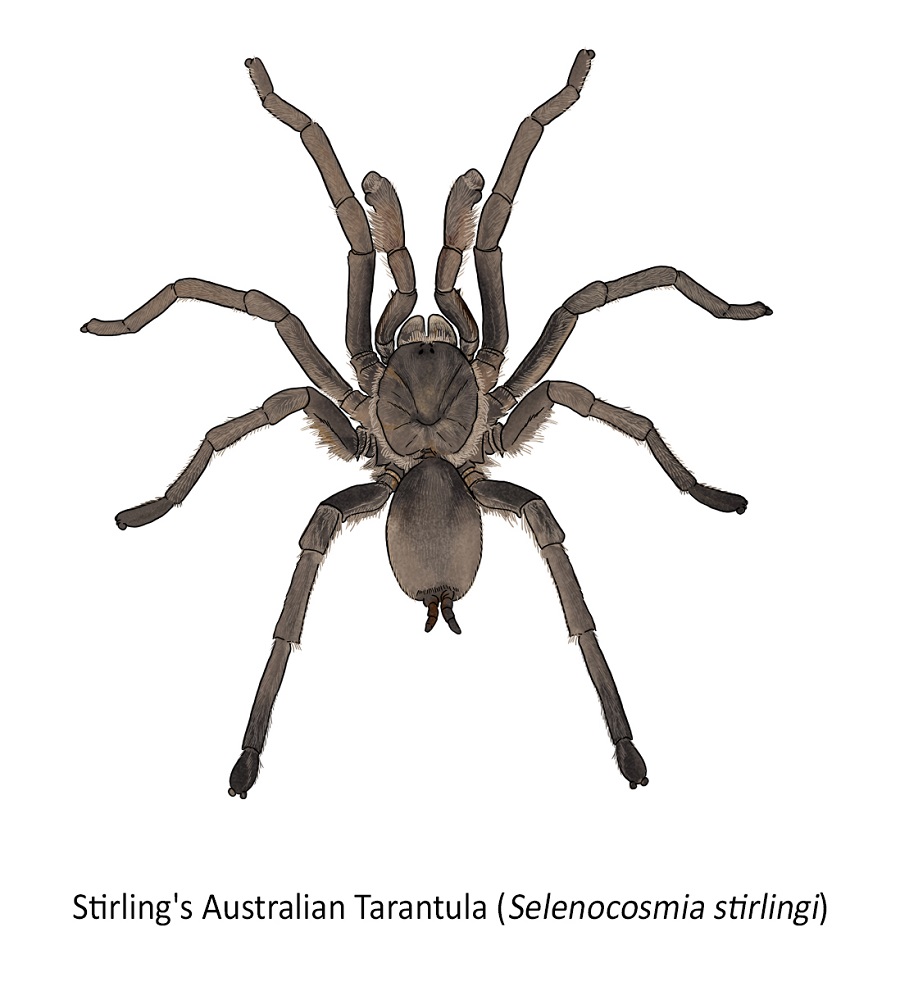
Selenocosmia crassipes, Selemocosmia stirlingi, Coremiocnemis tropix, Selenocosmia strenua, Selenocosmia subluvipa, Selenocosmia feolschei, Selenocosmia plumipes
Distribution
The genus Selenocosmia can be found in NSW, Queensland, South and Western Australia. Other species can be found in Queensland and the Northern Territory. Selemocosmia stirlingi is the most widely distributed species.
Family
Theraphosidae
Identification
30-110 mm, with a leg span of about 160 mm.
Life Cycle
Female Selenocosmia stirlingi lays 50 eggs in a sac. They protect the sac in the burrow until the spiderlings hatch and moult. The mother may even feed her young.
Females live up to 12 years, while males live shorter and usually die after mating at 5 years old. As a result, females are larger than males because they continue to grow throughout their life.
Average life span
12 years
Diet and Behaviour
Australian tarantulas primarily eat insects, lizards, frogs, and other spiders. They rarely eat birds despite their nickname, “bird-eating spiders”. They have excellent climbing abilities due to hair pads on their legs and feet. During moulting, they create web hammocks and lie on their back. Females continue moulting after maturity, while males do not.
Mating Behaviour
Mating occurs at the female’s burrow entrance during spring and early summer. Males use specific signals to avoid being mistaken for prey. They drum their palps on the ground and the female’s caprice.
Habitat
Adult females live in underground burrows lined with silk webbing to prevent them from caving in. They often have a grass flange around the entrance. Younger spiders and males may create delicate silk shelters under rocks or logs. The size of the burrows depends on the size of the tarantula and can vary in depth (40-100 cm deep) but are usually deep enough to maintain a constant temperature for activity (20 degrees Celsius).
Safety Risk
They may look scary but Australian tarantulas are not usually aggressive. They have large and long fangs so their bites are painful and can result in nausea and vomiting for six to eight hours.
The increasing reports of tarantula bites may be correlated with the increasing popularity of them being kept as pets.