Other common name: Common paper wasp
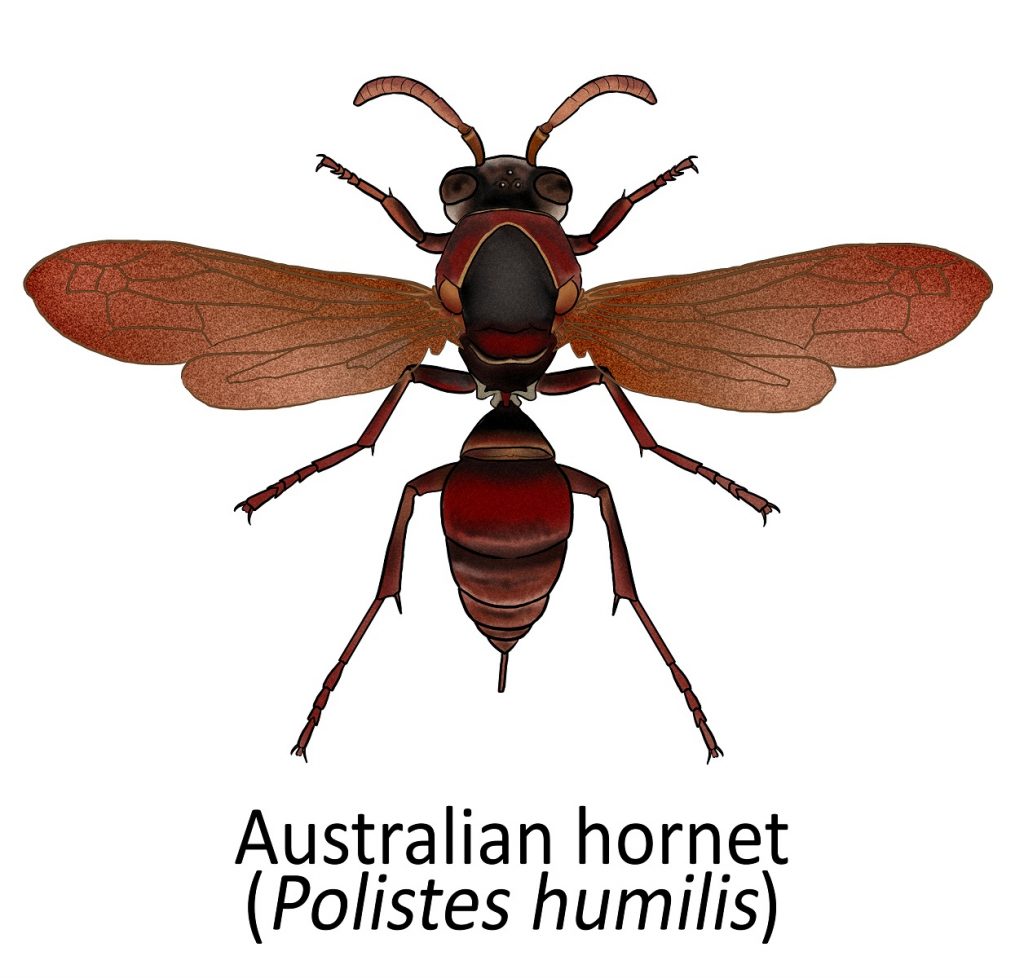
Scientific name: Polistes humilis
Distribution
Southern Queensland, New South Wales, Victoria, and South Australia.
Identification
10–15 mm in length. Tannish-red in colour. The males have yellow markings on the abdomen.
Nesting Behaviour
Social. The nests are cone-shaped with multiple hexagonal cells. They are made out of grey wood material mixed with saliva. Unlike most wasps, P. humilis reuses their old nests from year to year.
Danger
Can deliver painful stings; only attacks when the nest is disturbed. Non-aggressive when it leaves the nest
General Treatment Procedure
Gaining Access
Residential
You must notify the customer beforehand that you are scheduled to do a pest control treatment via phone call or otherwise before you proceed to the property. You must either knock on the front door and ring the doorbell or otherwise, to alert the client that you have arrived on site. If a minor answers the door or intercom, ask to speak to an adult occupant.
Introduce yourself to the occupant and explain the work order, confirm the client’s request, and ask about the pest problem using a friendly and professional tone.
You must use the following introduction or something similar:
“Good morning Mr/Ms [Occupier’s last name] my name is [Your name] I am here to treat [inspect] your home for [pests included in the job allocation]. Is there anything, in particular, you want me to pay attention to?”
Commercial
You must contact the authorised person at the business and notify them that you are scheduled to do a pest control treatment via phone call or otherwise before you proceed to the property.
Introduce yourself to the authorised person and explain the work order, confirm the client’s request. Use the following introduction or something similar:
“Good morning Mr/Ms [Authorised person’s last name] my name is [Your name] I am here to treat [inspect] your home for [pests included in the job allocation]. Is there anything in particular you want me to pay attention to?”
Describing the Job
Before starting the job, the Pest Controller must:
- Inform the client about treatment details.
- Inform the customer about the equipment, products, and in what areas you intend to use them.
- Inform the client on how you will remove the nest.
- Ask if the client has any health risks, e.g. asthma.
- Inform the client on what precautions they must take to minimise the risk of being stung during the treatment.
- Ask the client about the location of the mud nest(s).
- Inform the client what to do id there if there is a re-infestation.
- Inform the client of the treatment preparations, e.g. the windows need to be closed, and children and pets should be excluded from any area until the wasps and the nest has been eliminated.
- Explain the warranty.
- Confirm the approval of the client to proceed.
Conducting A Site Risk Assessment
Performing a site risk assessment helps identify potential hazards or risks within the property and allows the pest controller to take necessary precautions to ensure their safety and the safety of others.
While you go around the property and familiarise yourself with the building structure, access points and utilities, you must be observant and identify potential hazards or risks that could pose a danger during the treatment.
Some elements to consider before doing a treatment include:
- People
- Children
- Pets (dog/s, cat/s, caged birds)
- Fish tanks/fish pond
- Other animals or pets
- Clothes on line
- Electrical wiring or outlets that can lead to electrical shocks
- Health risks (asthma or respiratory risks)
- Slips and trips
- Temperature
- Spills
- Working at heights
- And other potential risks
Examples of risk and safety considerations you must do before the wasp treatment include:
- Exclude occupants, children, and pets for the duration of the treatments
- Secure pets and make sure they can not escape
- Remove or turn over any pet food or water containers.
- Keep a spill kit on site
- Ensure the ladder is safe to use
- Wear the necessary PPE
Inspection
Inspect areas around the property where wasps are seen flying around, such as under eaves, porch ceilings, garages, sheds, attics etc.
Non-chemical Control
Sanitation and Exclusion
- Regularly trim bushes and hedges to prevent wasps from building nests.
- Install tight-fitting screens in windows.
Chemical Treatment Procedures
Mud daubers and potter wasps will hunt spiders and paralyse them so they can place them in the mud nest as provisions for their young once they hatch from an egg to a larva. If the property also has spider problems, you must also treat the spiders in order to assure that mud daubers will not come back to the property.
For a small colony
- Spray the nest(s) with an approved wasp spray until all the wasps are dead.
- Remove the mud cells by scraping them or using a pressure washer. Older nests may need to be softened with water before they can be removed. Properly dispose of the mud nests.
For a large colony
- Wear the proper PPE to avoid getting stung
- Carry the treatment in the early morning or late afternoon when the wasps are less active and not out foraging.
- Apply approved insecticide for wasps from a distance
- Wait until the adult wasps are dead and remove the nest.
Restore the Site
Once you are done treating the area, you must restore it to its original condition. Anything that was moved due to risk assessment, or to gain access to a harbourage should be placed back to where it was.
Completing documents, Re-entry time, and Post Treatment Expectations
After the treatment, talk to the client and discuss the terms and conditions and the invoice incompletion. You must ensure to discuss when the occupants can re-enter the treated rooms and ventilate the house to allow fresh air to circulate and remove any lingering odour or fumes from the chemicals.
You must discuss what to expect after the treatment. If wasps continue nesting in voids after the treatment, advise the customer to consider some exclusion practices such as installing screens to any openings or vents, painting exterior surfaces to make it difficult for the wasps to attach their nest, and trimming bushes and keeping them think to prevent wasps from nesting on the branches.