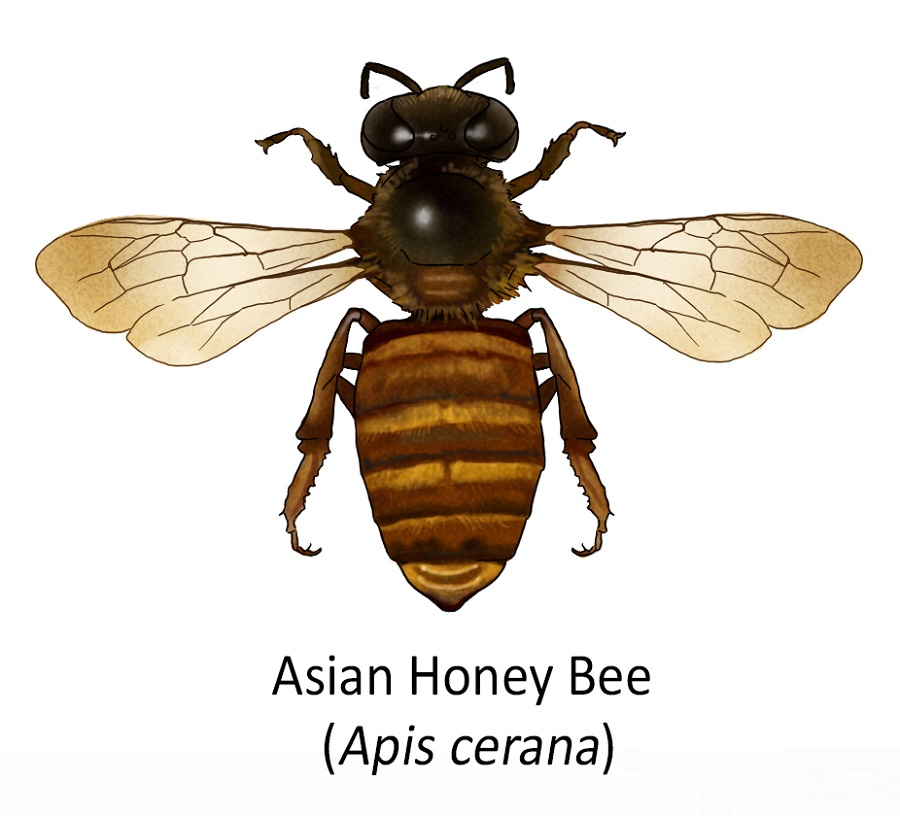
Scientific name: Apis cerana
Distribution
Asia, Papua New Guinea, Solomon Islands, Vanuatu, and parts of Australia, with notable infestations in North Queensland’s Cairns area. According to the Queensland Government, these bees have recently been detected in Townsville and the Port of Brisbane and any sightings in these areas should be reported.
Identification
The Asian honey bee (Apis cerana) is a small bee native to Southeast Asia, characterised by distinctive black/brown and yellow stripes and less hair compared to its European counterpart. Typically around 10mm long, these bees are known for being aggressive and protective of their nesting sites.
Environmental Impact
These bees have several ecological and environmental implications. They are potential carriers of bee diseases and pests, particularly serving as natural hosts for varroa mites that can potentially harm European honey bee colonies. Their tendency to compete with other bees for floral resources and their ability to quickly establish colonies make them a significant biosecurity concern. Asian honey bees can develop slightly faster than European honey bees, with workers maturing in just 19 days compared to 21 days for European bees.
Due to their potential impact, Asian honey bees are classified as restricted matter under the Biosecurity Act 2014.