Black larder beetles and Hide beetles
The larvae of black larder beetles (Dermestes ater) and the common hide beetles (Dermestes maculatus) are sometimes found damaging timber in houses. They use the wood as protection during pupation and not for food. They favour softwoods like Douglas-fir and radiata pine, and enter through the softer growth rings.
Severe damage to structural wood is very rare and usually does not require treatment. Identification of the damage and the insect is important to make the decision to apply treatment or not.
Identification of Species
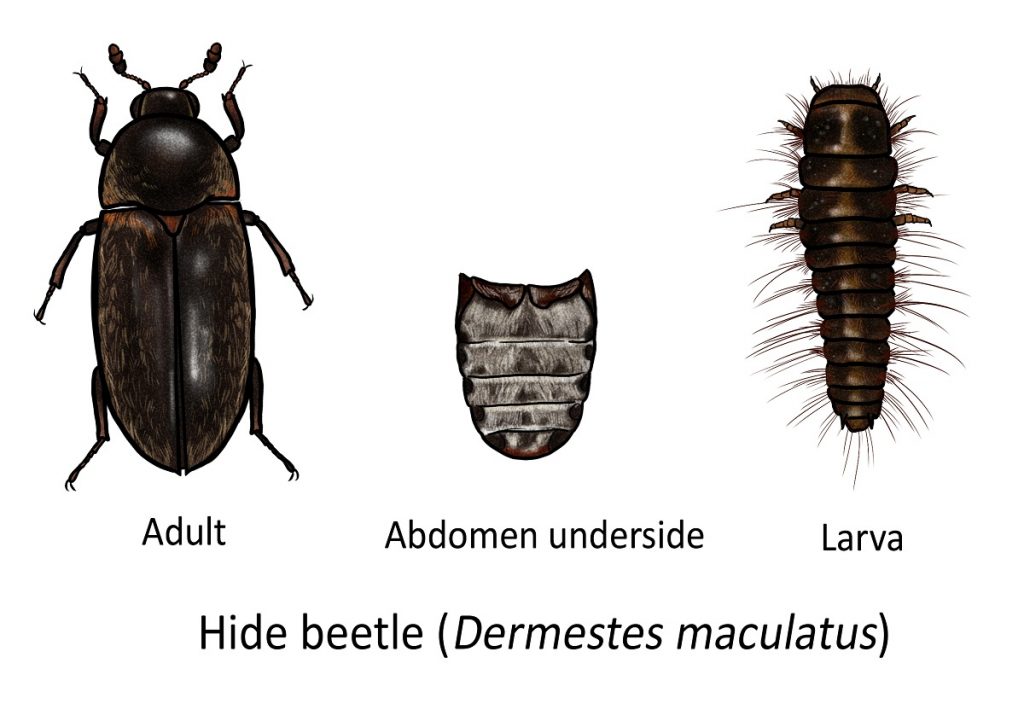
Adults are 5–10 mm, oval in shape and dark brown to black in colou
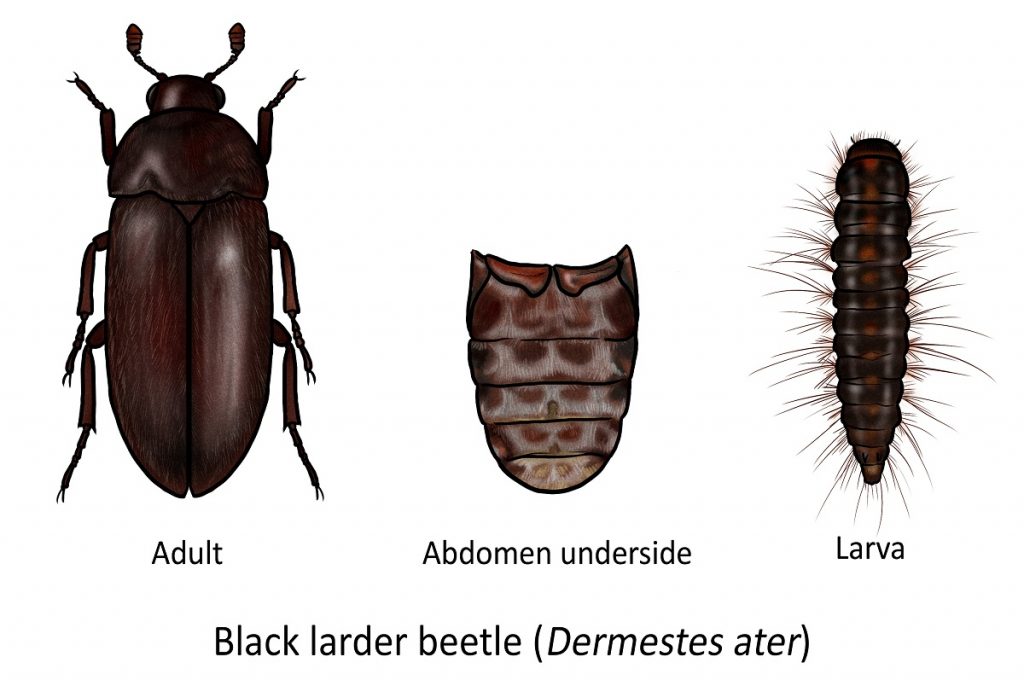
D. ater – Their bodies are covered with sparse hairs. The underside of the abdomen is light brown with dark patches in the middle and on the sides
D. maculatus – each side of the thorax has a band of white hairs; the underside is white with black spots on the sides, with a large black spot on the last segment; the tip of the elytra has a spine.
Identification of Damage On Wood
The entry and exit holes are 3–4 mm in diameter, round with no dust around, and often contain the shed skin of the last larval instar. They often damage roof cavities, where the food source is often dead rodents, possums, and birds. Once the larvae finish feeding, they enter the wood to pupate and emerge through round holes.
Leave a Reply