Family Rhinotermitidae
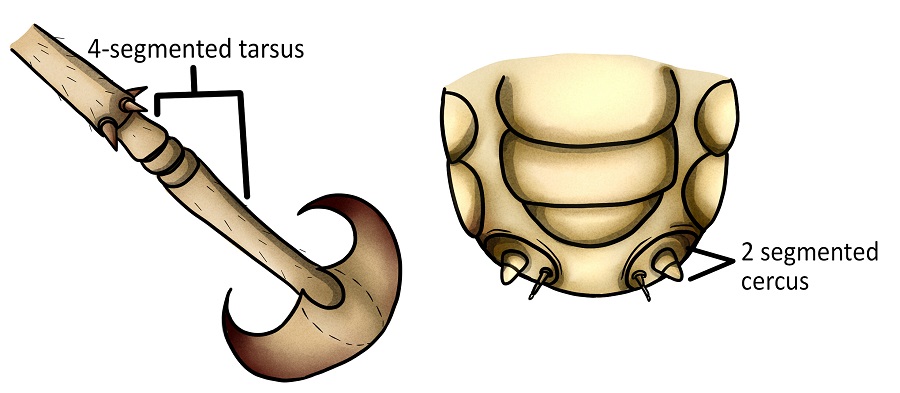
Members of this family are classified as subterranean termites. have 4 tarsal segments, cerci with 2 segments, flat pronotums, and their fontanelle is present. Furthermore, members of this family have true worker castes.
Genus: Schedorhinotermes
Distribution
There are several species of Schedorhinotermes found in Australia. Listed in the table below are the species that occur in Queensland.
| Species | Distribution |
| Schedorhinotermes intermedius | Southern Queensland and Nowra in New South Wales |
| Schedorhinotermes actuosus | Western Australia in Geraldton, Northern Australia, Alice Springs to Cairns in Queensland |
| Schedorhinotermes breinli | Northern Territory, Newcastle Waters, coastal Queensland north of Gladstone |
| Schedorhinotermes seclusus | From Cairns in Queensland to the central coast of New South Wales |
| Schedorhinotermes reticulatus | Widely distributed in the mainland but absent in the Northern Territory |
Identification
The soldier caste in this genus is dimorphic meaning it has two distinct forms — major and minor soldiers. Major soldiers are 5.0–7.5 mm long and have bulbous heads. Minor soldiers are 3.0–5.5 mm long, and have narrower heads and slender bodies. Furthermore, the labrum of minor soldiers extends almost to the tip of the mandibles. Both the major and minor soldiers have asymmetrical serrations or “teeth” on their mandibles; the left mandible has 3 serrations, while the right only has 2.
Identification of the species is not as relevant to this genus and seldom affects control measures.
Schedorhinotermes Species
Schedorhinotermes intermedius
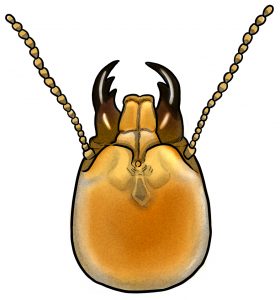
Schedorhinotermes actuosus
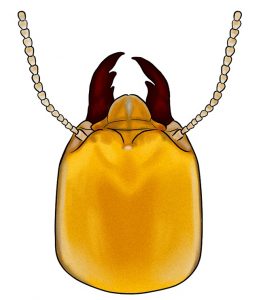
Schedorhinotermes breinli
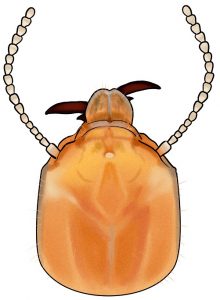
Schedorhinotermes seclusus
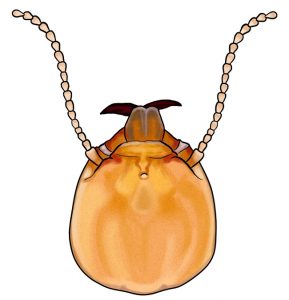
Schedorhinotermes reticulatus
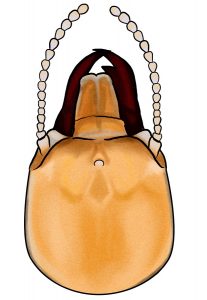
Habitat and Behaviour
Species in this genus build their nest almost exclusively underground in tree stumps of living or dead trees. They also like to build their nests under buildings and structures where the timber is in contact with the soil. They are known to build multiple secondary nests in different locations whenever a mating flight takes place; they build secondary nests away from the primary nest, making them hard to control.
Due to urbanization and the creation of abundant nesting sites, this is now the most damaging genus of termites in Southeastern Queensland, with Coptotermes as the second most damaging genus.