Mites
Like ticks, mites belong to the subclass Acari (or Acarina). They are minute arachnids, with the smallest might measuring 0.1 mm and the largest at 6.0 mm, which is why they are easily overlooked. They have an unsegmented body and four pairs of legs as adults. In the case of predatory and parasitic mites, they have mouthparts (chelicerae) that may be for piercing and sucking. Mites that feed on grains and other food products have modified mouthparts, and mites that feed on fungi have mandibulate mouthparts.
Mites thrive in moist or humid environments and for this reason, they are rarely found inside air-conditioned buildings.
In Australia, there are 3,000 mite species that have been named but the actual number present is greater than that. The most common ones feed on plants and are considered pests of domestic gardens and agriculture.
Life Cycle
Mites undergo four life stages — egg, larva, nymph, and adult. However, there are typically one larval stage and two nymphal stages in the life cycle. Some species have a hypopal stage, where the nymph has no mouthparts and reduced legs. In this stage, it is able to survive dryness. The larvae only have three pairs of legs, and the nymphal and adult stage has four. The life cycle usually takes 2–4 weeks to complete depending on environmental conditions and the species.
Common mites
Food Mites
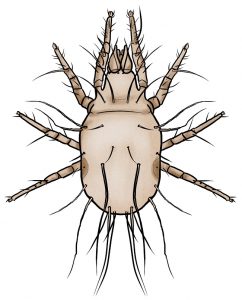
Tropical Fowl Mite
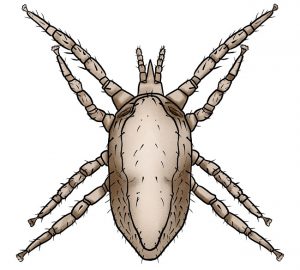
Poultry Mite
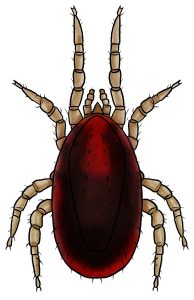
Bryobia Mite
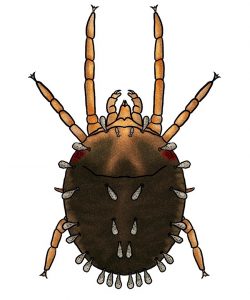
Straw Itch Mite
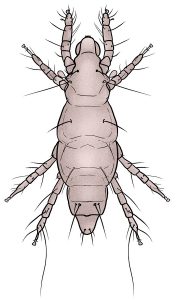
Scabies Mite
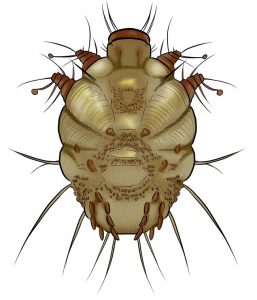
Grass Itch Mite
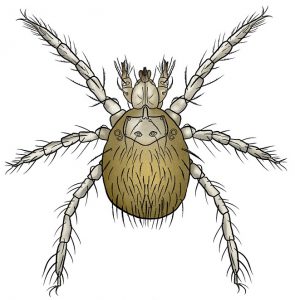
Control of mites
Avoiding a mite infestation is the best control measure. Once mites attack humans they become a medical problem since they need to be treated, and are no longer the pest controller’s problem. Mites are only temporary pests of humans and they mostly enter properties because of vegetation.
The following may help to prevent a mite infestation in a home:
- Regularly vacuuming beds, rugs, furniture and carpets.
- Prevent birds and rodents from nesting in the property, yard or garden.
- Trim branches and vegetation around the house.
- Regularly mow lawns and keep weeds and bushes from overgrowing, making areas less suitable for rodents and mites.
- Examine plants that may have potential mite infestations.
In case insecticide treatments are necessary to control mites, the labels should always be checked.
Symptoms and Treatments of Scabies mite bite
| Symptoms | Treatment |
| * Intense itching especially at night * Pimple-like rash * Scales or blisters * Sores caused by scratching * Track-like burrows in the skin | Attention to personal hygieneHeat wash clothes and iron creasesSeek a medical professionalLocal application of ointment, or as advised by a doctor. |