Mosquitoes
Mosquitoes are members of Order Diptera and of the Family Culicidae. They are characterized by having a pair of wings with scales on the veins, and a long proboscis protruding from the head. These insects earned their worldwide pest status because of the females’ bloodsucking habits that can cause discomfort to humans and livestock. In addition, these insects cause annoyance and irritation and are also vectors of numerous diseases that have claimed, and continue to claim lives. In Australia, there are 270 species of mosquitoes.
Morphology
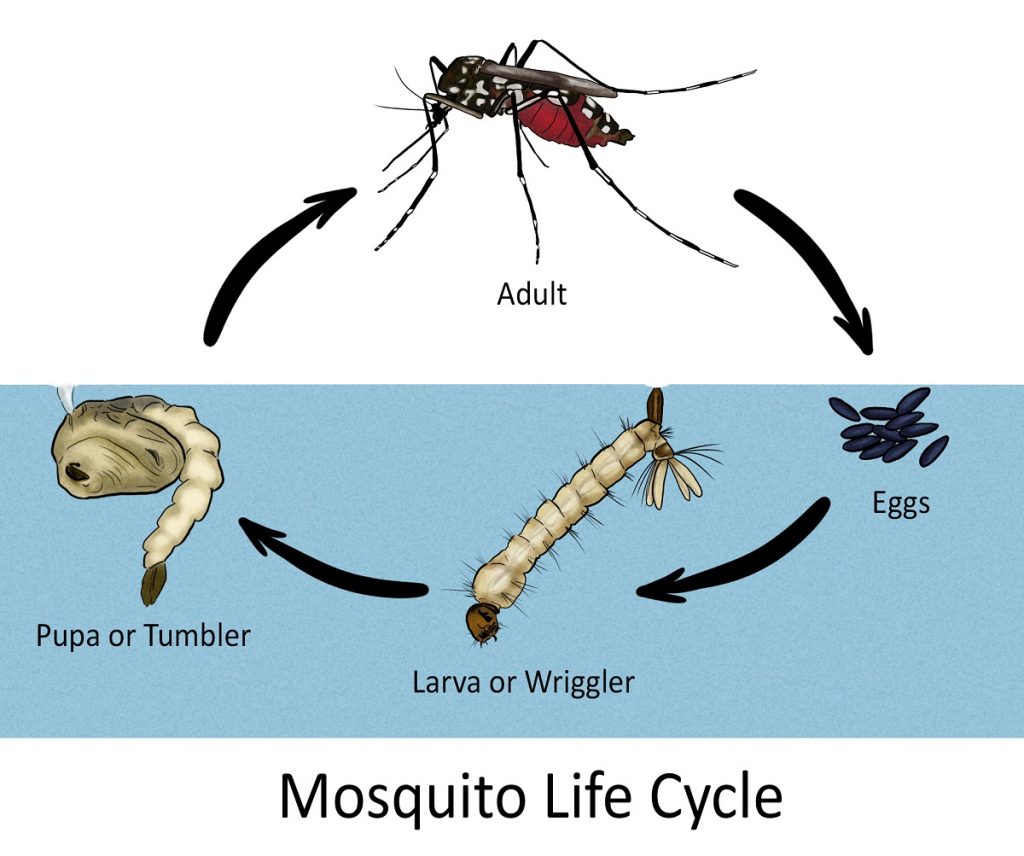
Adult mosquitoes have dark grey to black slender and dainty bodies measuring about 3–6 mm. They have long thin legs and long narrow wings with scales on the veins. They have piercing-sucking mouthparts. They are similar in appearance to midges. The larvae are often called ‘wrigglers’ because of their constant wriggling movements. They are aquatic and have a well-developed head, a pair of respiratory openings called spiracles located at the hind end, and a body covered with tufts of bristles. The pupae are called ‘tumblers’ because they move in a summersault motion when they are disturbed; they are oval with a tail-like abdomen or are comma-like.
Biology and Life Cycle
Like all flies, mosquitoes go through four life stages – egg, larva, pupa, and adult. The first stages are entirely aquatic. Females need a blood meal before they can lay eggs. The eggs are laid on the surface of the water and usually hatch within 48 hours depending on environmental conditions. The wrigglers feed on organic matter in the water and usually undergo four instars. The tumblers do not feeb but are mobile and emerge as adults within 2–3 days. The entire life cycle can be completed in 8–10 days depending on the species, food availability, temperature, and other factors. Adult males are short-lived and feed on honeydew, nectar, and fruit juices because their proboscis is not strong enough to pierce through animal skin. Adult females, on the other hand, live for several weeks and may pierce the skin of a variety of animals to get protein from blood meals and start a whole new life cycle.
Mosquitoes as Pests
Mosquitoes pose a threat to the health and comfort of humans and livestock as they act as vectors for many disease-causing viruses and parasites.
Mosquito-borne diseases include:
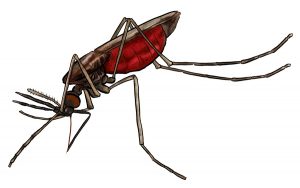
Malaria. This is a serious and sometimes fatal disease caused by protozoan parasites (Plasmodium spp.) that infect female Anopheles mosquitoes – they are the only Genus of mosquitoes that can transmit malaria. People who are infected with malaria get very sick with high fever and flu-like illness, headache, chills, muscle aches and tiredness. Although Malaria is historically endemic to Australia, it has been eradicated in 1981 and is no longer endemic.
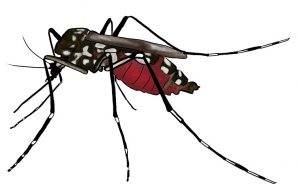
Dengue. The dengue virus is a significant health risk worldwide. It is transmitted by the mosquito species, Aedes aegypti. Most cases of dengue in Australia are from travellers who enter the country that is already infected by the virus. Severe cases require hospitalization and can be life-threatening. Symptoms of dengue include muscle and joint pain, fever, vomiting, and rashes.
Ross River virus and Barmah Forest virus. These are the two most common mosquito-borne diseases in Western Australia. These viruses are transmitted by a number of different mosquito species. Infection can cause fever, chills, muscle and joint pain, rash, fatigue, and polyarthritis.
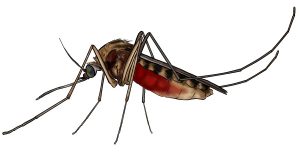
Murray Walley encephalitis virus, Kunjin virus, and Japanese encephalitis virus. These viruses are transmitted by the vector Culex annulirostris and cause encephalitis and may result in brain damage.
Common Mosquito Genera
Anopheles
Aedes
Culex
Mosquito Control
The main goal of mosquito control is to protect public health. Everyone is aware mosquitoes are a bloodsucking nuisance, but not everyone recognises the magnitude of mosquito-borne diseases to public health. Individuals can control mosquitoes in their homes by installing screens, or using coils, or repellents, or aerosols to kill or repel adult mosquitoes. However, on a larger scale, a combination of chemical and non-chemical control methods, public education, cooperation and adequate funding would be necessary to control mosquito populations from growing and prevent a disease epidemic.
Non-Chemical Control
Disrupting breeding sites can reduce a mosquito problem. Localized breeding can be prevented by emptying, throwing out, cleaning or covering any item that holds water such as vases, flowerpot saucers, blocked roof guttering, tin cans, etc. For large bodies of water, a water management plan should include a thorough inspection. Biological control like mosquito-eating fish (e.g. Gambusia), predatory plants, insects, crustaceans, arachnids, and microorganisms (Bti) can be used to control mosquito larvae, but using such methods must involve wildlife authorities.
Chemical Control
Insecticides for mosquito control can be for killing larvae, repelling and/or killing adults. Controlling adult mosquitoes can be achieved by residual surface sprays, space sprays, fogging, and misting. Larval control is more widely used than adult control because it is more cost-effective.
Larvicides. This type of insecticide targets larvae in breeding sites before they can develop into adult mosquitoes and disperse. These are more effective and less toxic than insecticides for adult mosquitoes because they are proactive, they do not harm people, pets or the environment, and they are not affected by vector resistance to synthetic insecticides. The larval breeding site can be treated with sprayers, granule application, or aerial application. In areas where insecticide use is not advisable, a thin layer of mineral oil and film can be used on the water’s surface to prevent larvae and pupae from breathing, eventually killing them. Biological control such as Bacillus thuringensis, a species of bacteria, and methoprene, a class of insect growth regulators (IGR) can also be used to control mosquito larvae.
Mosquito repellents. There are various products out in the market for temporary personal protection from mosquitoes such as aerosols, lotions, and roll-ons. These typically last for a few hours and can be applied on clothed or exposed skin. Space sprays and coils that contain natural pyrethrins and/or synthetic pyrethroids can temporarily control and/or repel mosquitoes in a treated area.
Adult Mosquito Control
Surface sprays. When sprayed on surfaces frequented by mosquitoes, these may remain active for up to a few months depending on a few factors.
Space sprays. These provide quick relief from mosquitoes in emergency or epidemic situations. Household aerosols that usually contain pyrethrins and synthetic pyrethroids are a common example. In larger spaces, foggers, misters, or high-pressure aerosols are used indoors or outdoors for control. Insecticides used in this type of treatment are non-residual and effective contact with the mosquitoes is sometimes difficult to achieve.
Killing adult mosquitoes alone will not do much in attempting to control mosquitoes. Breeding sites should be treated, the public should be educated about mosquitoes and the diseases they can transmit, and funding and cooperation should be given to achieve successful control.