Hide Beetles
Species: Dermestes carnivorous, Dermestes frischii, Dermestes maculatus
Family: Dermestidae
Distribution
Can be found around the world; D. frischii is more tolerablein temperate regions
Pest Type
Secondary pest, scavenger
Identification
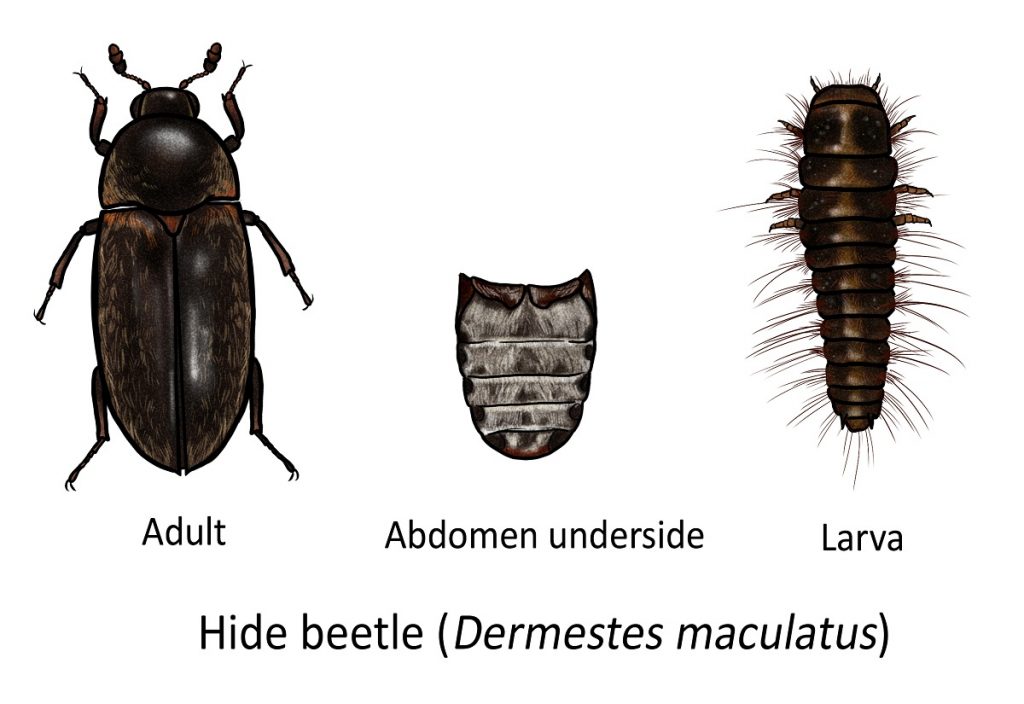
Adults are 5–10 mm, oval in shape and dark brown to black in colour.
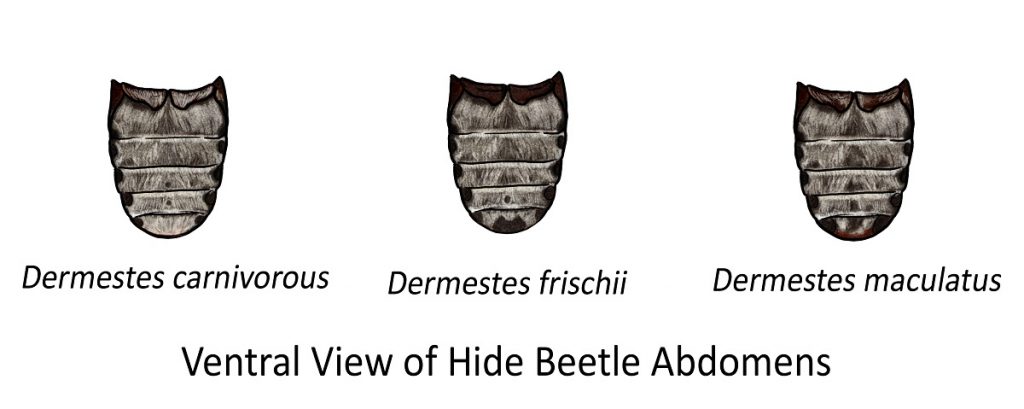
D. carnivorous – Underside of the abdomen is primarily white with black spots at the sides.
D. frischii – Underside of the abdomen is primarily white with black spots at the sides, with a large black spot at the tip.
D. maculatus – each side of the thorax has a band of white hairs; the underside is white with black spots on the sides, with a large black spot on the last segment; the tip of the elytra has a spine.
Life Cycle
At optimum conditions of 30℃ and 75% relative humidity, the life cycle will be completed in 21 days. Females lay eggs on the commodity. Larvae are mobile and they cast skins throughout infested material. The adults don’t feed on commodities and live long.
Dried organic material, especially of animal origins like hides, biological specimens, wool, and skin.
Commodities attacked
Attacks food and non-food items like museum collections, fish meal, dried fish, copra, hides and skins. A scavenger in stored grain, feeding on dead insects/animals.
Economic Importance
Highly important especially in the tropics.
Leave a Reply