Jewel Beetles
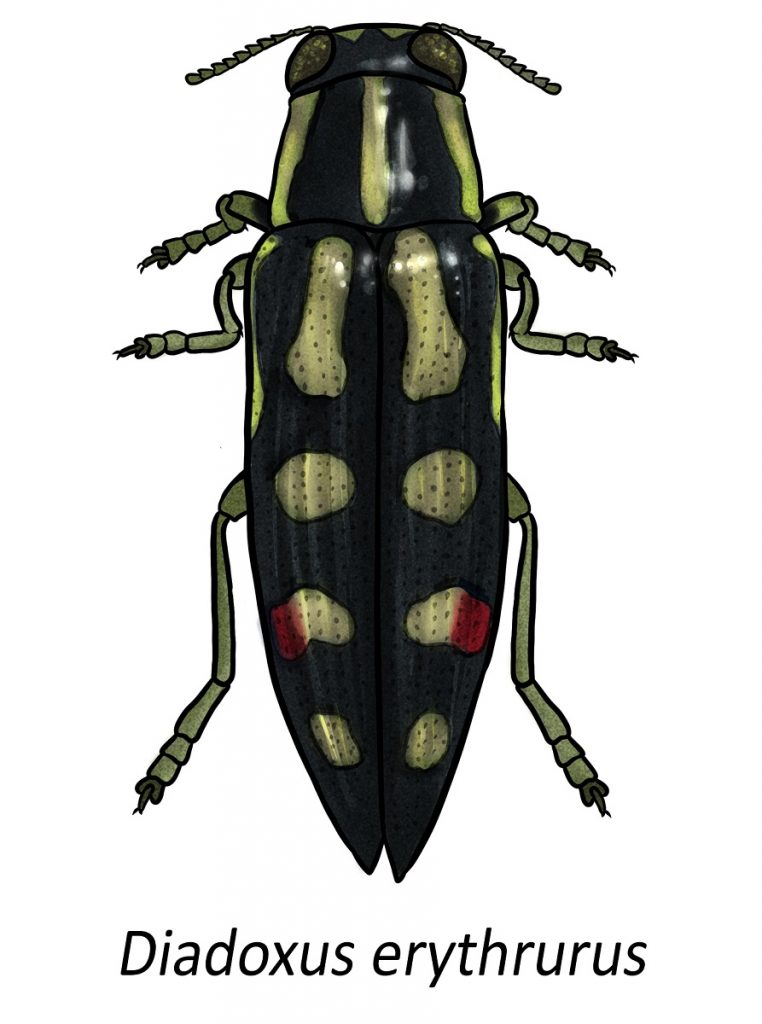
Jewel beetles belong to the family Buprestidae. They are called jewel beetles because of their glossy iridescent colours. Some of them are actually highly priced by collectors, and sometimes their wings are used as actual jewellery and decor. Adults have elongated or ovoid bodies that range from 3mm to 80mm in size, and short serrate or saw-like antennae. The first 3 segments of the larvae are flattened, resembling the head of a cobra snake; they are sometimes called “cobra-headed larvae”. The most common species of jewel beetles in Australia are Diadoxus scalaris or cypress jewel beetle, and Diadoxus erythrurus or small cypress jewel beetle.
Biology and Behaviour of Common Species
ewel beetles lay eggs in the bark of injured trees. After hatching, the larvae feed in the phloem–cambium region. They make crescent-like markings on the feeding site — this differentiates them from longicorn damage. The larvae then enter the sapwood to pupate. Their life cycle takes 6–24 months, and sometimes longer for drywood species.
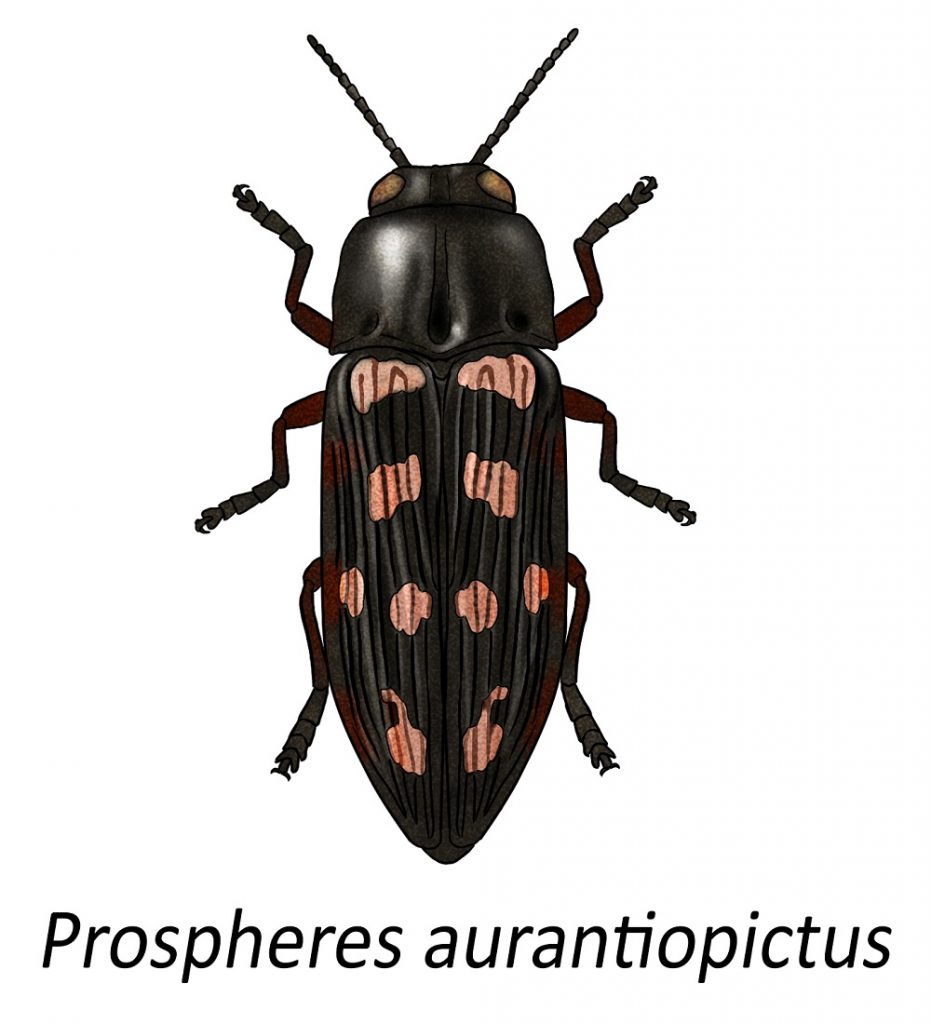
There are two drywood jewel beetles that controllers need to take note of – the hoop-pine jewel beetle Prospheres aurantiopictus native to Australia, and Buprestis aurulenta or the Oregon jewel beetle. P. aurantiopictus, attacks hoop pine logs, and later enters the sapwood. As the logs are cut and dried, moisture becomes unfavourable and larval development slows up, but does not stop– it sometimes can take up to 20 years. The adult then emerges from hoop pine furniture. They do not reinfest the damaged wood since it lacks moisture and is no longer favourable.
Buprestis aurulenta is similar to the hoop pine jewel beetles as it also has an extended larval development stage. This species was introduced from imported Douglas fir from North America. The emergence of adults has been observed from timber in service 50 years after milling.
Best Treatment
No treatment is required for true greenwood jewel beetles. For hoop pine jewel beetles, articles of furniture may be fumigated and carefully controlled by heat treatment.
Leave a Reply