Powderpost Beetle
Scientific name: Lyctus brunneus (Stephens)
True powderpost beetles belong to the subfamily Lyctinae within the family Bostrichidae. They got their common name from the powdery frass found in their tunnels. Lyctus brunneus is a pest of sapwood of certain hardwood timber species with medium to large pores or vessels and high starch content. This species is indigenous to North America but has been spread throughout the world in imported timber.
Morphology
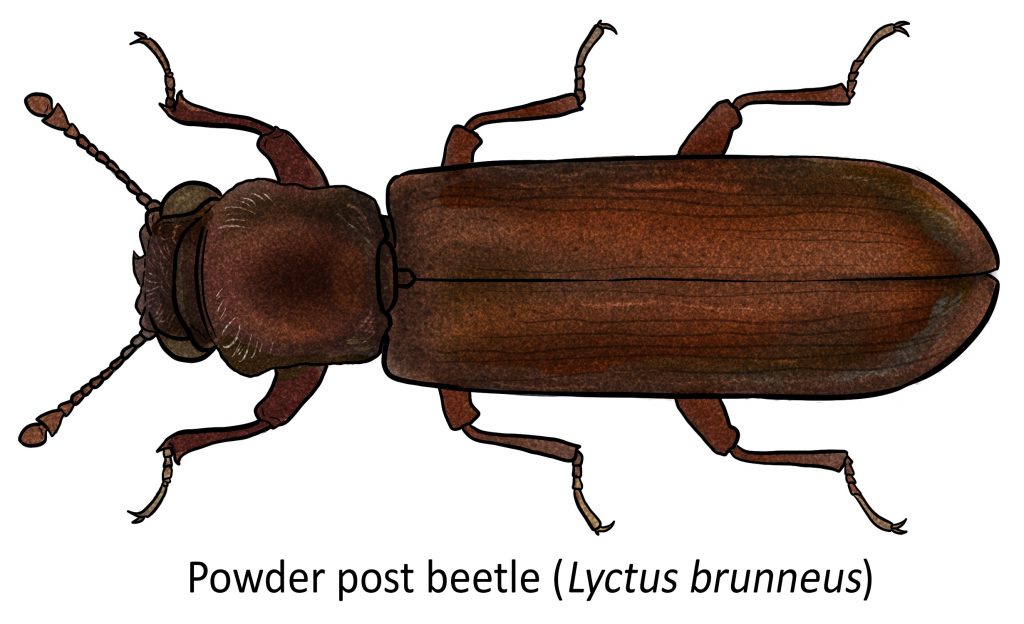
Adults are 2.5–8.0 mm long and have relatively flat and elongated bodies that range from light brown to reddish-brown in colour. They have a rectangular pronotum that is usually darker than their elytra. They have club-like antennae that are about as long as their thorax.
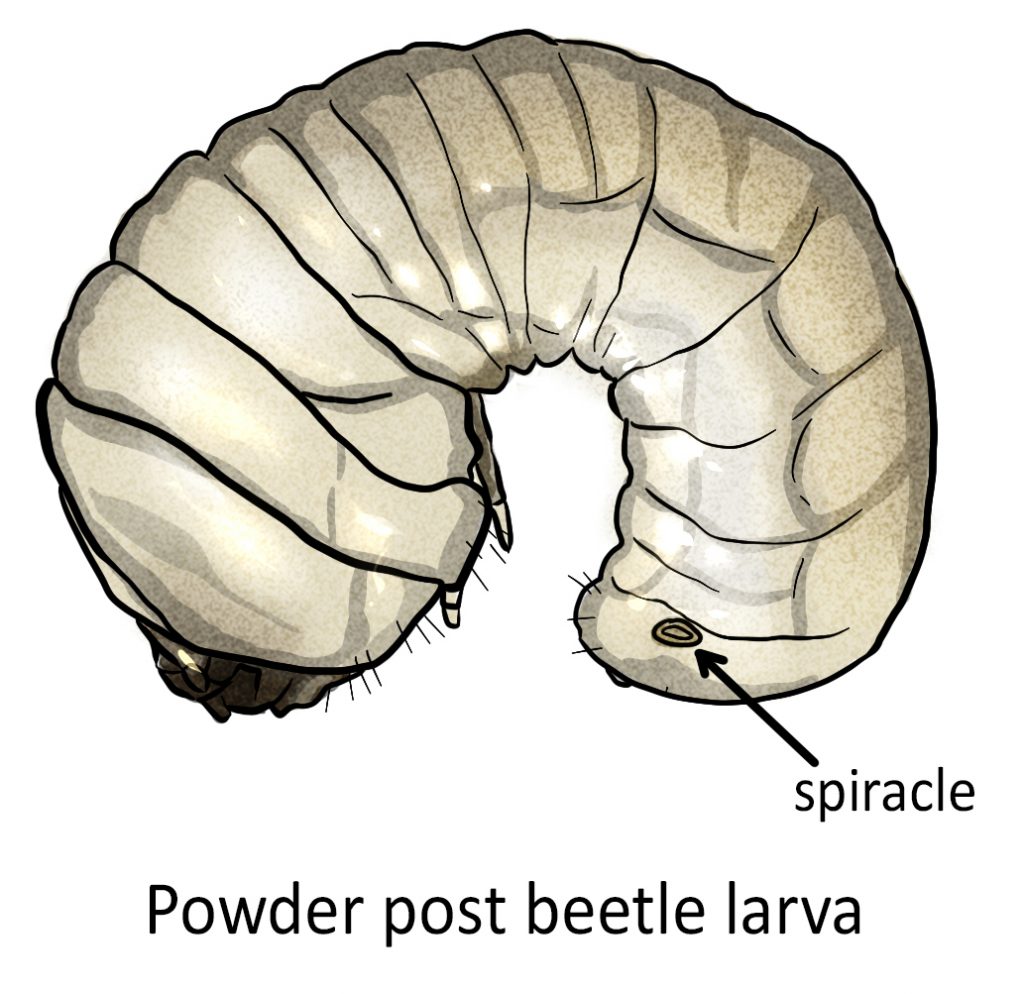
The larvae of this species are cream-coloured with brown heads and mouthparts and have three pairs of legs. Upon hatching, larvae are straight and slender and measure about 0.5 mm. Later on, they become slightly curved to a C-shape and measure about 5 mm long. The grubs are stout at the thorax and have well-developed legs. They have spiracles with a brown oval plate on the second-last abdominal segment, which differentiates them from larvae of Bostrychidae and Anobiidae.
Biology and Behaviour
After mating, the female powderpost beetle looks for a suitable host tree to lay its eggs. It bites the wood and makes “tasting marks” to determine if the timber has starch, exposing the wood for egg laying. She then deposits her eggs singly via her ovipositor 1–3mm deep in the open pores of the sapwood. Each female lays about 50–100 eggs.
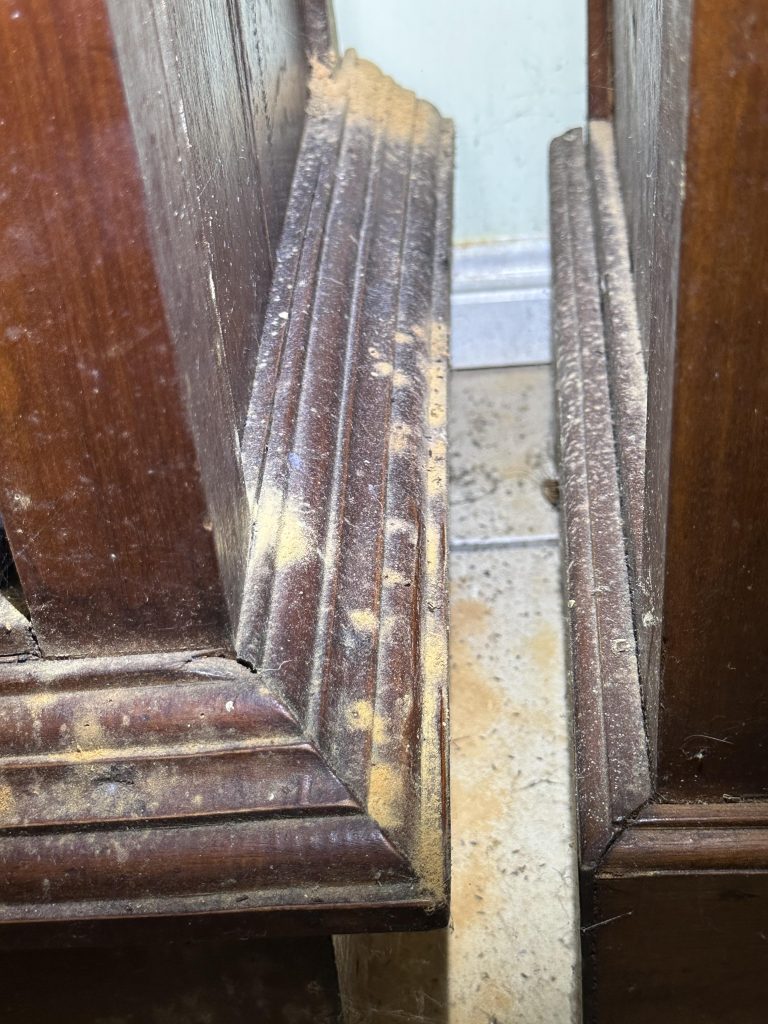
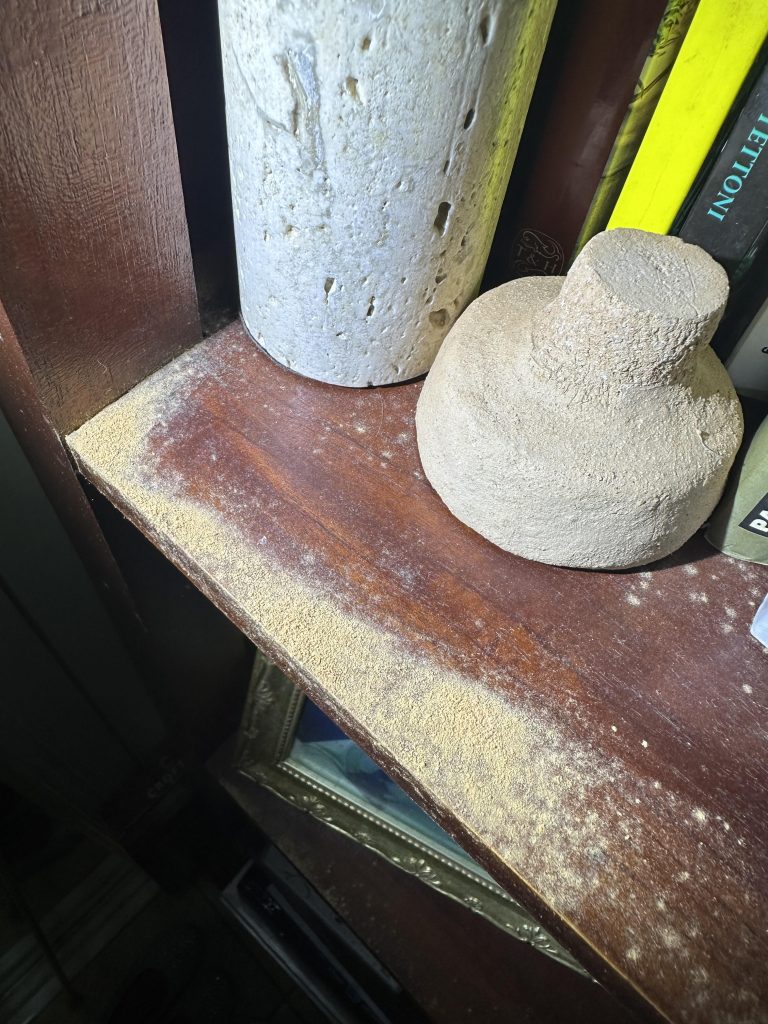
The eggs hatch in 10–15 days and feed on the starch of sapwood until they are fully grown. Larval development takes about 2–18 months and is dependent on environmental factors. Fully grown larvae make small oval holes where they would pupate. After 2–3 weeks, adults will emerge from the surface of the infested timber. They make round holes about 1–2 mm in diameter. Unlike ambrosia beetles, their holes do not have staining, however, they have small piles of powdery frass. Adult powderpost beetles are sexually mature upon emergence and mating occurs soon afterwards. Adults live for 2–5 weeks, and the entire life cycle lasts about 4–12 months.
Treatment
Limiting or excluding the use of sapwoods in buildings is the best way to prevent powderpost beetle infestations. Pretreating timber with registered insecticides is the best way to prevent powderpost beetle attacks. Pretreatment methods require a minimum concentration of chemicals in the centre of the sapwood so no matter how the wood is cut, powderpost beetles will only have treated areas to lay eggs on.
Image Gallery
Leave a Reply