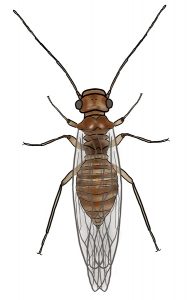
Insects that infest stored food, grains, cereal, powdered raw materials, leather, fabric, and any other dried or preserved products are called ‘stored product pests’. They are also called pantry pests because they can be found in cereal, grains, and flour in the kitchen pantry. Stored product pests also include bacteria, fungi, and other arthropods such as mites, rodents, and birds.
Stored product pests are divided into two categories: primary and secondary. Primarily stored product pests are those that attack undamaged and whole grains internally, and they develop inside the grains. Meanwhile, secondary pests feed externally on damaged or broken grains and powdered products. Primary pests include grain borers, weevils, the khapra beetle, and the Angoumois grain moth. Secondary pests include the Indian meal moth, and a variety of beetle species such as saw-toothed grain beetles, cigarette beetles, drugstore beetles, rust red flour beetles, and the confused flour beetle.
Stored product pests have caused million-dollar losses to the food industry because of contamination, and deterioration of product quality and market value due to odour, mould, heat damage, and insect parts. Infestations of these pests often go unnoticed until damages are already large because they are very small and can be transported easily. Proper identification of pests is essential for effective control and management.
Larvae
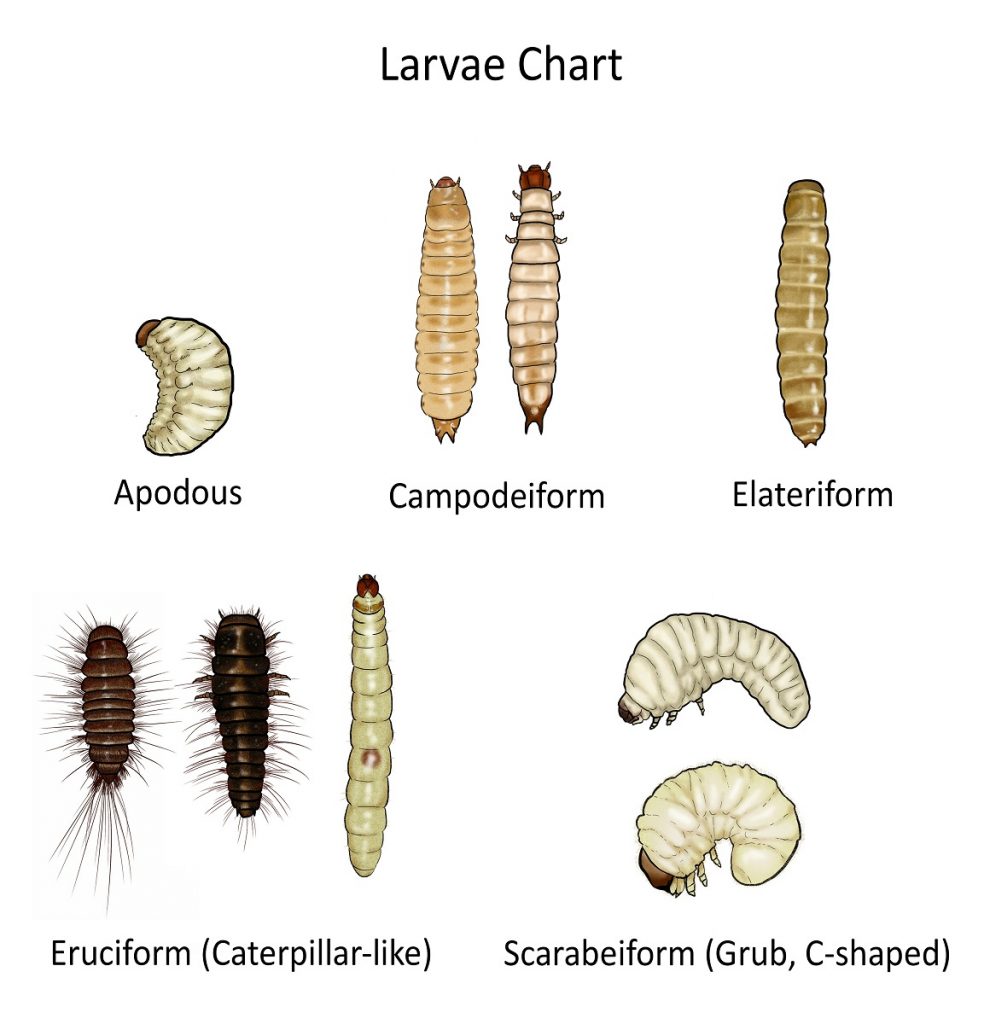
Beetle and moth stored product pests undergo a complete life cycle that starts from the egg. Soon after, they hatch as larvae and go through several larval stages. When ready, they undergo the pupal stage and emerge as adults. The larval stage of these stored product pests do most of the damage. Moreover, the larvae are classified based on their body forms which are listed below:
Apodous larvae – have no legs, are immobile, and are poorly sclerotized. They live inside the foodstuff or inside the grains.
Campodeiform – elongated body that is dorso-ventrally flat, well-developed legs, prognathous (extending outward) mouthparts, translucent but the last abdominal segment may be pigmented; lives freely within the commodity.
Elateriform – body is long and cylindrical or worm-like, the cuticle is leathery, legs are relatively short, and they live freely within the commodity. Beetle larvae from the families Elateridae (click beetles) and Tenebrionidae are elateriform.
Eruciform – also known as polypod larvae; they have abdominal prolegs in addition to their thoracic legs. They are elongated and may be covered with hairs, are relatively active, and live near the food source. Caterpillars of butterflies and moths and larvae of some beetles are eruciform.
Scarabeiform – C-shaped larvae that are poorly sclerotized, with short legs, immobile when mature, and live within the foodstuff.
Beetles
Cigarette Beetles
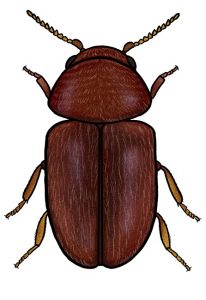
Drugstore Beetles
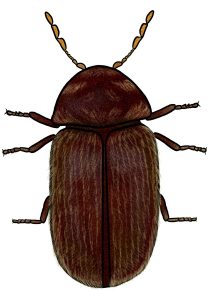
Larger Grain Borer
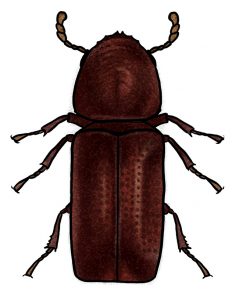
Lesser Grain Borer
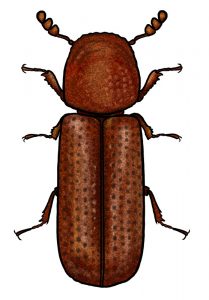
Grain Weevil
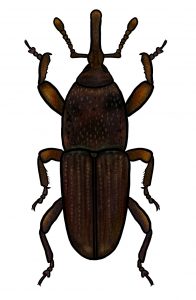
Rice Weevil
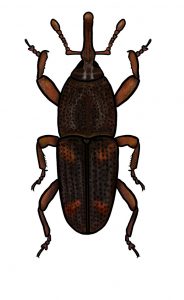
Maize Weevil
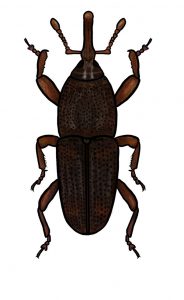
Variegated carpet beetles
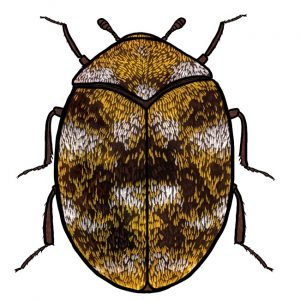
Australian carpet Beetle
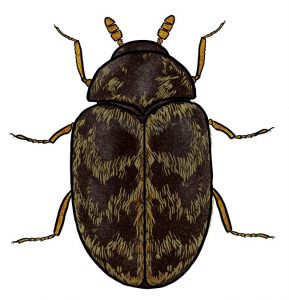
Black carpet Beetle
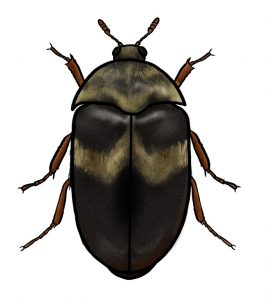
Black Larder Beetle
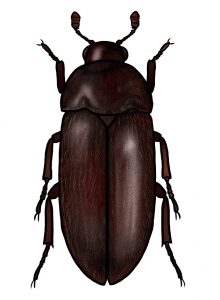
Hide Beetle
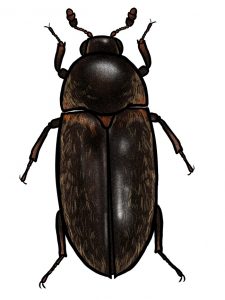
Warehouse Beetle
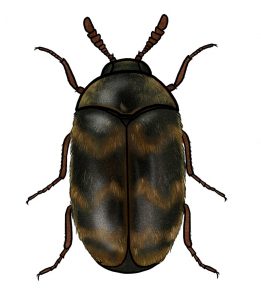
Flat Grain Beetle
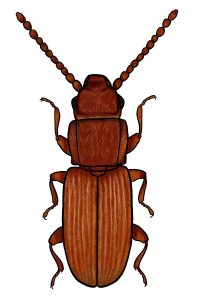
Dried Fruit Beetle
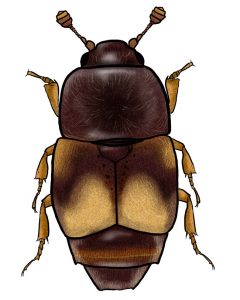
Foreign Grain Beetle
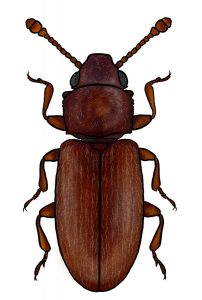
Saw-toothed grain beetle
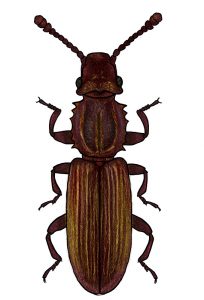
Rust red flour beetle
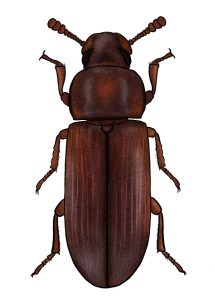
Confused flour beetle
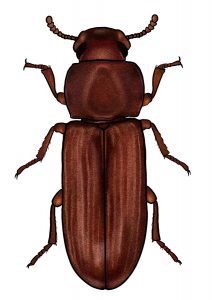
Spider Beetle
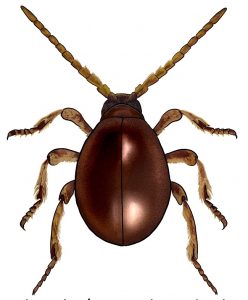
Cocoa Weevil
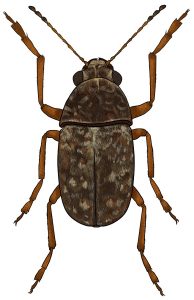
Bean Weevil
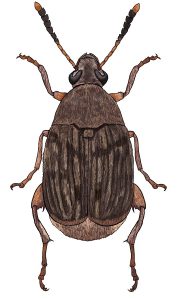
Pea Weevil
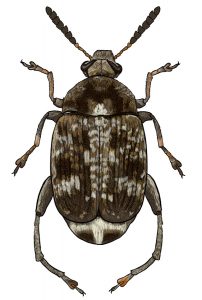
Cowpea Weevil
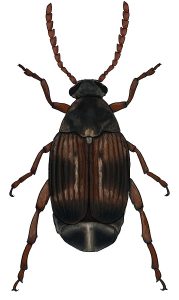
Broad-horned flour beetle
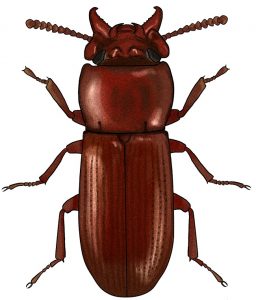
Groundnut bruchid
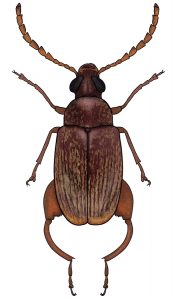
Long-headed flour beetle
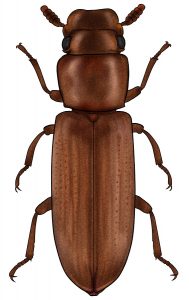
Khapra beetle
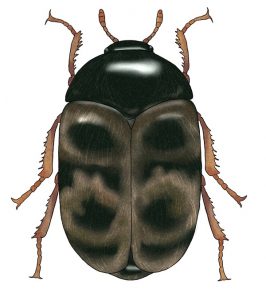
Moths
Indian meal moth
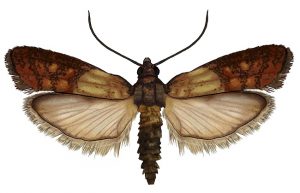
Angoumois grain moth
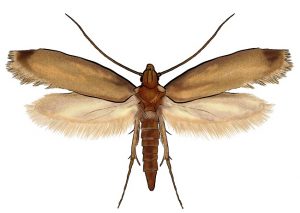
Case-bearing clothes moths
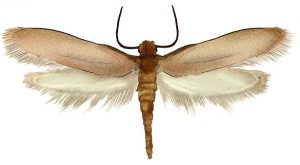
White-shouldered house moth
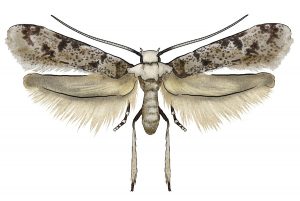
Brown house moth
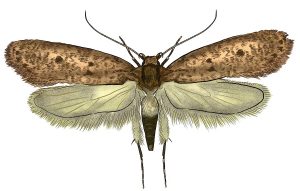
Meal moth
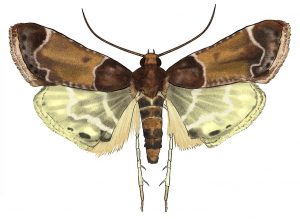
Almond moth
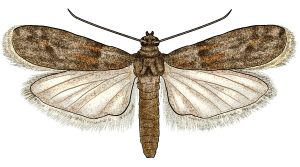
Tobacco moth
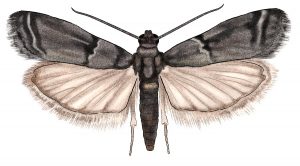
Rice moth
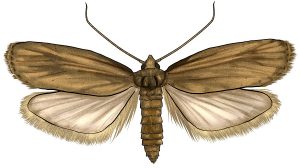
Tapestry Moth
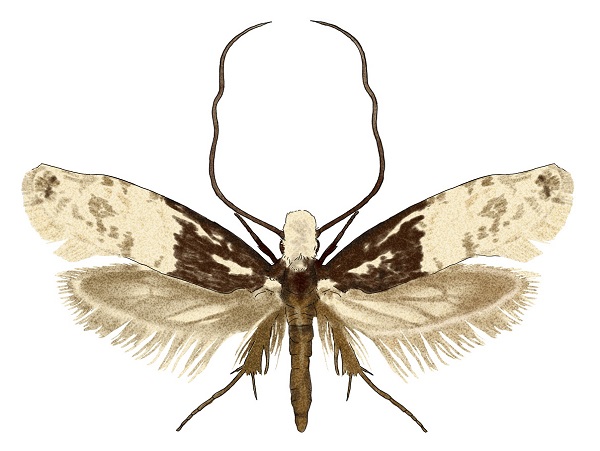
Psocids/Booklice
Psocids/Booklice
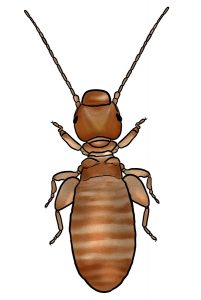
Winged Booklice