Family Rhinotermitidae
Members of this family are classified as subterranean termites. have 4 tarsal segments, cerci with 2 segments, flat pronotums, and their fontanelle is present. Furthermore, members of this family have true worker castes.
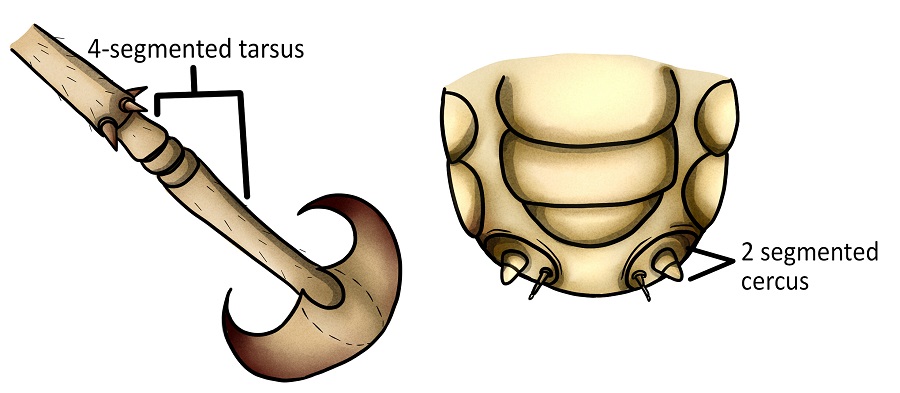
Genus: Coptotermes
Identification
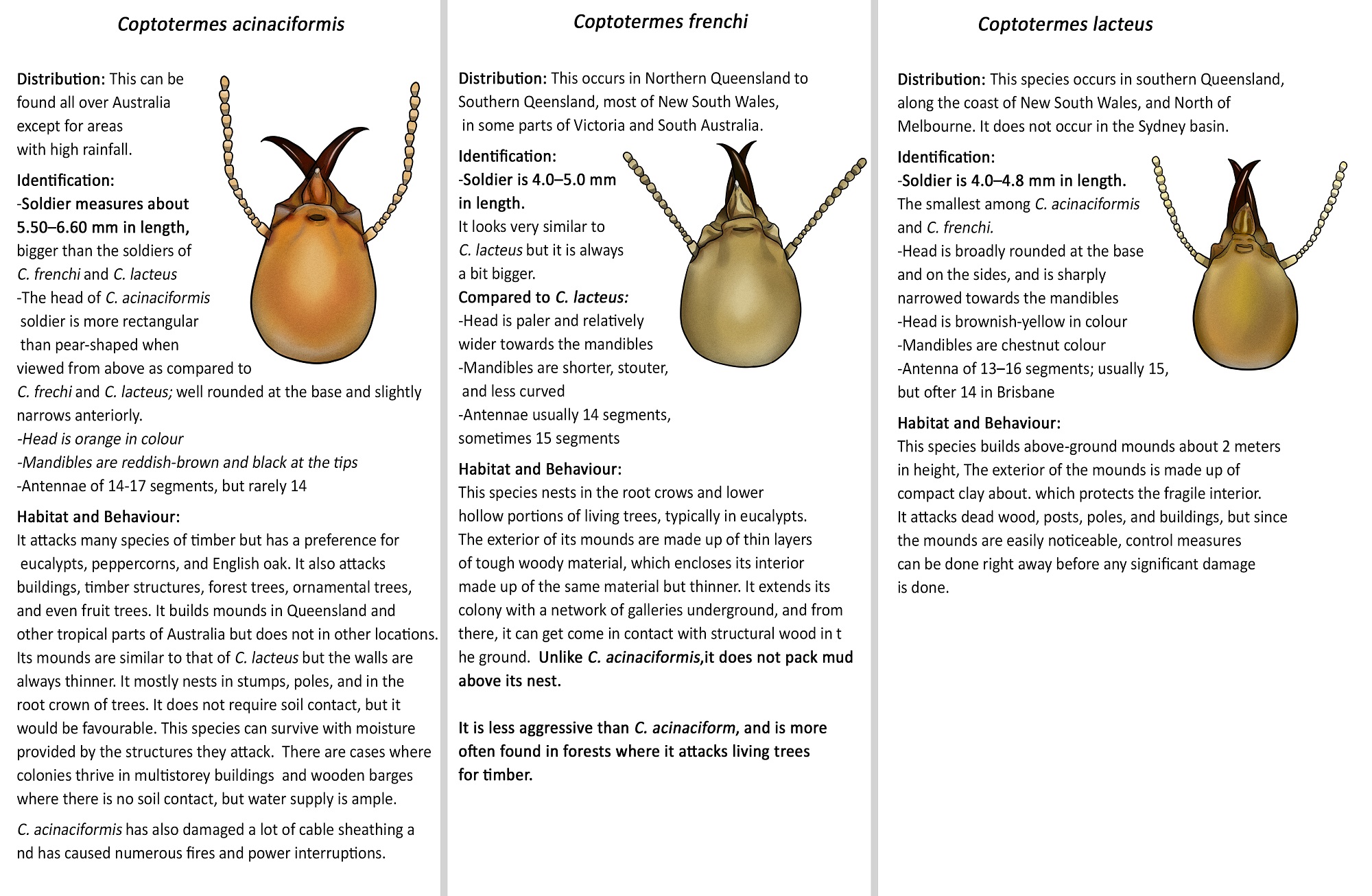
Soldiers in this genus are 4.0–6.5 mm in length and are mandibulate. They have pear-shaped heads with a round white pore on their “forehead” called the fontanelle — sometimes you would see a white milky secretion from it, which is actually toxins released from the frontal gland located inside their heads. It is mainly used for defence against predators and intruders in the colony. Their mandibles are smooth with no serrations or “teeth”.
Identification of species often requires a specialist; it is difficult to identify a species only with the soldier caste. However, it can be possible if nesting habits and area of occurrence is also known.
Coptotermes Species
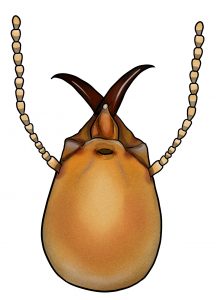
Coptotermes acinaciformis
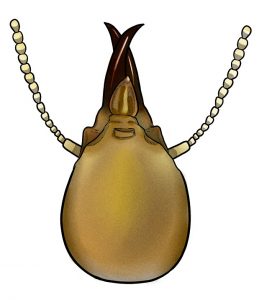
Coptotermes lacteus
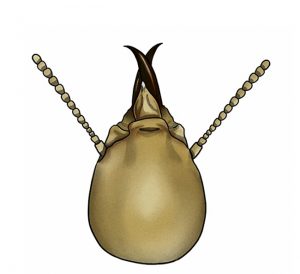
Coptotermes frenchi
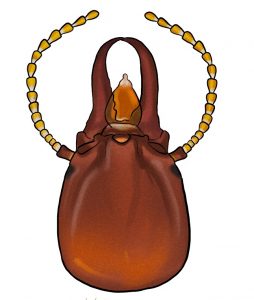
Coptotermes brunneus
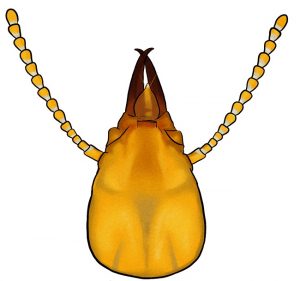
Coptotermes michaelseni
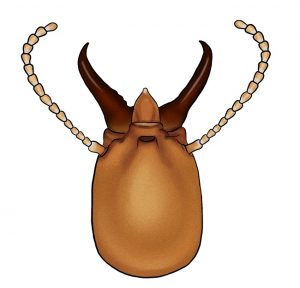
Coptotermes raffrayi
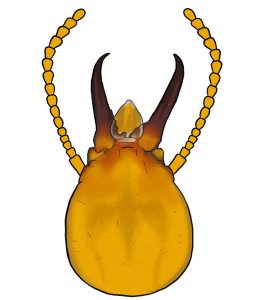
Coptotermes dreghorni
Distribution
There are several species of Coptotermes present in Australia. The distribution of those found in Queensland is summarized in the table below.
| Species | Distribution |
| Coptotermes acinaciformis | Widespread in all states |
| Coptotermes frenchi | Queensland, New South Wales, Victoria, and South Australia |
| Coptotermes lacteus | Southern Queensland, New South Wales, Victoria, and the Australian Capital Territory |
| Coptotermes brunneus | Western Australia |
| Coptotermes michaelseni | Western Australia |
| Coptotermes dreghorni | Northern Queensland |
| Coptotermes raffrayi | Western Australia |
Habitat and Behaviour
Most species of this genus make big nests with around 500,000 individuals. Depending on the species, their nests can either be found inside root crown of trees or underground. Coptotermes acinaciformis is the most destructive species in this genus.