Vertebrates Pests
Rodents are mammals from the order Rodentia — derived from the Latin “rodentem” meaning “the gnawers”. This refers to their habit of gnawing to control their continuously growing front incisor teeth. There are about 2,050 species of rodents, but only three are considered pests in Australia, namely the Norway rat, the roof rat, and the house mouse.
Rats and mice have very diverse lifestyles and can be found in almost every terrestrial habitat, including human environments. They are known to damage human foods and spread many diseases worldwide through contact with their feces, urine, saliva, or bites. They can also carry fleas that act as vectors to spread diseases like the plague and murine typhus to other rodents and people. Some other rodent-transmitted diseases include Well’s disease, rat-bite fever, mouse typhoid, poliomyelitis, favus, rickettsial pox, and trichinosis.
They are overwhelming pests to have in homes, apartments, offices, and any type of building since they will chew on anything to build their nests; whether it be clothes, books, paper, furniture, electrical wires, and even drywall.
Before eliminating rodent infestations, it is important to know their biology, habits, and which rodent species you are dealing with since they have different behaviours and preferences.
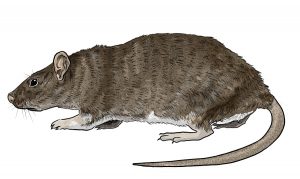
Norway Rat
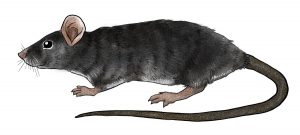
Roof Rat
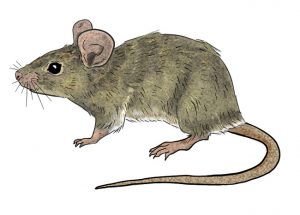
House Mouse
Signs of rodent infestation
A site inspection will help technicians determine if a site is infested, which species caused the infestation, where the infestation is coming from or their nesting and feeding sites, and the size and population of rodent infestation. It is advised to do inspections at night when rodents are active. Signs of rodent infestations will help in determining an effective action plan and management program for the clients. Signs of rodent activity in an area include the following:
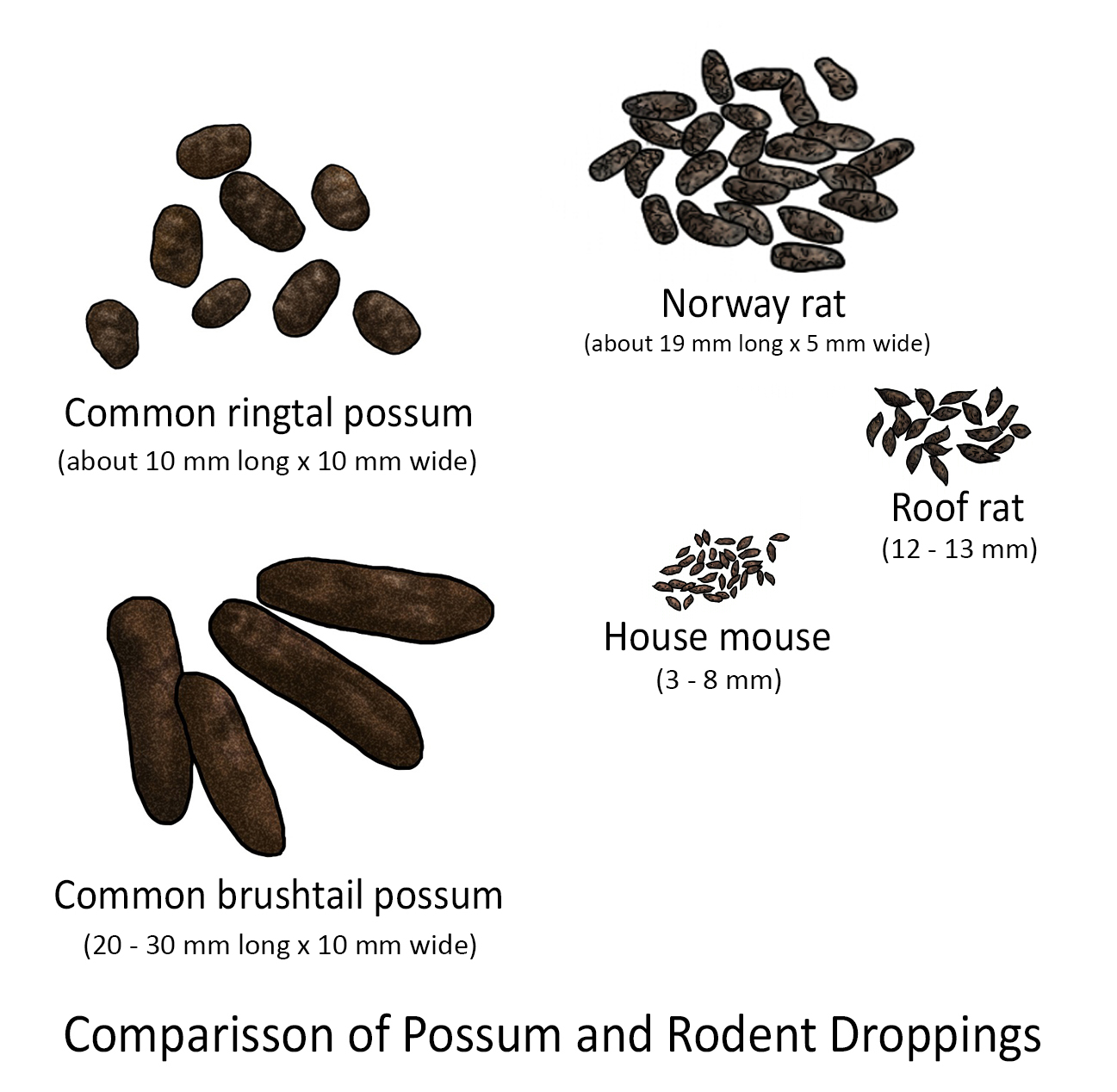
Droppings. The species of a rodent can be identified with their droppings. Recent drops look shiny and pliable, then dull and dry after 2-3 days. Norway rat droppings have blunt ends and are about 18mm long, while roof rat droppings have pointed ends and are 12mm in size; house mouse droppings are also pointed but are smaller than roof rat droppings and are about 3-4 mm in size.
It is advised to clean droppings after inspection to monitor the absence or presence of rodent activities during future inspections.
Like roof rats, possums can also invade roofs. A way you can differentiate a possum from a rodent is by their droppings.
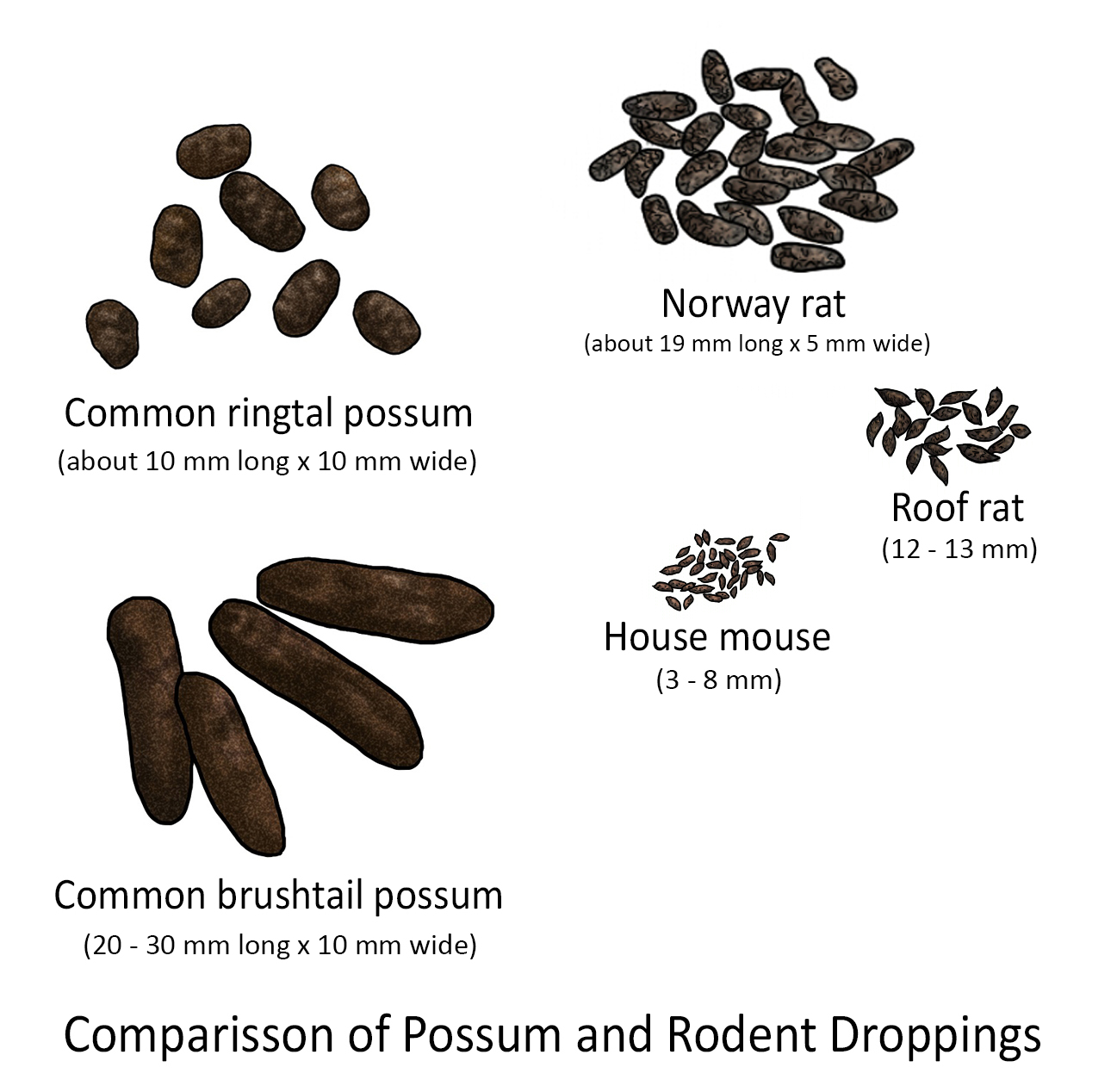
Comparison of possum and rodent droppings.
Runways or Rubmarks. Rodents leave dark grease and dirt marks along walls and surfaces when they travel from their nests to their food source. They tend to follow the same path over and over again; the more rodents use a runway, the darker the rubmarks are.
Chewing. Rodents’ incisor teeth do not have roots and they never stop growing. To keep them sharp and short, they need to be constantly chewing. Rodents chew on a variety of things including leather, wood, soap, electric wiring, and food packaging, and they can also chew holes in your house, creating entry points.
Nests. Nests are made up of pieces of paper, rags, cardboard, and are found in secluded areas. If there are fresh droppings near the nest, this indicates an active nest.
Tracks. Footprints and tail marks on dusty surfaces indicate rodent activity. Rats and mice have 4 toes on their front foot and five toes on their hind foot. Adult Norway rat front footprints are about 11 mm long and 22 mm wide, while their hindfoot prints are 15-16mm long by 23 mm wide. Mice have smaller footprints about 10 mm.
Sounds. Occupants may hear sounds of scratching, crawling, squeaking, and gnawing at night.
Odour. Long-term rodent infestation creates a distinct pungent, musky odour.
Visual Sightings. Visual sightings of rodents during the day may indicate high infestation.
Rodent prevention and control
Non-chemical Control
Non-chemical control measures is the first line of defence against rodents. They do not pose any risk of poisoning non-target animals or children.
Sanitation. Removing food and water sources, as well as cleaning up items and debris that provide shelter for rodents is the best way to prevent infestations. Clients should be advised about hygiene and sanitation with regard to rodent infestations. Using garbage bins with heavy, tight-fitting lids, cleaning up premises, trimming weeds, and cutting branches that touch the fencing may be recommended.
Each situation will be different, so each should be thoroughly inspected and assessed before giving advice. The client’s cooperation with recommended hygiene and sanitation practices is very important for a rodent control and prevention program to work.
Structural proofing. Sealing up cracks, crevices, holes, and other entry points is a permanent solution to prevent rodents from entering building premises. Entry points should be sealed with cement mortar or concrete, cast-iron grills, or sheet metals. Plastics and wood should not be used since rodents can chew on them. Doors can also be proofed with metal plating in high-hazard areas.
Trapping. Chemical control methods may be easier to apply and are more cost-effective, but there are situations where these methods cannot be done, thus trapping devices are used instead, like in certain where:
- premises that do not tolerate dead rodents (e.g. malls, food-manufacturing facilities, restaurants, etc.), and
- premises that do not tolerate chemical pesticides (food-manufacturing facilities, pharmaceuticals, etc.).
Traps can also be used to catch remaining rodents that were not eliminated after a baiting program.
Snap traps. There are a variety of traps that have been developed but some operators still prefer simple snap traps. Snap traps can be baited with various attractants depending on the rodent of concern; Norway rats have a preference for fish or meat, while roof rats have a preference for fruit, vegetable, and cereals. Technicians can experiment on the baits and see which one gains more attraction. Baits should be securely placed inside the traps or they can be set off without capture.
Traps should be set along rodent runways, where they travel to get food and back to their nest. Norway rats and roof rats are wary of new objects placed in their environment, so traps should be placed a few days before being set. Pre-baiting the traps before setting them up may also help to get the rats accustomed to the trap and they might get comfortable with getting close to them.
Traps should never be placed where they could pose danger to staff, so the placing of traps should be thoroughly planned. The position of traps should also be changed frequently to interfere with the memory of rodents that are still around. Traps should be checked daily, and dead rodents caught should be disposed of as soon as possible. Place dead rodents in sealed bags and be sure to wear appropriate protective gear.
Multiple-mouse-catching traps. This kind of trap is used to catch live mice in large populations. This trap relies on a good understanding of mice activity in the buildings, which can be observed during inspection and survey. This device has openings where when rodents enter, a mechanism sweeps them into a compartment when the trigger is activated.
Glue Boards. Glue board traps are a more passive form of rodent trapping but are heavily reliant on strategic placement. Glue board traps have adhesive, so when a rodent walks over them, they become stuck. Some glue boards have scents that attract rodents, and some do not. Glue boards are usually positioned against walls along runways. Glue board traps lose their effectiveness when they become heavily covered in dust, so it is recommended to cover them. They also need to be changed whenever there is a catch.
Chemical Control
Rodenticides are used when non-chemical measures are not enough to control rodent populations. Before the 1940’s rodenticides contained sodium fluoroacetate, heavy metals such as arsenic trioxide, and thallium sulfate, and poisons like strychnine, red squill, and antu. Because of their high risk of secondary poisoning, most of these chemicals are no longer used and have been replaced by less dangerous rodenticides.
In the early 1950s, first-generation anticoagulant rodenticides were developed — they are also known as “multiple-dose” anticoagulants. This type of rodenticide works by stopping the blood clotting of target pests which eventually causes internal bleeding. They are safer to use because rodents need to feed on the bait for several days in a row before the concentration of the active ingredient becomes lethal; usually, it takes about 4-10 days. Risks of secondary poisoning with multiple-dose anticoagulants are lower. Second-generation anticoagulants or “single-dose” anticoagulants were then developed in the ‘80s. These baits have more potent active ingredients than the first generation. It only takes one feeding to get a toxic dose in the system of a rodent, and it will die from internal bleeding in just two to three days. However, since their toxicity is higher, if a non-target animal consumes a rodent that died from a second-generation anticoagulant, they in turn get the poison in their system as well. In event of a non-target animal poisoning, these first and second-generation anticoagulants have antidotes, which is Vitamin K1.
Anticoagulant rodenticides come in various forms such as:
- Concentrates – mixed in food or liquid baits, also in the form of tracking powder and gel
- Ready-to-use baits – in the form of treated whole grain or pellets
- Paraffin blocks – come in different shapes, sizes, and colour made of treated paraffin wax, suited for high moisture environments.
Baiting. Baits should be placed in labelled, lockable tamper-resistant bait stations to reduce the risk of exposure to non-target animals, and so that they cannot easily be moved. They should always be placed in areas with high rodent activity such as runways, near nests and burrows. Prebaiting can also be done since rats are wary to new objects in their environment.
Tracking powders and gels. Some rodenticides are in the form of powders or gel formulations. They can be placed along runways, nests, and burrows where they would contaminate the paws and fur of rodents. Rodents will then later ingest some of the poison when grooming. These can be used in less accessible areas like wall voids. There should be caution when using these, especially the tracking powder since rodents may contaminate human food with it.
Safety Tips for Rodent Control
- Always read product labels before using them.
- Wear protective gear (gloves and respirator) when handling rodent baits.
- Place baits where children, pets, and other non-target animals can’t get to them.
- Make sure bait stations are labelled ‘POISON’.
- Notify clients where the bait stations and placed.
- Keep a record where bait stations are placed for monitoring.
- Inspect bait stations regularly.
- Wear gloves when retrieving dead rodents, quickly put them in sealable plastics.
- Using insect repellent is recommended when handling dead rodents to prevent risks of flea bites.
- In event of skin contact with rodenticides, wash skin area thoroughly with soap and water.
- Do not place baits and tracking powder or gel where there is a possible risk of food contamination.
- Do not contaminate waterways and drains with rodenticide.
- Do not eat, drink, or smoke when handling rodenticides.
- Wash gloves and clothes before using them again after using rodenticides.
- Store rodenticides in original containers, seal tightly, and place them in a safe place.