Subfamily Thynniinae
Distribution
Found throughout Australia
Identification
Males are winged, relatively large, typically 10-25mm. They have an elongated body form with a distinct constriction between the thorax and abdomen. Males can be black with yellow or white markings, while some species show orange or reddish patterns.
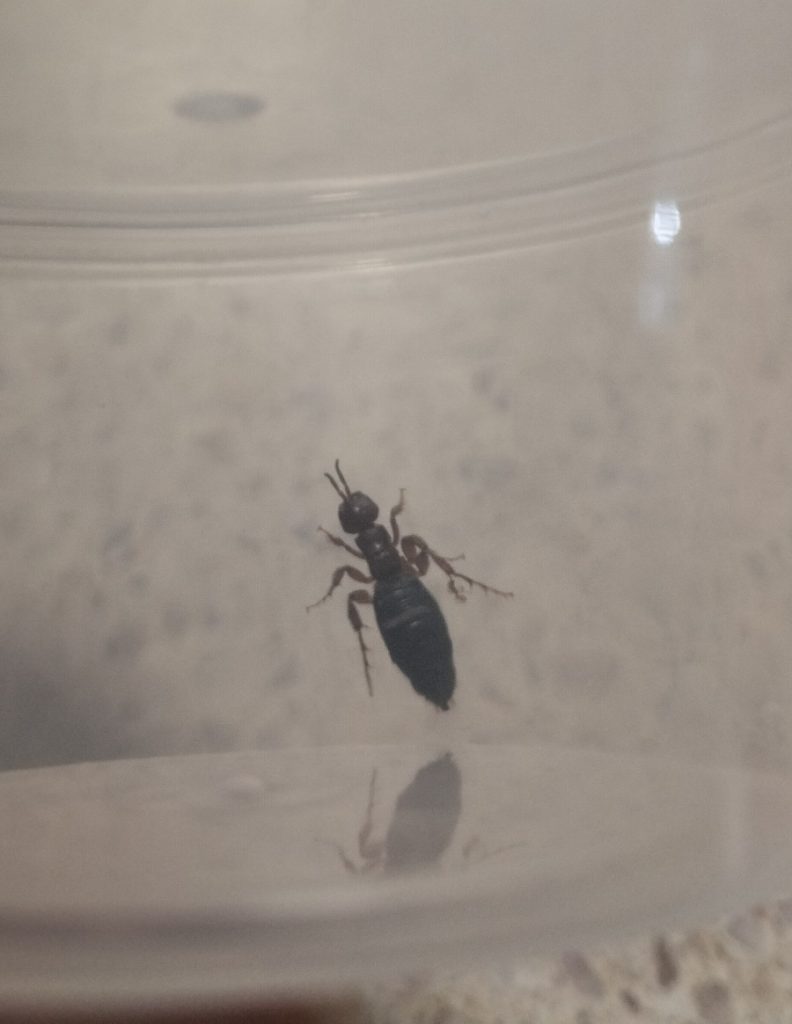
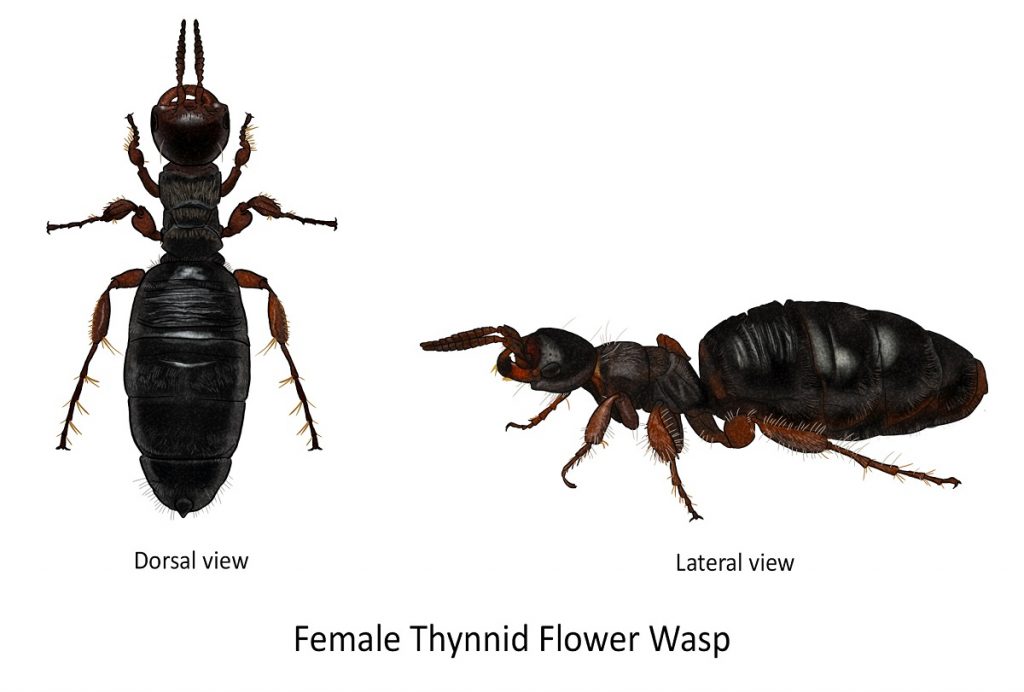
Females are completely wingless and smaller than males, typically 5-15mm. They can be mistaken as ants because of their ant-like appearance. They have large, well-developed mandibles, shortened antennae with 12 segments (straight antennae whereas ants have long elbowed antennae), and relatively small eyes compared to males. They have strong fossorial (adapted for digging) legs that are used to dig burrows.
Habitat and Behaviour
Flower wasps wasps exhibit remarkable sexual dimorphism, with winged males and wingless, ant-like females. They inhabit various environments including open woodlands, heathlands, coastal sand dunes, and native grasslands, showing a particular preference for areas with abundant flowering plants and well-draining soils.
The wasps’ mating behaviour is distinctive — males patrol territories searching for females, who release pheromones when ready to mate. During courtship and mating, males carry females between flowers, where both feed on nectar. This behaviour makes them important pollinators of native plants, particularly those in the Myrtaceae family.
Thynniinae wasps have a parasitic lifecycle, with females hunting underground beetle larvae as hosts for their offspring. After mating, females dig through the soil using their antennae to detect chemical signals and vibrations from host grubs. Upon finding a suitable host, they paralyse it and lay their eggs, which will develop by consuming the host larvae. These wasps play crucial ecological roles as both pollinators and natural pest controllers, though their populations face challenges from habitat fragmentation, loss of native flowering plants, pesticide use, and climate change. Their presence often indicates a healthy ecosystem with intact native vegetation and soil systems.
Danger
Female flower wasps, are capable of delivering painful stings that cause burning and swelling, however, they present a relatively lower risk to humans compared to social wasps due to their solitary nature.
Image Gallery