Drepanotermes rubriceps
Family: Termitidae
Type: Subterranean
Distribution
Found throughout Australia except for Victoria. This species prefers drier inland areas more than the wetter coastal regions.
Identification
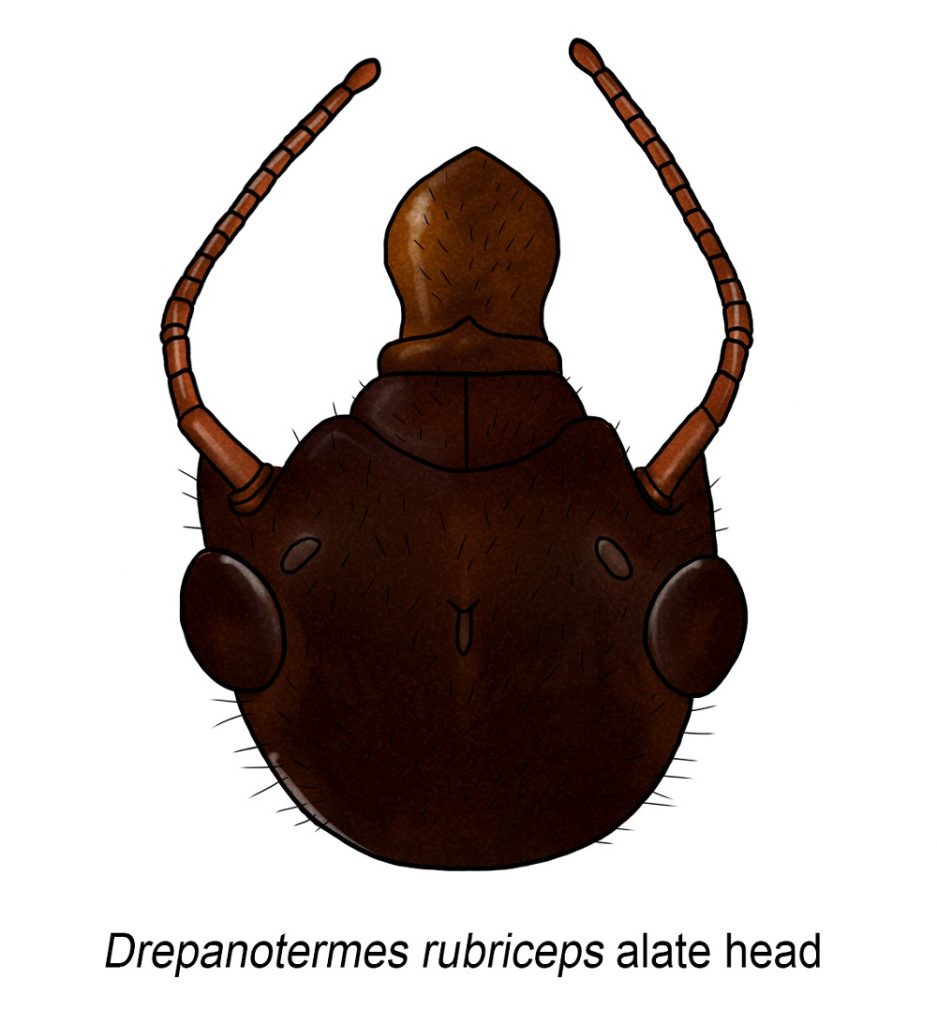
1) Head very dark brown, large, rounded behind, flat on the summit, with numerous short, fine, pale hairs.
2) Eyes are large, projecting moderately, nearly circular.
3) Antenna are very long and slender with 16 segments.
4)Ocelli are large, oval, oblique
5) Clypeus yellow-oche in colour
6) Antennae are darker than the clypeus – brownish
7) Mouthparts are yellow (labrum, labium, maxillae, mandibles, and hypopharynx); labrum is narrow at the base, swollen on the sides, and rounded in front.
8) Anteclypeus is membranous, pointed in front
10) Prothorax yellow-ochre with brown blotches
11) Wing-stumps and abdominal tergites are argus brown in colour
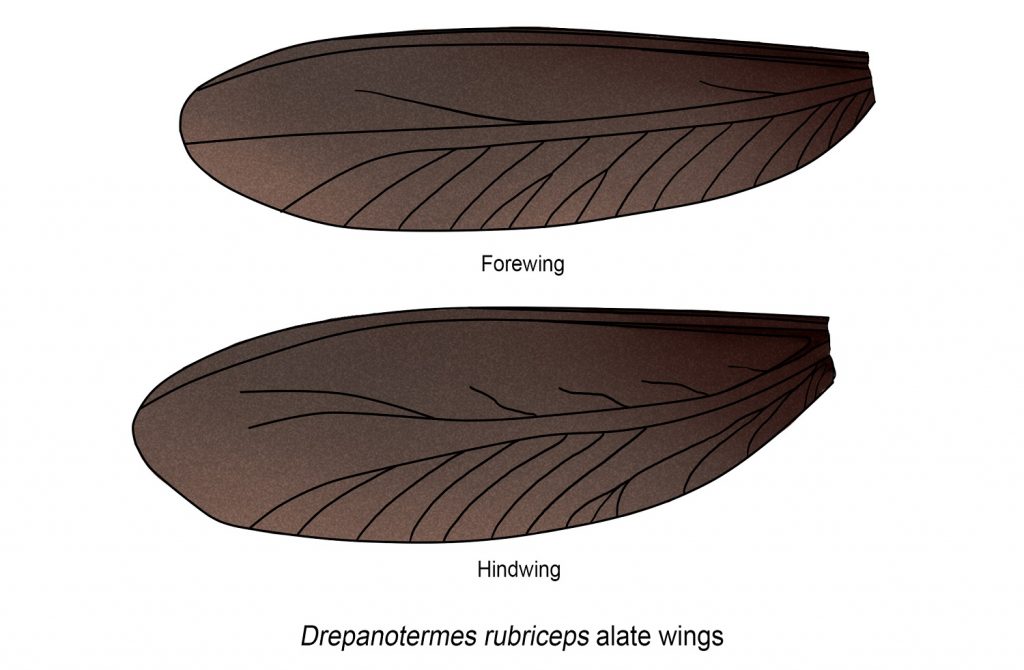
12) Wings are brown, radium and branches of the cubitus very dark, costal margin is pale
13) Wings are very large and broad; fore-wing is a little longer and a little narrower than hind-wing
Soldier
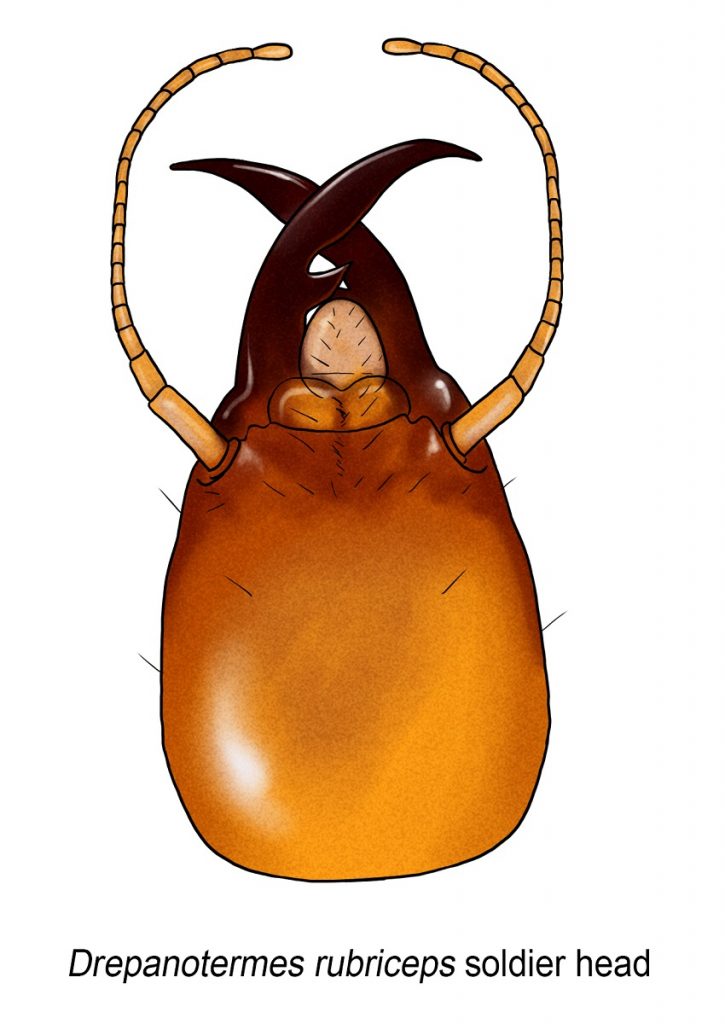
- Head is yellow-ochre to ochraceous in colour
- Labrum is whitish-yellow
- Clypeus with anterior border with translucent membrane
- Mandibles are a little darker than head, darkest at the tip
- Antennae are very long and slender, 17 or 18 segments.
- The rest of the insect is pale yellow
Habitat and Behaviour
This termite species behaves differently depending on the location. In areas with plenty of moisture, like coasts, they build their nests underground and leave no sign above ground. In dried areas, they create mounds that can be up to 3 meters tall, but these mounds are messy and uneven compared to the termite mounds that are usually seen.
This species eats grass and debris, therefore they are not a major threat to buildings, unlike other termites. However, in dry areas, they can be a nuisance for pastures since they eat the grass.