THE ACTION OF INSECTICIDES
Insecticides eliminate insects by disrupting vital life processes. This toxic action depends on:
- The pathway through which the insecticide enters the insect’s body
- The mode of action of the insecticide within the insect body.
The routes of entry
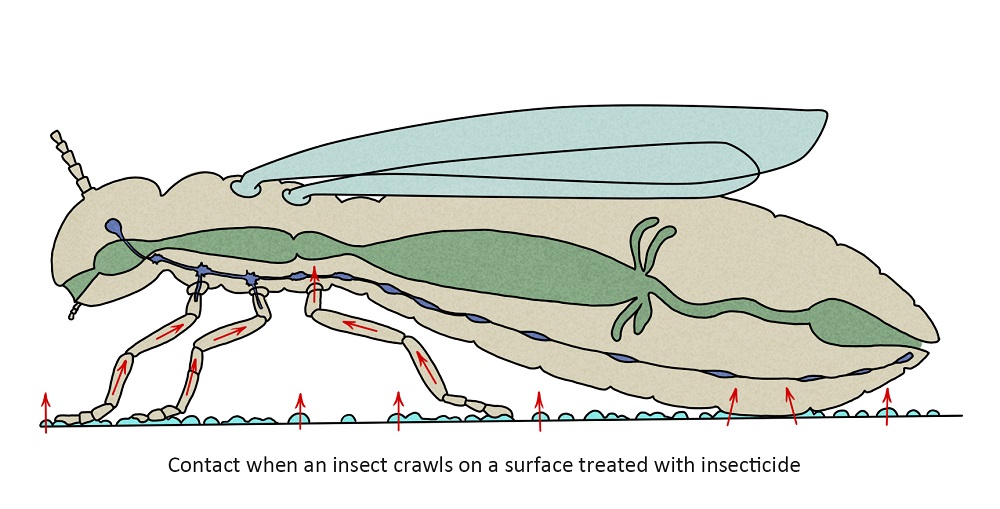
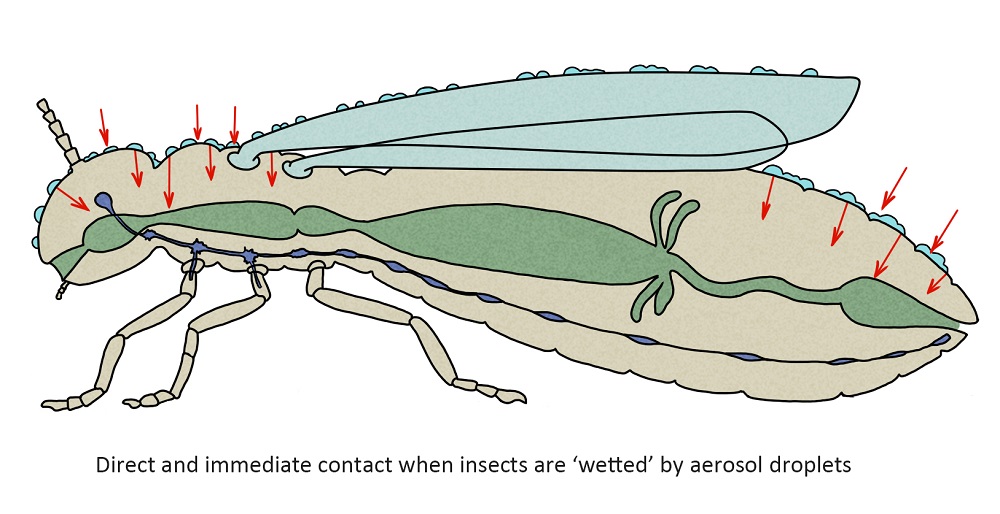
Insecticides can enter the body through the cuticle (dermal entry), the mouth (oral entry), or the respiratory system (respiratory entry). An insecticide may primarily enter by one, two, or all three of these pathways. The terminology can be somewhat perplexing. Contact insecticides all lead to death upon contact, but the exact point of contact may differ. When an insect is sprayed and becomes wet with a droplet, the insecticide can enter through all three routes. If the same insecticide is applied to a surface, the insect can absorb it through the tarsi, or it may ingest the insecticide, for example, form a leaf. In such situations, the insecticide acts as both contact and residual and the entry occurs through dermal absorption or ingestion.
Dermal entry
The penetration of the insect cuticle by an insecticide is called ‘contact’ action, and insecticides relying on this entry method are known as contact poisons. The majority of synthetic insecticides employed in urban pest management practices fall into the category of contact poisons.
The solubility aspect of a pesticide significantly influences cuticle penetration. The penetration predominantly takes place in areas where the cuticle is thinner, particularly near sensory structures and where body segments are connected by thinner, more flexible cuticle between sclerotized or hardened plates. After entering the body cavity, contact poisons are partially transported in the hemolymph to the target tissue, primarily the nervous system in most cases. It is likely that certain insecticides when applied as liquids directly to the cuticle act faster than when applied as dusts. When the liquid dries, the residue on the surface can dissolve in the waxy cuticle on the tarsi, leading to slower absorption from a smaller surface area compared to liquid application. Settled dust particles may contact various parts of the insect within a crevice. However, the effectiveness depends on the active constituent and residue application.
Oral entry
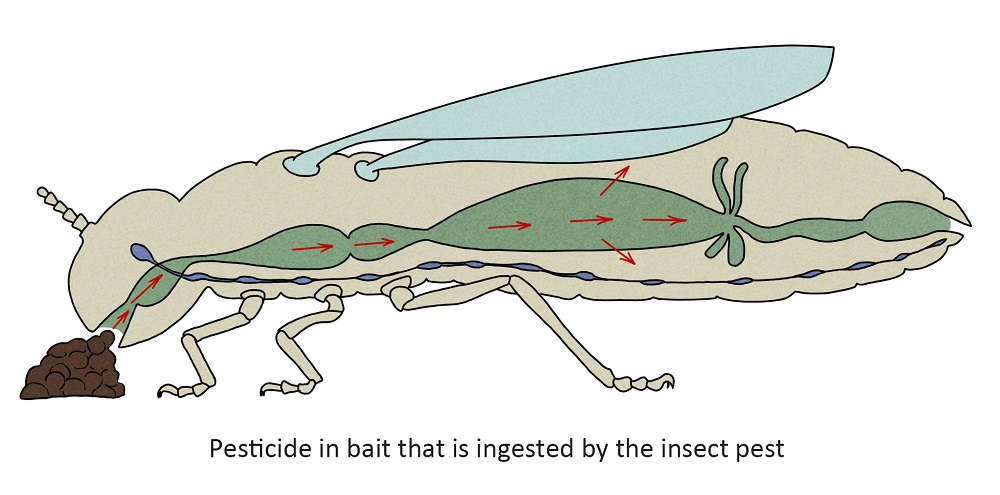
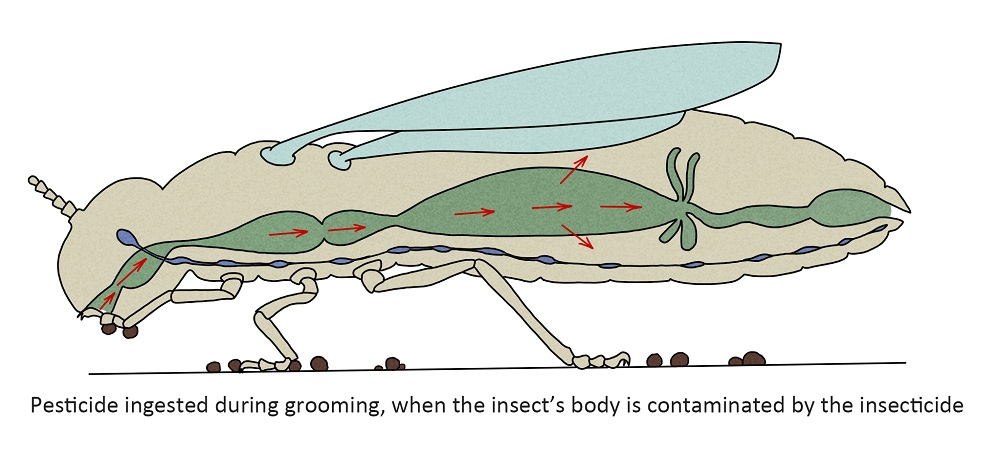
The oral entry of insecticides depends on the insect ingesting the poison into its digestive system. Insecticides that utilise this entry method are sometimes referred to as stomach poisons. When an insecticide is applied to an insect’s food source, like in a gel bait, and is ingested along with the food, it enters the digestive tract. Ingestion can also occur through grooming behaviours, such as termites cleaning other termites exposed to termiticidal dusts, or cockroaches ingesting dust particles while cleaning their antennae.
Specific insecticides known as systemic insecticides are formulated to be absorbed by the host plant or animal, allowing them to be distributed throughout the host system. This process effectively transforms the sap or blood into a poisonous substance. When parasitic pests like aphids (on plants) or fleas (on animals) feed on the host, they ingest poison. Systematic insecticides, primarily organophosphates, are limited in number. It is essential that systemic insecticides do not harm the host plant or animal and break down relatively quickly.
Respiratory entry
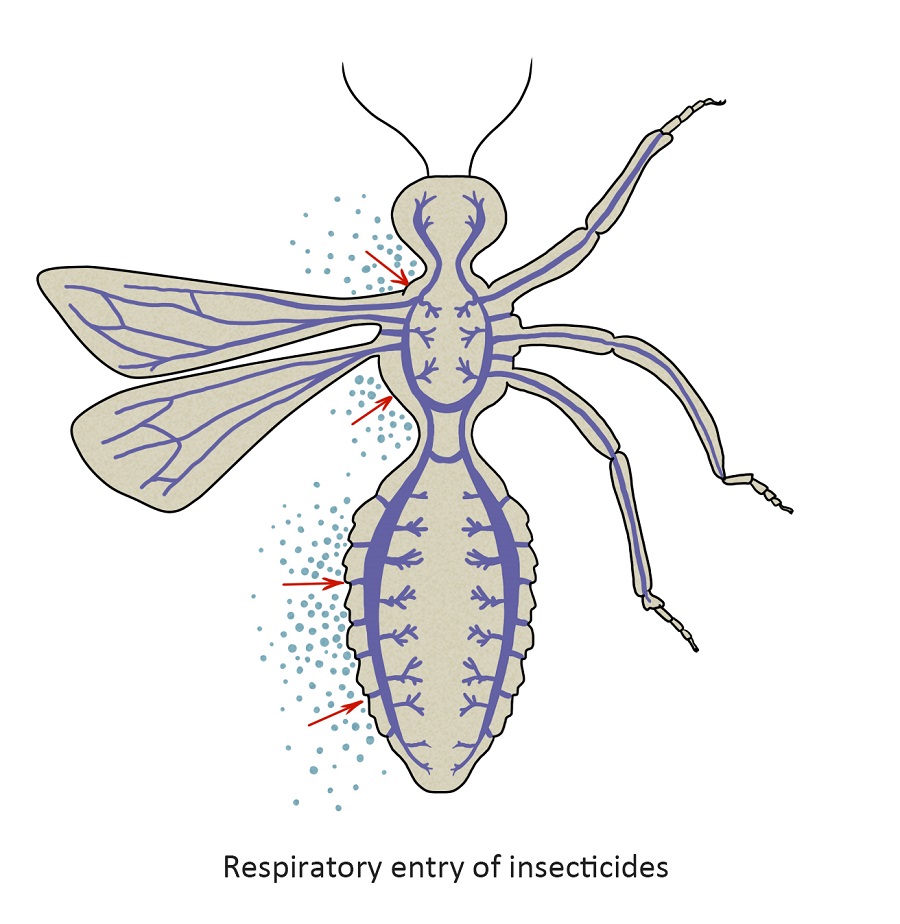
Insecticides that insects inhale, known as respiratory poisons, include fumigants. fumigants, characterised by their easy evaporation, act as toxic molecules in the air. Techniques like grain or timber treatment rely on maintaining these toxic vapours in a sealed silo or chamber for a specific period.
Modes of action of insecticides
The mode of action of an insecticide refers to the way in which it causes physiological disruption at its target site, causing the insect to die. Although precise details of the toxic mechanisms of numerous insecticides are not fully understood, most synthetic insecticides function as neurotoxins.
For instance, synthetic pyrethroids seem to impact the functioning nerve fibres or axons, leading to a phase of heightened electrical activity and the inhibition of nerve impulses.
Organophosphorus and carbamate insecticides, known as cholinesterase inhibitors, disrupt nerve synapses. By reducing the essential enzyme cholinesterase, these insecticides lead to the accumulation of neurotransmitters in synapses, causing severe disruptions to the nervous system and eventual dysfunction of organs and tissues.
Certain toxins operate through mechanisms other than nerve system disruption. Insect Growth Regulators (IGRs) interfere with regular development or cuticle formation. Abrasive dust works by wearing away the waxy layers of the cuticle, enabling water to escape and leading to death through dehydration. Mineral oils can create a wet barrier, excluding air and causing suffocation in insects. Inorganics can induce mortality by precipitating proteins in the lining of the gut.