There are more than 2,500 flea species worldwide, with approximately 88 present in Australia, 78 of which are endemic.
Being a domestic annoyance and a vector for diseases, fleas rank high on most lists of troublesome insects.
Appearance
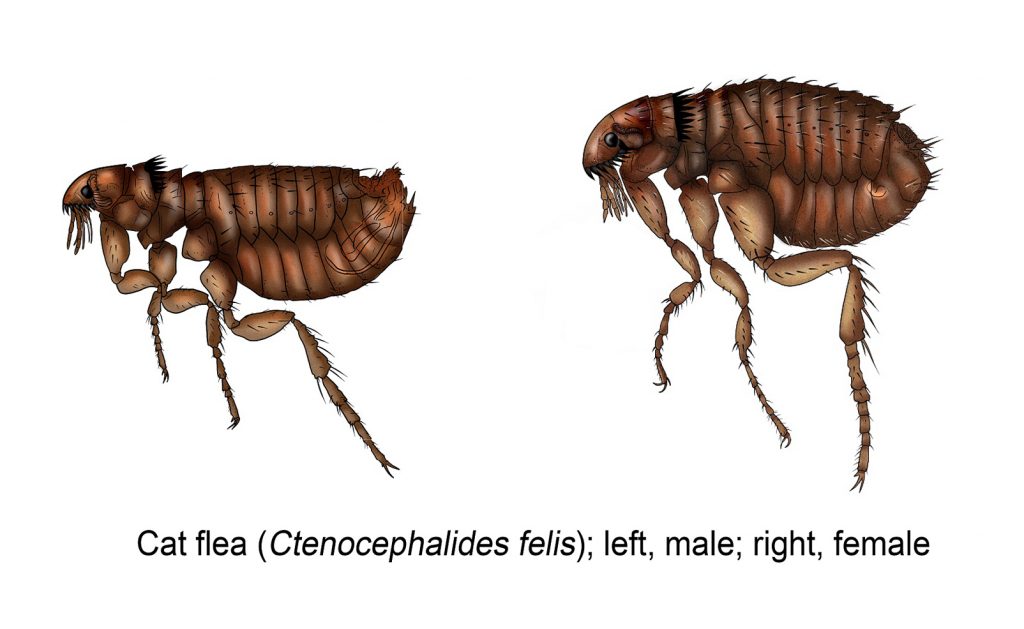
Adults are small, bilaterally flattened, with short backward-pointing spines covering their bodies. They have stout, spiny legs, and enlarged femurs on the hind legs for jumping. They are wingless and lacking compound eyes; they may have lateral ocelli. Antennae are small, and mouthparts are adapted for piercing and sucking.
The larvae are tiny, lack legs, and worm-like with short antennae. They have chewing mouthparts and rigid body hairs.
Biology and Behaviour
Fleas are external parasites of mammals and birds. They vary in host specificity; some are host-specific whereas others can adapt to various hosts. Active adults move through fur and jump, spending minimal time on hosts for blood meals.
Reproduction is sexual, with eggs dropping into the host’s environment. Larvae feed on organic matter, pupate in a cocoon, and emerge as adults triggered by vibrations signalling potential hosts.
Pest Status
Fleas can thrive in favourable conditions in homes annoying the tenants, and pose health risks by transmitting serious diseases like the bubonic plague, muring typhus, and tapeworm infections.