Grasshoppers, crickets and locusts
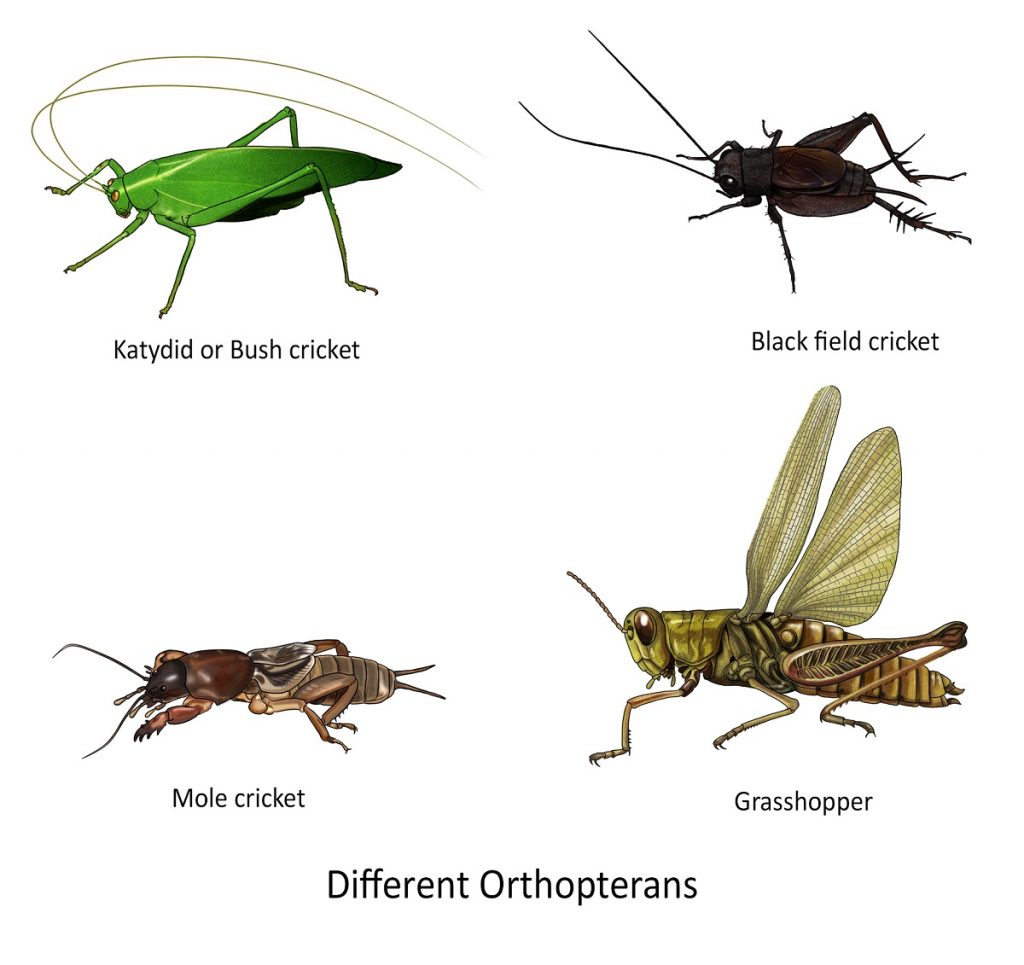
There are approximately 25,000 described species in this insect order, 3,000 of which are present in Australia.
This notable insect group is famous for their distinctive summer night “singing” and impressive jumping ability, often used to escape danger. Locusts, a type of grasshopper with short antennae, have long been responsible for major crop losses when swarming.
Appearance
Adults are typically medium to large, characterized by a cylindrical body with a prominent thorax resembling a collar. They have very strong chewing mouthparts, well-developed compound eyes, and thread-like antennae. Wings, if present, consist of leathery forewings (tegmina) covering membranous hindwings, which can be reduced or absent. Hindlegs are often enlarged for jumping, and females carry a noticeable ovipositor. Structures for sound production and hearing are present but not easily visible.
Nymphs resemble adlts but lack wings and have undeveloped genital features.
Biology and Behaviour
Most orthopterans feed on vegetation in grasslands, crops, and open forests. They move by running, jumping, and flying. Some inhabit unusual environments like caves or water. Their activity patterns vary, with some being night-active and other active during the day. While mostly solitary, certain short-horned grasshopper species, such as locusts, can form highly destructive swarms due to population fluctuations.
Reproduction involves elaborate courtship rituals with species-specific “songs” produced by rubbing specialized wing or leg sections. Mating varies in position and duration, often lasting several hours. Eggs, individually or in groups, are placed in plant tissue or soil, covered with a protective plug. Nymphs undergo multiple moults and have similar behaviours to that adults.
Pest Status
Orthopterans, particularly locusts, have major economic implications in horticulture and agriculture, causing extensive famines and costly crop losses. Additionally, field crickets and mole crickets may occasionally create noise disturbances near buildings.